
Why your boiler won't turn on in a Maine winter

Step 1 of 3: Equipment

A boiler that won't fire in a Maine cold snap usually comes down to one of a few things: the igniter or pilot has failed, the thermostat isn't calling for heat, the water pressure has dropped too low, or a safety switch has shut the system down on purpose. That last one matters most in weather like this. Boilers have a limit switch and a flame sensor that stop the burner if something is off, a blocked flue, water that's too hot or too low, a draft problem from wind pushing back down the vent pipe. The boiler isn't broken in those cases so much as refusing to run unsafely. If your home heats with oil, a clogged nozzle or a tank running low will also stop it cold. None of this sorts itself out by waiting. A boiler down overnight in a Maine winter is a pressing problem, and the cause needs a look from someone who can test the switches and pressure rather than guess at them.

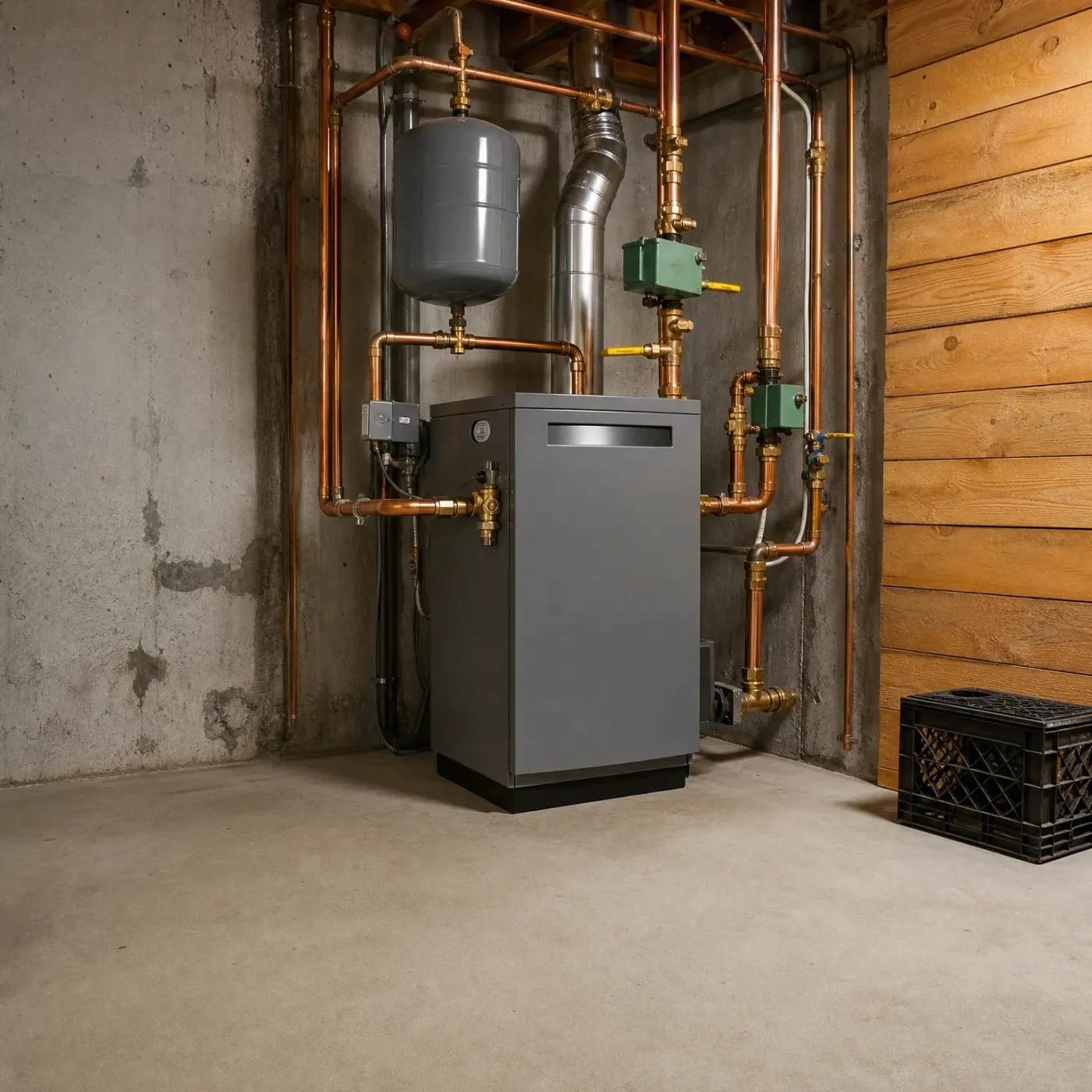
A gray boiler unit on a concrete pad in a basement corner, connected to copper piping, valves and a metal flue against painted concrete block walls.

Running the way it should

Pressure holds steady on the gauge, the pilot or igniter catches every time, and the pipes along the wall stay quiet. No clanking, no short-cycling. The thermostat calls, the burner answers, and heat moves through the house without you thinking about any of it.


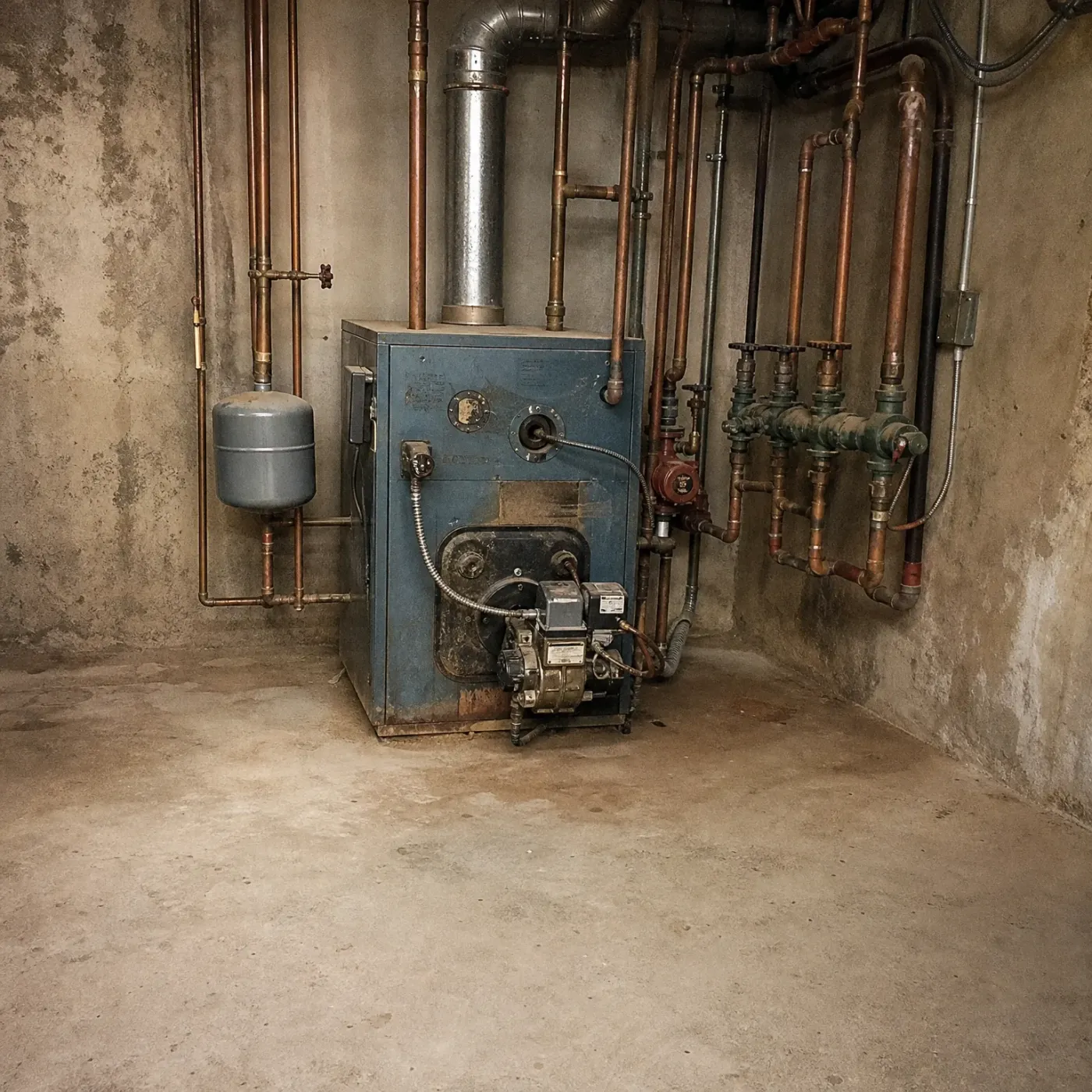
A blue oil-fired boiler with a burner unit sits on a concrete pad in a basement corner, with copper piping, valves and a gray expansion tank overhead against concrete block walls.

Shutting itself down

This is a boiler protecting itself, not failing for no reason. A pressure switch, a flame sensor, or a high-limit switch has tripped and cut the burner off before something worse happens. It won't fire again until whatever tripped it gets fixed.

A smiling man in a gray long-sleeved shirt stands in a kitchen looking to the side, with open shelves of dishes, a white mug on the counter, a potted plant, and a view through a doorway into a living room.
A smiling bearded man in a green sweater sits at a white marble kitchen island with a mug, potted plant and bowl of fruit, in a bright white interior with open shelving and an arched doorway.
A smiling man with dark curly hair and a beard, wearing a dark green knit sweater, stands at a white marble kitchen counter with a dark blue mug, with open shelving, pendant lights and a houseplant behind him.
A smiling man in a green ribbed sweater stands behind a wooden table holding a ceramic mug of coffee in a kitchen with white subway tile, shelves of potted plants, and a bowl of fruit.

An oil boiler does not just light and stay lit. Every time it fires, a cad cell relay checks for a flame within seconds, and if it doesn't see one, it shuts the burner down rather than let unburned oil keep spraying into the chamber. That lockout is a safety, not a malfunction. The same goes for the low water cutoff: if pressure drops below what the switch is set to see, it blocks ignition outright until that's corrected. The aquastat works differently. It reads the temperature of the water and holds the burner off until the water has cooled enough to need heat again, so a boiler sitting quiet isn't always broken. A dirty cad cell eye or a clogged nozzle can make the burner try, fail, and try again a few times before it finally locks out for good. And because oil boilers pull combustion air through a flue, a vent pipe blocked by ice can trip a safety switch before the burner ever gets a chance to light. The reset button is built to work once. Hitting it over and over after a lockout doesn't help; it just pushes more oil into a chamber that isn't burning it.

Why the burner locks out

  • A low water cutoff sits in the boiler and will block ignition completely if the pressure drops below what the switch is set to see.
  • Most oil boilers fire through a cad cell relay that checks for a flame signal within seconds, and if it doesn't see one it locks out the burner.
  • The aquastat reads water temperature and will hold the burner off until the water has cooled enough to call for heat again.
  • A clogged nozzle or a dirty cad cell eye can make the burner start, shut off, and start again a few times before it locks out.
  • Oil boilers draw combustion air through a flue, and a blocked or iced-over vent pipe can trip a safety switch before the burner ever lights.
  • The reset button on the burner is built to work once; pressing it again and again after a lockout can push oil into the chamber unburned.
A smiling man in a dark blue T-shirt sits on a light gray sofa in a living room with a wooden shelf and window behind him, with a laptop edge visible in the foreground.
A bearded man in a plaid flannel shirt stands indoors looking out a frost-covered window, with a steaming dark blue mug on the wooden sill and snow-covered trees outside.

Let someone else find the pro

A dead boiler in January isn't something to sit with while you figure out who to call. A Maine cold snap doesn't wait for business hours, and with oil heat and electric rates what they are here, every day without heat costs you more than the repair will. Most people in this spot start dialing around, explaining the same problem to three or four companies, waiting on callbacks that don't come, then trying to compare quotes for a job they don't fully understand. That's the part worth skipping. Send the request once and the search for a contractor stops being your problem. You're not getting five strangers competing for the job, just one who takes it on. Your house still needs heat tonight. Handing off the search is the one part of this you can get done in the next two minutes.

Why pressure drops in cold snaps

Boiler water contracts as it cools, and a hard cold snap pulls the pressure down faster than it would on a mild day. If the system had a small leak at a valve or a fitting that never got looked at, the drop that normally wouldn't matter is enough to trip the low water cutoff. That switch exists to protect the heat exchanger from running dry, so it isn't a flaw in the boiler. It's doing what it's supposed to do. The fix is usually simple once someone's there to bleed air and bring the pressure back to where the gauge should read, but the boiler won't try again on its own.

What the cad cell actually checks

On an oil boiler, the cad cell is a small sensor inside the burner that watches for the glow of a lit flame. If it doesn't see that light within seconds of ignition, it tells the relay to shut the burner off rather than keep spraying oil into a chamber that isn't burning it. A dirty lens on the cell, soot buildup, or a flame that's weak and unstable can all read as no flame at all. Oil heat depends on this check working correctly, which is part of why a boiler that cycles and then quits is often a cad cell problem rather than an empty tank.

An older blue boiler with a burner unit stands in a concrete basement corner, connected to copper and steel piping, valves and a gray expansion tank on the wall.
Before you get your boiler repair
A gray boiler unit in a basement corner with copper piping, brass valves, a gray expansion tank, a metal flue duct, concrete walls and a wood-paneled wall, with a black plastic crate on the floor at right.
After you get your boiler repair

Winter nights average 13°F statewide

At 13°F, a boiler with even a minor fault won't shrug it off the way it might in October. A weak igniter or borderline pressure that held on through fall can be the difference between heat and a cold house when the temperature drops this low overnight.

NOAA nClimDiv 1991-2020 county normals weighted by homes

What a dead boiler comes down to

  • A boiler that won't fire almost always traces back to the igniter, the thermostat, low pressure, or a safety switch doing its job.
  • Cold snaps don't create new problems, they expose the ones already sitting in the system.
  • A pressure drop or a weak igniter that held on through October can fail outright once it hits 13°F.
  • Skipping the search for a contractor means you're not calling around or explaining the same problem twice to different shops.
  • Oil heat and high electric rates make every extra day without heat a cost that adds up fast in Maine.
  • Knowing which part failed doesn't fix it; a licensed contractor still has to open the boiler and confirm it.

A boiler that won't start in the middle of a Maine cold snap is almost never a mystery once someone opens the panel. It's the igniter or pilot, a thermostat not calling for heat, water pressure that dropped below where the system needs it, or a safety switch doing exactly what it's built to do. None of that is new damage. Cold just finds the weak point that was already there, the connection that was borderline, the pressure that was a little low all along. At 13°F, there's no cushion left for a part that was already struggling.

Knowing the likely cause doesn't get the boiler running again. Someone still has to get into the system, check the pressure, test for a flame signal, and find out which switch tripped and why. That's the part that takes a license and a gauge, not a guess.

What changes once you send the form is what you stop having to do yourself. No scrolling through listings, no calling three or four places to see who picks up, no explaining the same cold house and the same dead thermostat to each one, no sitting with quotes trying to guess which number is honest. That search is its own job on top of a cold house, and it's the part that goes away. With oil heat and electric rates what they are in Maine, every day spent hunting for a contractor instead of getting one to the door is a day the cost keeps climbing.

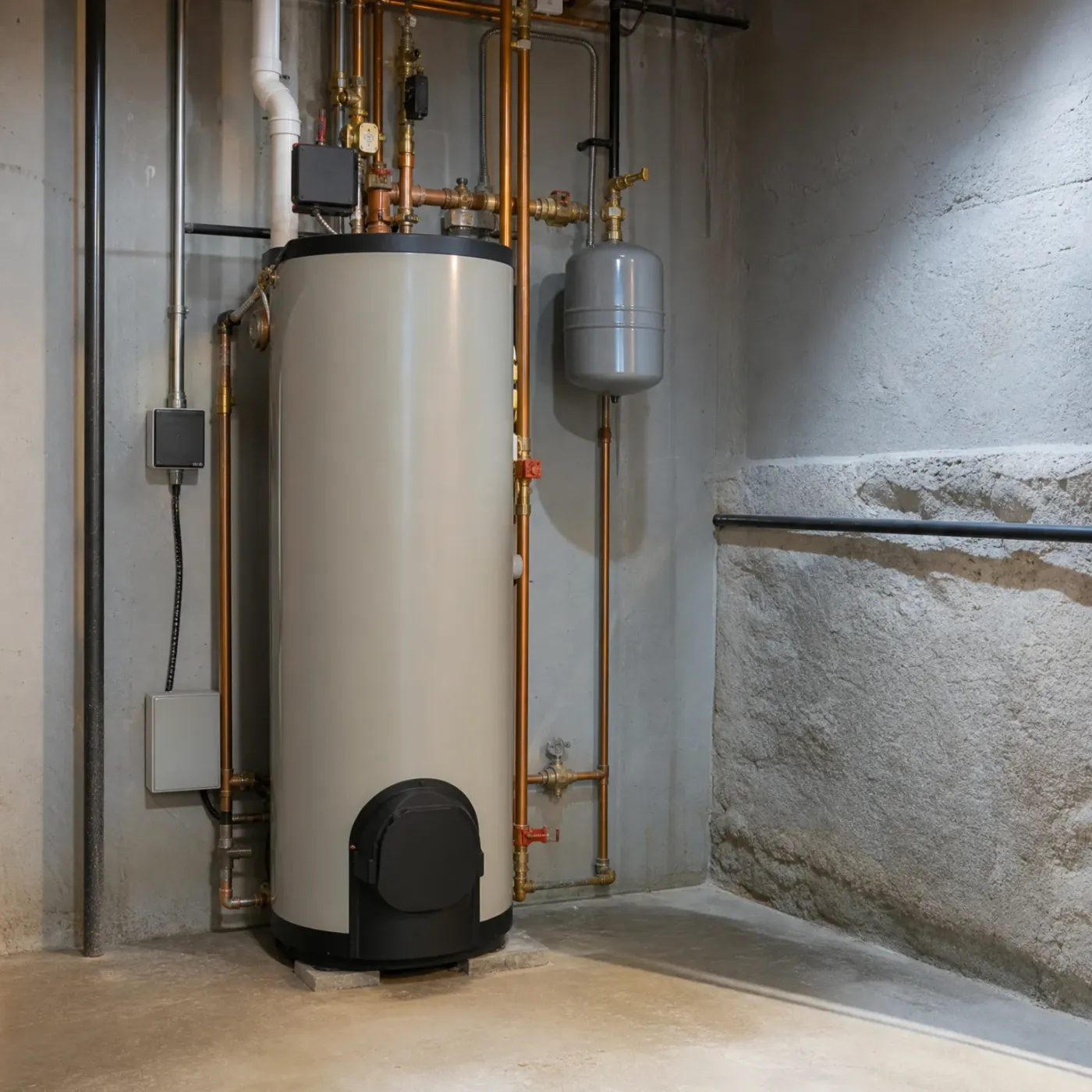
A tall cylindrical boiler or water heater with a black burner cover stands in a concrete-walled basement corner, surrounded by copper pipes, valves, electrical boxes, and a gray wall-mounted expansion tank.

One request and it's handed off

Send it today

Describe your boiler job once, to one pro.

You only hire the pro if you want to.