

Profile view of a bearded man wearing a dark green baseball cap and a dark gray T-shirt against a plain light background.

Why your boiler makes a banging noise in Maine

Step 1 of 3: Equipment

Why does my boiler make a banging noise?

A banging boiler usually gets noticed fast by someone who doesn't let small problems sit. You're probably hearing it most when the heat first kicks on, and wondering if it's something that'll wreck the system if you wait, or just a noise you can live with until someone looks at it.

It's almost always kettling, caused by mineral buildup or trapped air in the boiler

The banging, sometimes called kettling, happens when limescale or sludge builds up on the heat exchanger and traps water against the hot metal. That water flashes to steam faster than it can escape, and the pockets collapsing make the banging sound. Trapped air in the system can cause a similar noise. Oil-fired boilers, which most homes in Maine run, build up this kind of deposit over years of heating through long winters. Left alone, the buildup makes the boiler work harder to heat the same water, which costs more to run on electricity rates already among the highest in the country. The noise itself won't go away on its own, and it tends to get louder over a season, not quieter.

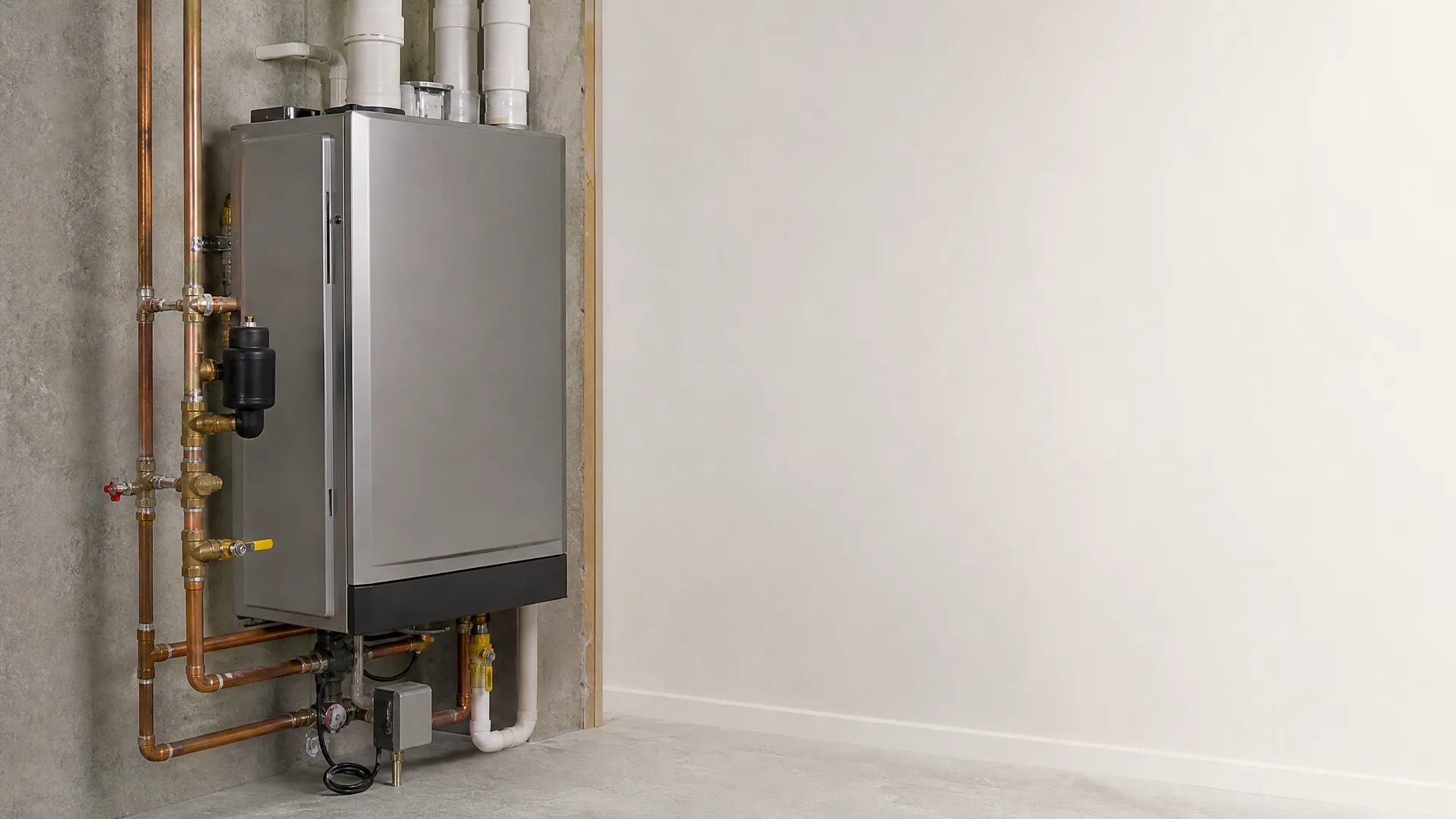
A wall-mounted grey boiler with copper pipework and white flue pipes installed against a concrete wall in an empty room with a plain pale wall to the right.

What kettling actually sounds like

The banging usually comes from the heat exchanger. Oil-fired boilers common in Maine heat water fast, and if there's buildup inside the exchanger, steam pockets form and collapse against the metal. That's the bang. It tends to happen right at startup, when the burner first fires and the water hasn't circulated evenly yet. It's not the boiler straining to run. It's trapped steam hitting cold metal, over and over, until the water around it heats through.

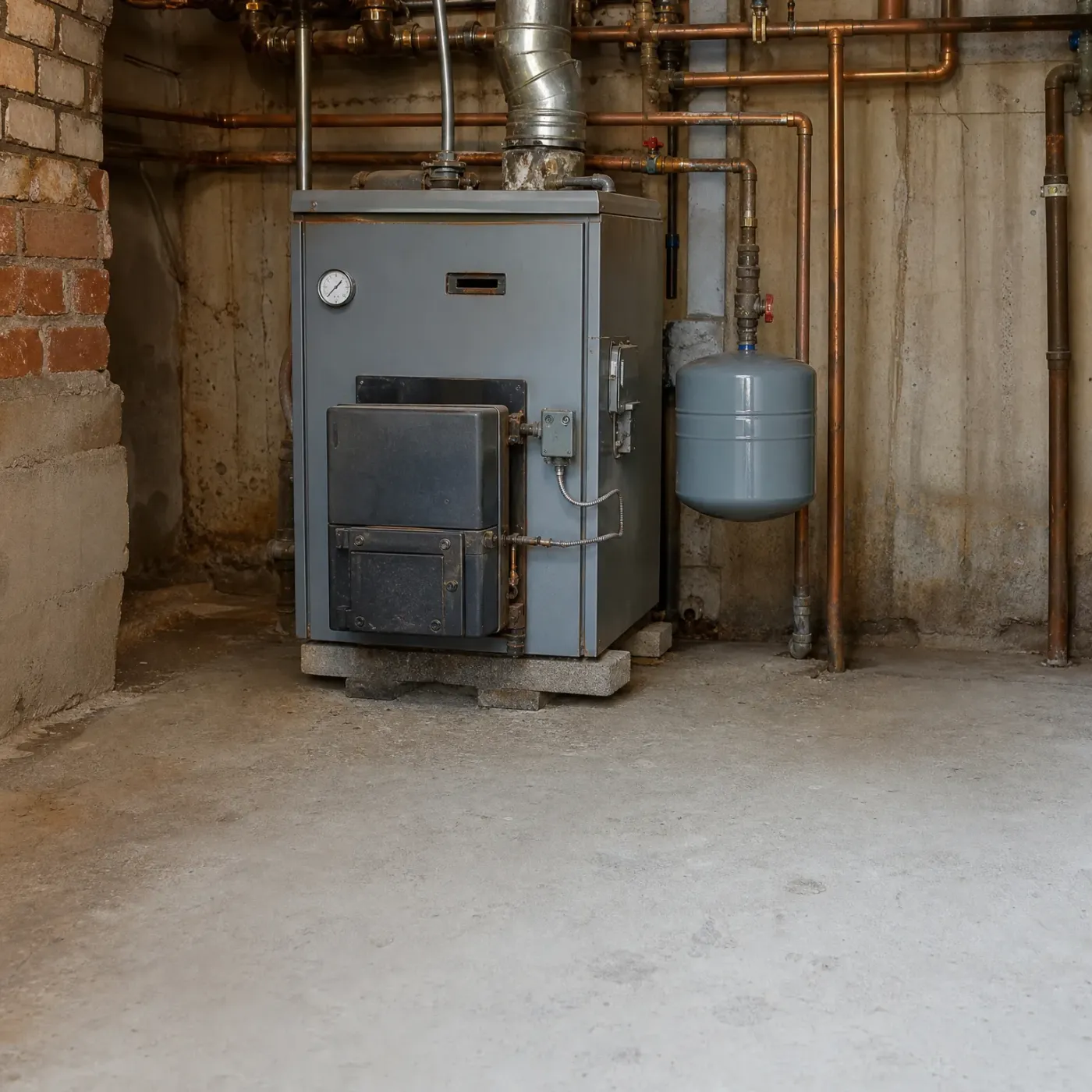
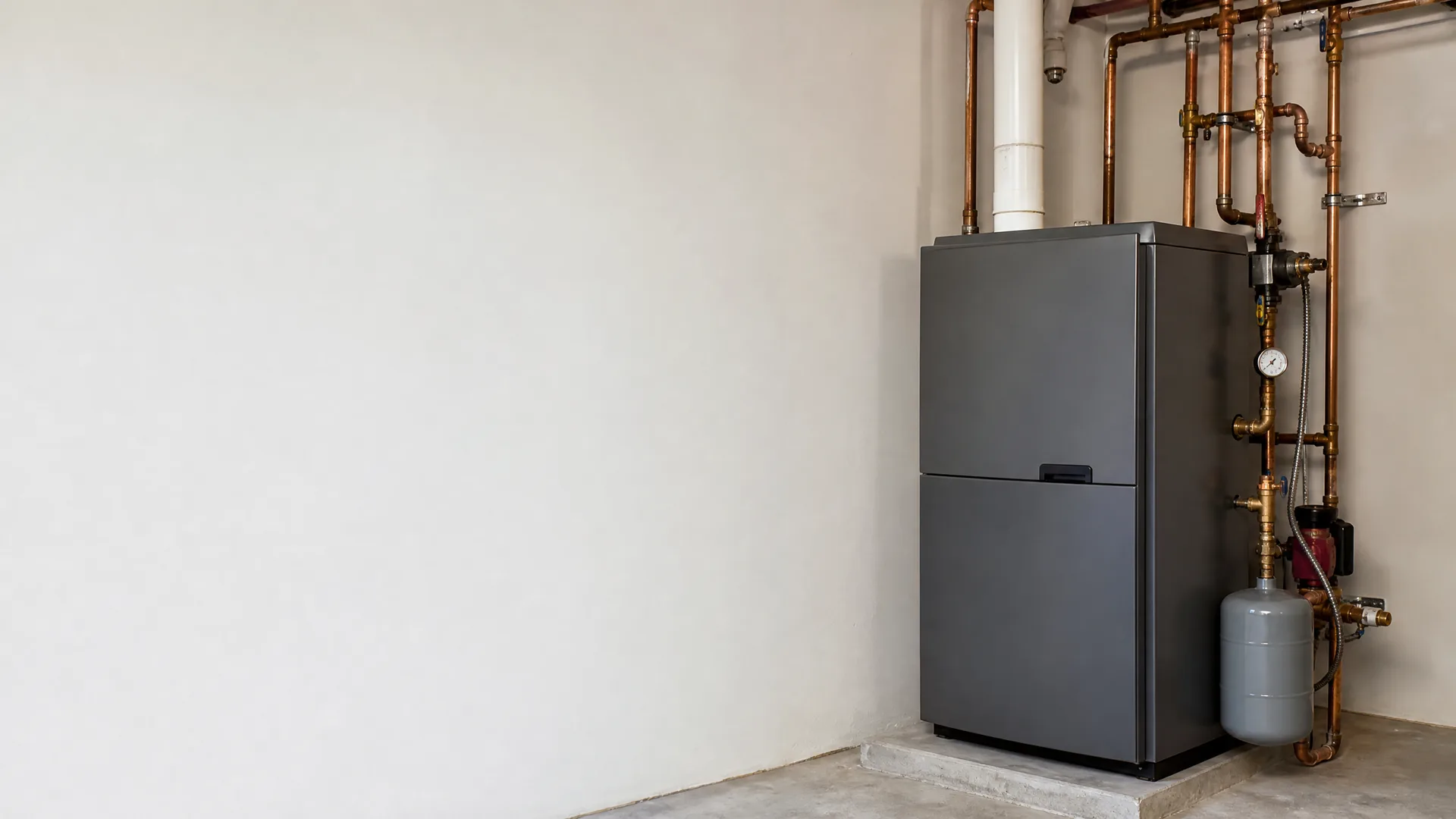
A dark grey boiler unit stands on a concrete pad against a plain light wall, connected to copper pipes, a pressure gauge, a pump and a grey expansion tank.

Why it gets worse, not better

Buildup inside a heat exchanger doesn't clear itself out. Each winter it runs, the same spot heats unevenly and the banging shows up sooner in the cycle. Maine's oil-heavy heating load means these boilers run hard from October through April, so a noise that starts faint in November is often loud by January. Left alone, the uneven heating stresses the same section of metal repeatedly, and that's where cracks tend to start.

A woman in a cream sweater and jeans stands in the open doorway of a white stucco house, holding the dark door, while a man in a dark quilted jacket seen from behind walks toward the entry past potted plants.

What it means for your house

A boiler that's kettling is working harder to heat the same water. Oil isn't cheap here, and a system fighting through scale burns more of it to get the house to temperature. You might notice the bang getting louder over a few weeks, or the rooms taking longer to warm up than they used to. Neither is something to wait out.

Left alone, that buildup keeps baking onto the heat exchanger, and the metal underneath takes the stress of it. A cracked exchanger is a different repair than a descale, and a much bigger one. If you'd rather deal with this now than find out the hard way in January, send the details through and a contractor who works on oil boilers in Maine will reach out to look at what's actually going on in yours.

A living room corner with a beige sofa and cushion, a round wooden coffee table holding a pale ceramic vase of eucalyptus stems and a wooden bowl, and a curtained window with a potted plant above a latticed radiator cover in the background.
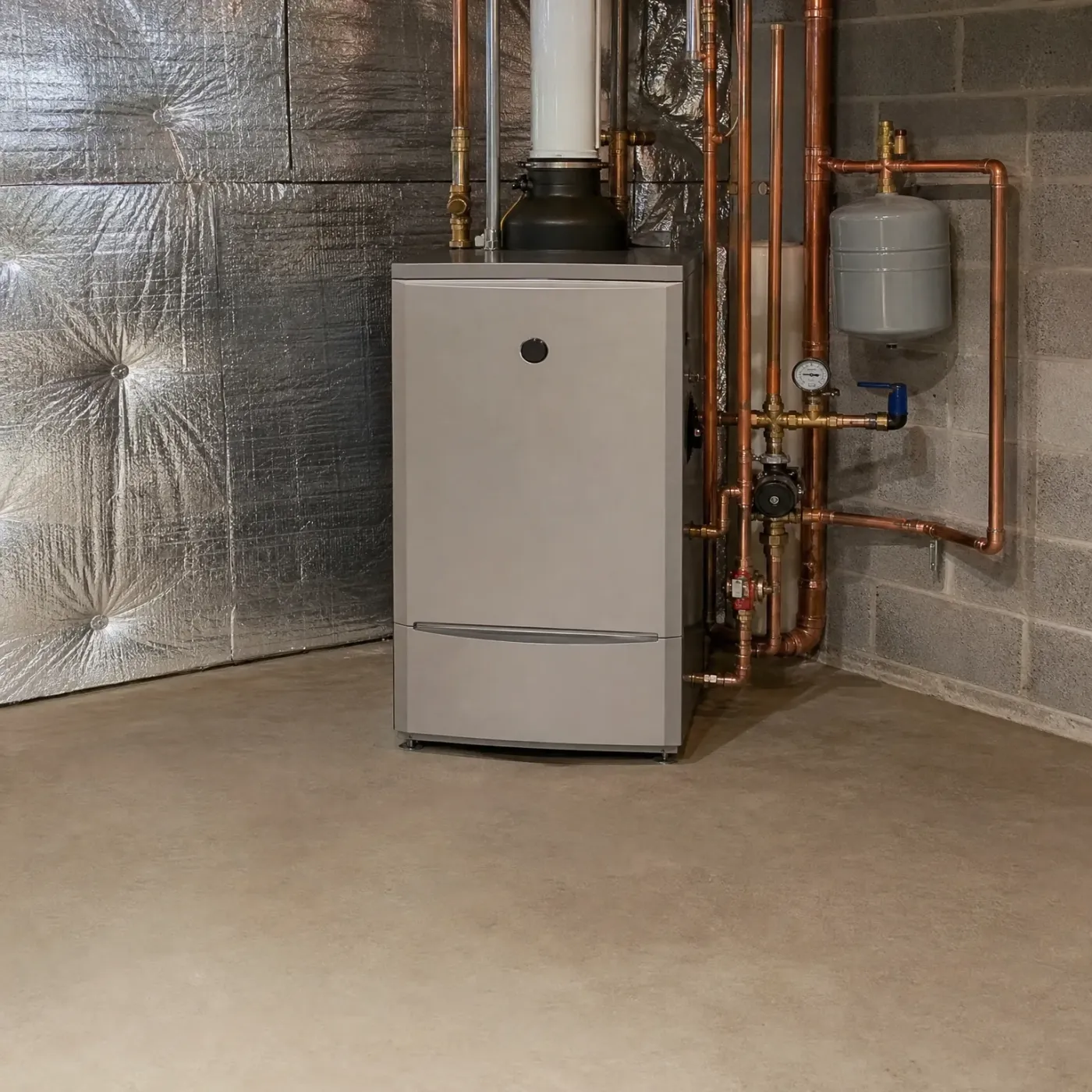
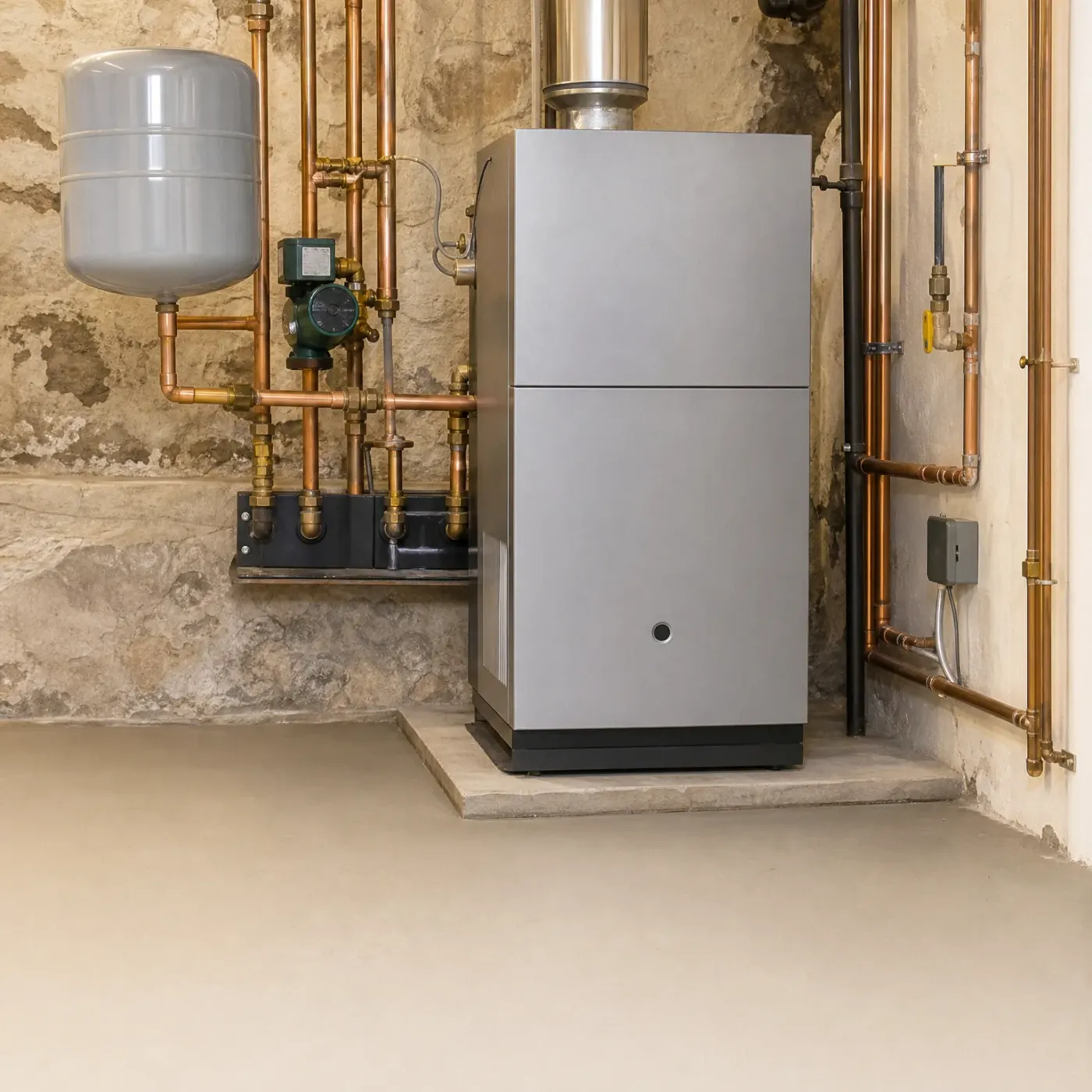
A gray boiler unit with a flue pipe stands on a concrete pad in a basement, surrounded by copper piping, a circulator pump, an expansion tank mounted on a stone wall, and an electrical outlet.

Running clean

Water moves through the exchanger without a fight. The pump pushes it along the copper loop, the expansion tank handles pressure changes, and the flue carries exhaust straight out. No banging, just the quiet hum of the burner cycling on and off.
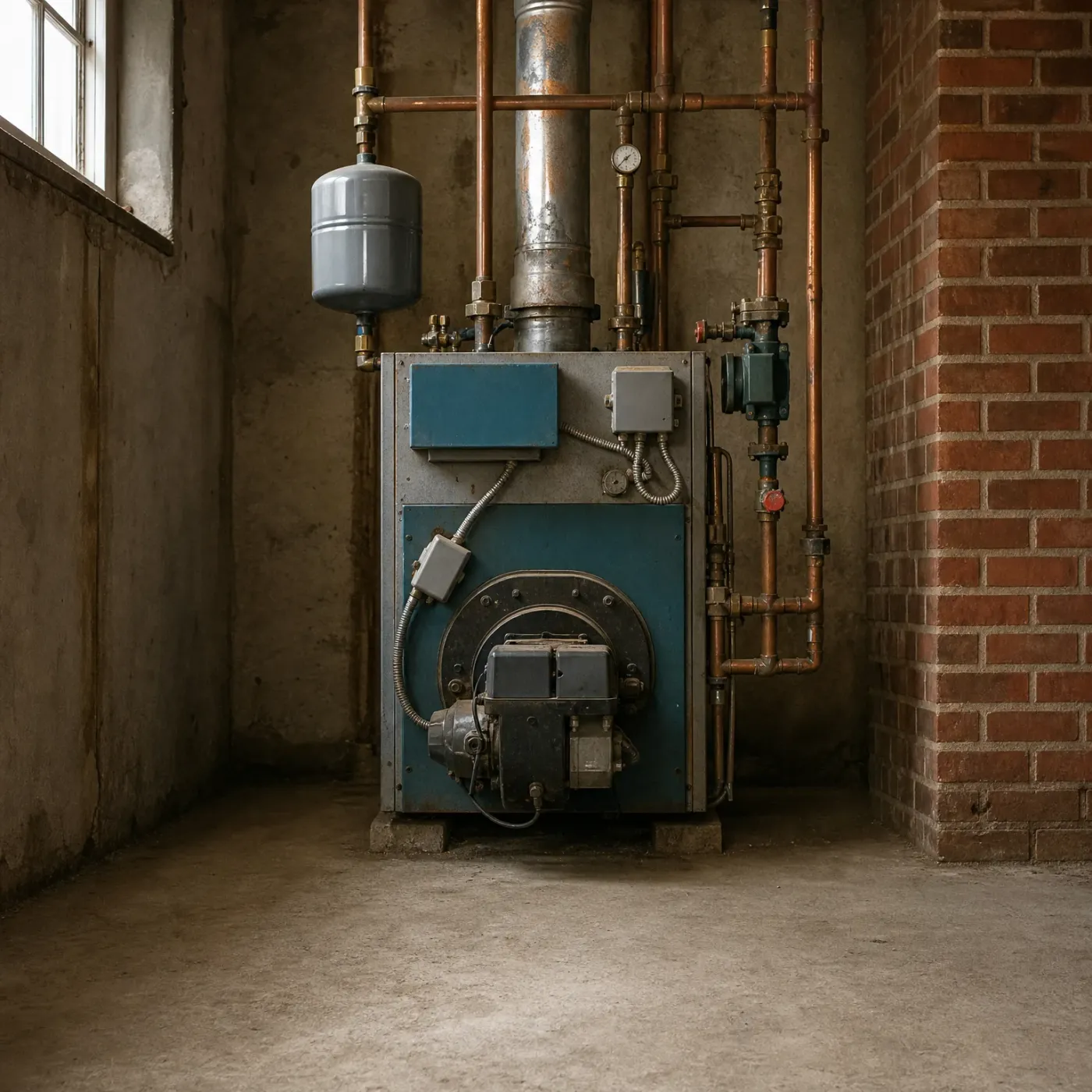
A blue cast-iron boiler with a burner unit, gauges and copper piping stands in a concrete-floored basement room beside a red brick pillar and a window.

Fighting scale

That same oil-fired unit now has buildup lining the exchanger walls. Water trapped under it flashes to steam and collapses with a bang you can hear from the next room. The gauge and valves still look fine from the outside. The damage is inside, where you can't see it.

Flush It Now or Let It Ride

Flush the exchanger

  • A contractor can descale the heat exchanger and clear whatever's built up inside it, which stops the steam pockets from forming in the first place.
  • This is the fix if the bang only started recently and the boiler ran quiet for years before it.
  • It costs less than letting the scale keep building, since a contractor caught early means less metal has been stressed by the banging.
  • Oil-fired systems here run hard through the winter, so a flush now means less strain on the exchanger through the months it's working the most.
  • Once it's done, the boiler goes back to heating water the way it did when it was new.

Let it keep banging

  • The bang doesn't go away on its own. Scale doesn't dissolve just because the boiler keeps running through it.
  • Each cycle adds more buildup, so the noise usually gets louder over time instead of staying the same.
  • A boiler fighting through scale burns more oil to hit the same temperature, and that shows up on the next delivery.
  • The metal around the steam pockets takes a beating every time it bangs, and a cracked heat exchanger costs far more to deal with than a flush would have.
  • Waiting through a Maine winter with this running in the background means paying more for oil the whole time it sits unaddressed.
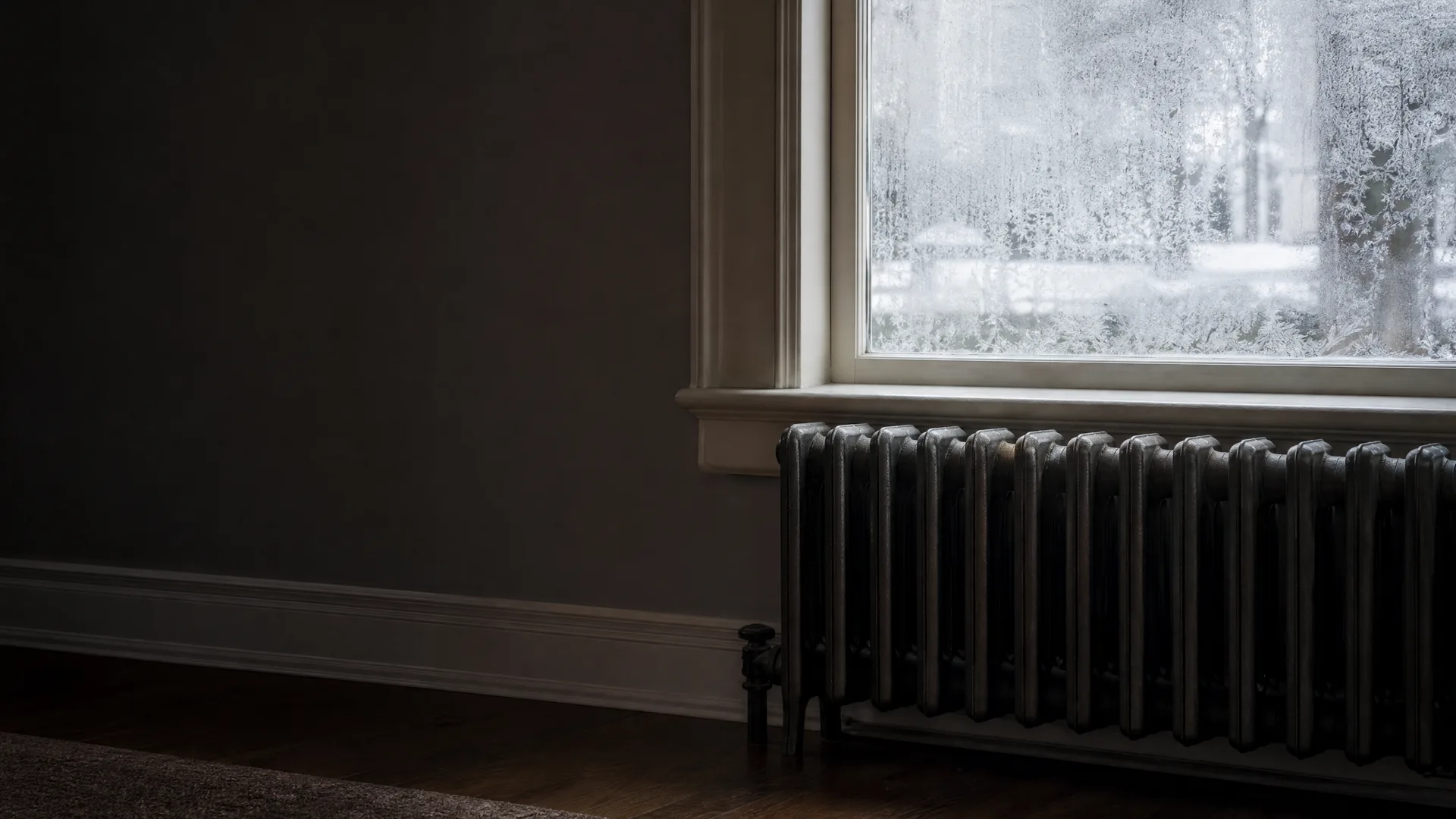
A cast iron column radiator with a valve stands beneath a window with a frosted pane showing snowy trees outside, in a dim room with dark walls and wood flooring.

The radiator under the window has frost feathered on the inside of the glass above it, and you're standing there in your socks because the floor near the kitchen is the only one that feels warm. The bang comes from down in the cellar where the boiler sits, loud enough that you hear it through two floors. It's early, the kind of January morning where the oil truck's been by twice already this month. You've already decided you're not waiting on this one. You picture the bill if it keeps eating fuel at this rate, and you go find your phone before the coffee's even done.

Get your boiler to the right pro

Send the request today and let a boiler pro reach out to you.

There's no charge for the request.

How Scale Causes Kettling

  • Scale forms where the water sits hottest, right along the exchanger walls closest to the burner flame.
  • Each bang is a pocket of steam collapsing back into water the instant it hits cooler water nearby.
  • A clean exchanger lets heat move evenly into the water, so it never gets hot enough to flash to steam.
  • The sound usually shows up on startup because that's when the burner is pushing hardest against the buildup.
  • Oil-fired boilers run hotter at the exchanger than most gas units, which is part of why Maine systems kettle.
  • Scale builds slowly, so a boiler can run years before the bang ever starts.

Water inside the boiler moves constantly past the exchanger, but scale doesn't move. It sits on the metal, closest to the burner flame, where the water runs hottest. That layer acts like a blanket. Heat from the flame can't pass through it evenly into the water anymore, so it piles up right at the exchanger wall. The water trapped against that hot spot gets hot enough to flash into steam, even though the water just an inch away is still well below boiling. The steam pocket doesn't last. It hits that cooler water and collapses back into liquid almost instantly, and that collapse is what you hear as a bang. It happens over and over, fast, which is why kettling sounds more like knocking than one single noise.

Startup is when it's loudest because that's when the burner is working hardest, trying to bring the water up to temperature through a layer of scale that's blocking the heat. Oil-fired boilers run their exchangers hotter than most gas units do, so the water near that surface gets closer to flashing point to begin with. Add scale on top of that and it doesn't take much to push it over.

None of this happens overnight. Scale builds up slowly, mineral by mineral, over years of normal operation. A boiler can run quiet for a long stretch before the buildup finally gets thick enough for the banging to start.

A gray residential boiler in a basement corner with copper piping, a circulator pump, pressure gauge, blue-handled valve and gray expansion tank against a concrete block wall, next to a foil-insulated wall.
Water moves through the exchanger without a fight, the pump pushing it along the copper loop at a steady pressure the gauge holds flat.
A gray boiler on a concrete block base in a basement, with copper piping, a metal flue, and a gray expansion tank mounted beside it against a concrete wall.
Scale narrows the path inside the exchanger until steam pockets form and slam against the metal every time the burner fires.
  1. Scale builds up along the exchanger walls closest to the burner flame

  2. Water trapped against that scale overheats faster than water around it

  3. Trapped water flashes into a steam pocket against the hot metal

  4. The pocket collapses back into water when it hits the cooler flow

What you're probably hearing and seeing right now

The bang usually comes right after the burner fires, a few knocks or a sharp clank from the cellar before things settle into a quieter cycle. Some homeowners hear it more on the coldest mornings, when the boiler is working hardest to bring the house up to temperature. You might also notice a radiator or baseboard that used to heat fine now running lukewarm, or the burner cycling on and off more than it used to. Left alone, the scale behind the noise keeps building, and the exchanger keeps losing ground against it. That means more oil burned for the same heat, and eventually a bang that doesn't stop when the water warms up.

A woman in a cream cowl-neck sweater sits by a window with snow outside, in a dimly lit living room with a sofa, lit lamp, mirror, candles and a fireplace.
A woman in a gray turtleneck sweater sits beside a large window looking out at snow-covered evergreen trees, in a dimly lit living room with a lit fireplace, lamps, couch and houseplant.
A woman in a cream turtleneck sweater stands beside a large window with snow-covered ground and bare trees outside, in a dimly lit living room with lamps, a sofa and framed art.
A woman in a grey cowl-neck sweater stands indoors near a window, looking out at falling snow, with a lamp, framed picture and couch in the warmly lit room behind her.
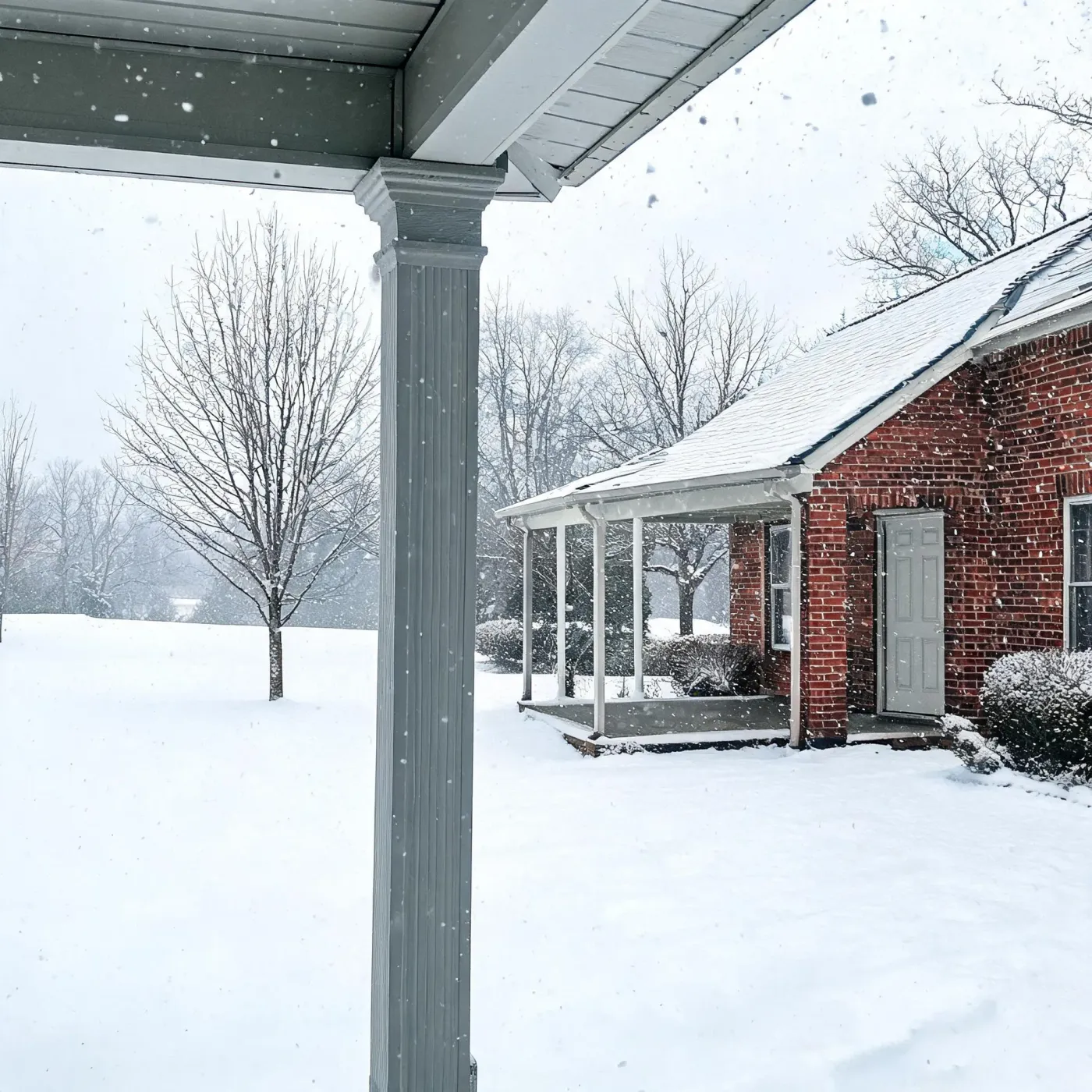
View from under a covered porch with a gray square column toward a red brick house with a white-columned porch and gray door, with falling snow covering the yard, roof, and bare trees.

Winter nights average 13°F statewide, according to NOAA. At that temperature your boiler isn't cycling on and off a few times a day, it's running long stretches to keep ahead of the cold, and it's running them on the coldest nights for hours at a stretch. That's exactly when scale-choked spots in the exchanger get hottest and the banging shows up loudest, usually right as the burner fires and the water nearest the scale flashes to steam fastest. If you've only noticed the noise since the cold really set in, that's why. A clean exchanger handles a long oil-fired run without complaint. One fighting scale works harder to do it, on a night when you're already burning more oil than usual.

NOAA nClimDiv 1991-2020 county normals weighted by homes

A bearded man in a plaid flannel shirt stands in a kitchen looking out a window toward snow-covered shrubs, with a steaming mug on the windowsill and potted plants on a shelf behind him.
A smiling man with dark curly hair in a navy t-shirt sits on a gray couch indoors, with a large-leafed plant and a window in the background.

Winter nights average 13°F statewide

At 13°F your boiler is leaning on that scaled-up exchanger for hours at a time, not just a few minutes here and there. Every one of those long runs is more chances for steam pockets to form and bang. The coldest nights are when you'll hear it most.

NOAA nClimDiv 1991-2020 county normals weighted by homes

The bang is scale on the heat exchanger making steam pockets that collapse against the metal, and it gets louder and more frequent the longer it sits. That's the whole answer. It won't fix itself, and running the boiler through another cold Maine stretch on a scaled exchanger just means more oil burned for the same heat. A flush clears it if the noise is new, a cleaner-running system is the goal either way, and a contractor can tell you which one you need once they've seen it. Send the form and that part stops being yours to figure out. You won't be left searching through listings or making calls trying to find someone who works on boilers. Someone gets matched to your situation and reaches out to you. The noise in the cellar gets handled by somebody who does this for a living, not by you standing over the boiler trying to guess what's wrong with it.

A sunlit room corner with cream walls, white baseboard and window sill molding, a wood floor, and a dark wooden cabinet on the right holding a pale vase with leafy branches below a framed picture.
A round woven basket with a cream fringed throw draped over its rim sits in a corner on a wood floor, beside a dark wooden cabinet holding a stone vessel, with sunlight from a nearby window on the beige walls.
Interior corner of a room with a white-trimmed window and sill, beige walls, white baseboard molding, and a wood floor with sunlight falling across it; green foliage is blurred outside the window.
Interior corner of a room with cream walls, white baseboard molding, a window with a white sill showing blurred green foliage outside, and a wood plank floor lit by sunlight.
Sunlit interior corner showing a beige wall with a small crack above white baseboard molding, wood plank flooring, a patterned rug edge at lower left, and a window with sill at upper left.

The right pro for this job

Get the boiler repair search off your mind today.

Send it today

You only hire the pro if you want to.