Tell a local repair pro what your boiler is doing.
A boiler that shuts off on its own, over and over, is telling you something specific. It might be the pressure, a flame sensor, the aquastat, or air trapped somewhere in the lines. Most of these systems here run on oil, and an oil-fired boiler has its own list of parts that cause this exact complaint, from a dirty nozzle to a failing igniter. The fix depends on which one it is, and that takes someone looking at your system, not a guess from a search page.
Right now you're probably weighing whether to start calling oil companies and repair outfits around Maine, explain the shutoffs to the first one, then do it again for the second and third to see who can even get to you this week. That's real time, and heat that keeps cutting out in the middle of winter isn't something you want to sit with while you sort through callbacks.
This page skips that part. Tell it what's going on with your boiler and you get matched with a contractor who works on these systems and knows what a repeating shutoff usually means on an oil-fired unit. They'll reach out to you directly, so you're not the one chasing down quotes or repeating the same explanation to five different voicemails.
Electricity here costs more than in most of the country, so a boiler that's short-cycling or shutting down and restarting isn't just annoying, it's running up a bill while it struggles. And with oil heat, a problem that starts small, like a clogged filter or a failing igniter, tends not to stay small once the weather turns cold and the system is running for hours at a stretch.
You don't have to figure out which part it is before you ask for help. That's the point of handing it to someone who already knows oil boilers and has seen this particular complaint before. The next step is just telling the page what your system is doing.
Why does my boiler keep shutting off by itself?
You've reset it once or twice already and it keeps happening. A boiler that shuts off on its own and won't stay running is doing it for a reason, even if that reason isn't obvious from the thermostat or the panel. You want to know what's actually going on before you decide whether this is a quick fix or something that needs a tech out to the house.
Usually a safety control doing its job, not a random failure
A boiler that keeps shutting off is almost always a safety switch tripping on purpose. Low water pressure, a flame that won't sense right, or a limit switch reading the water too hot will all make the system cut itself off rather than keep running. On an oil-fired boiler, a dirty nozzle or a bad igniter can cause the same shutdowns, and most boilers in Maine run on oil. None of this means the boiler is finished. It means something upstream of the burner isn't passing the check the boiler is built to make before it lets itself fire, and that check needs a tech to find, especially with how much it costs to run one of these systems on backup heat while it sits broken.
Running the way it should
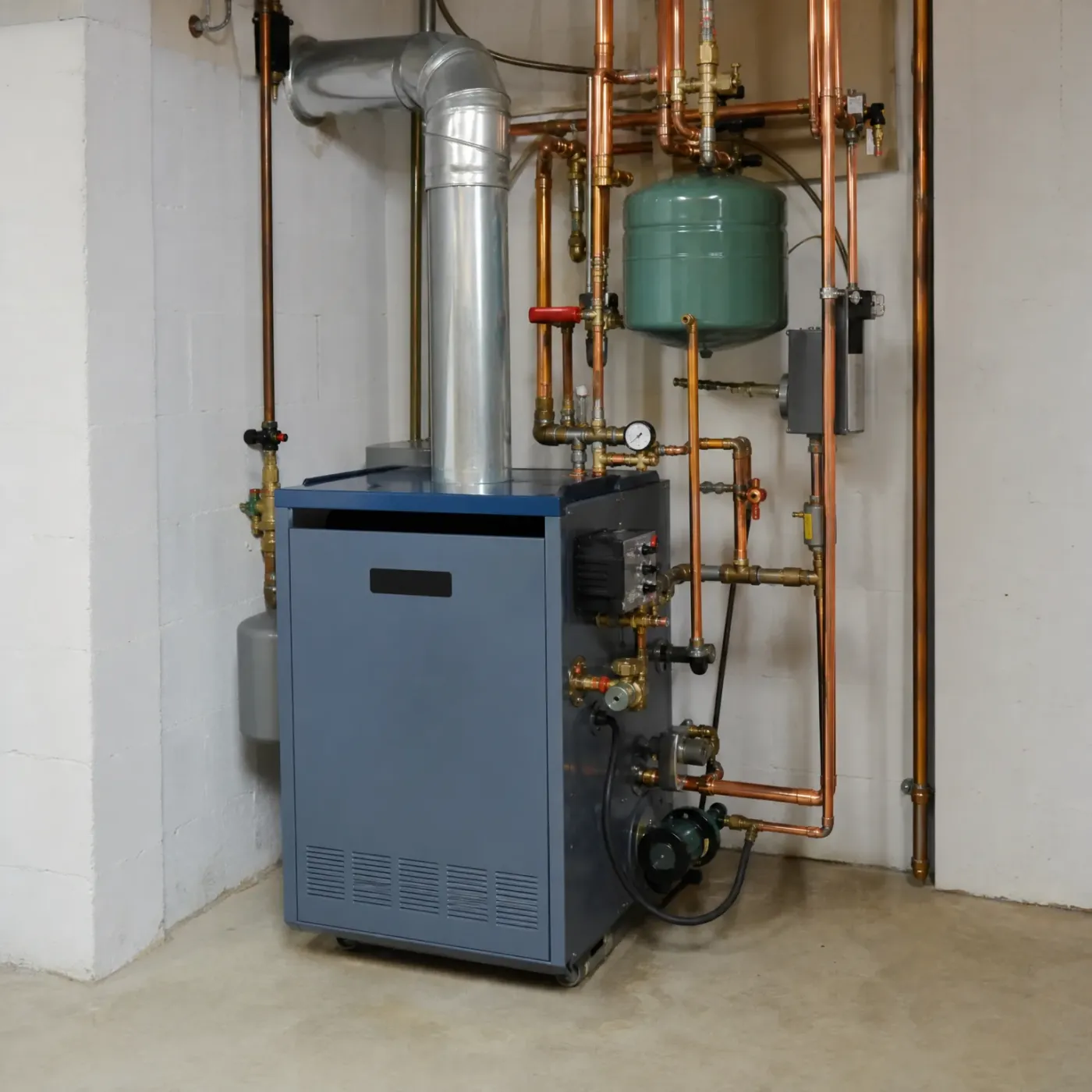
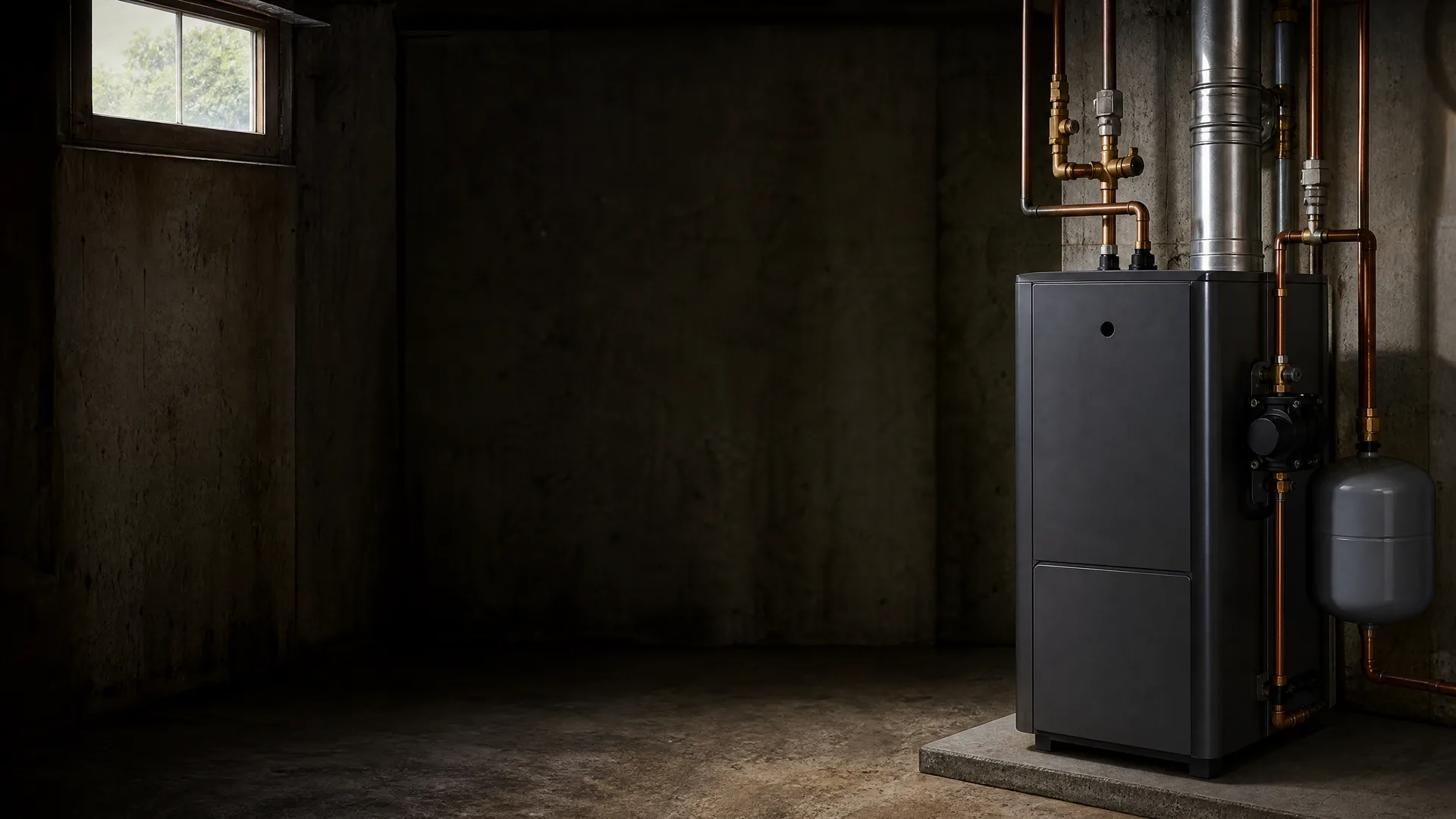
Steady heat, no short cycling, pressure holding where it belongs. The pump, the expansion tank, and the gauge are all doing their job, and the flue is pulling exhaust out the way it's supposed to. This is what lets a Maine house stay warm through a long cold stretch without you touching the reset button.
Shutting off on its own
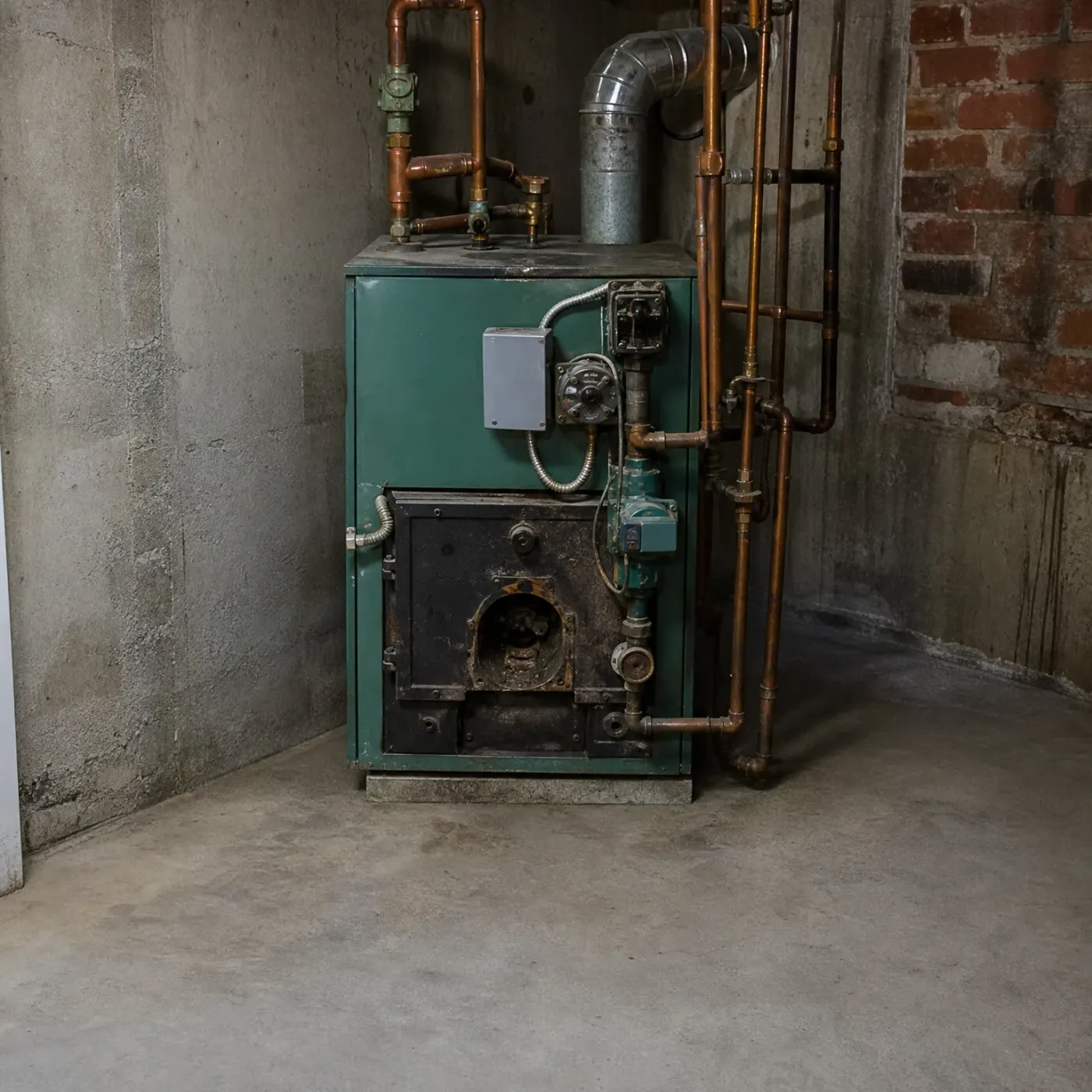
Corrosion like this inside the firebox changes how the burner fires and how heat moves through the unit. An old boiler in this shape can trip its own safety switches well before the thermostat is satisfied. By the time the door looks like this, shutting off isn't a glitch, it's the boiler protecting itself.
Why does it shut off, then come back on hours later?
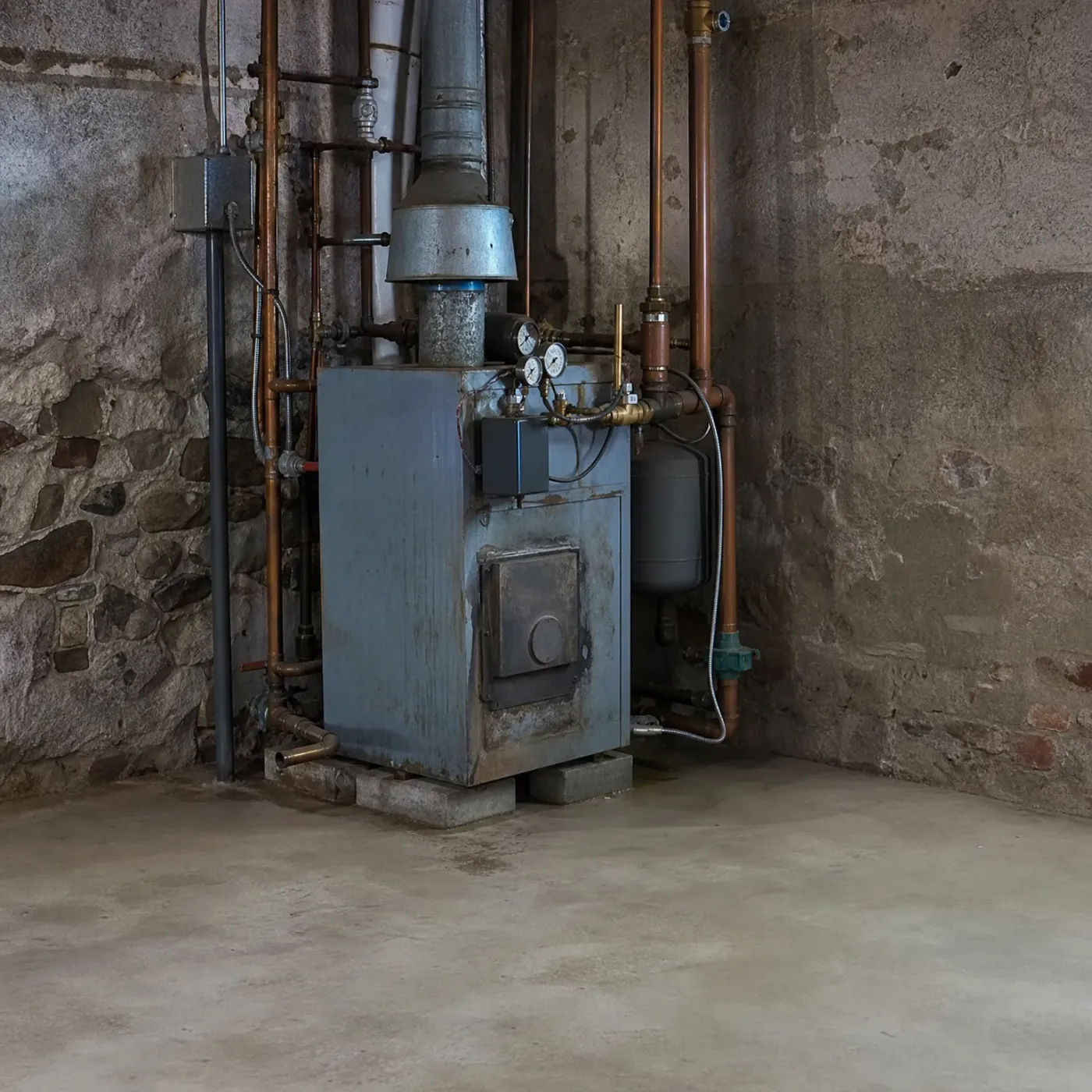
You hear the burner cut out, then nothing for a while, then it fires again on its own. Or you walk past it and notice the pressure gauge sitting low, or the water in the sight glass isn't moving. Maybe there's a smell near the burner, or a reset button you've pressed more than once this week. On an oil-fired system, soot around the inspection door or a smell of oil in the room means the burner isn't firing clean. A boiler that keeps dropping out can't hold a house at temperature through a cold night, and in a Maine January that shows up fast as rooms that won't warm back up, pipes that sit too close to freezing for comfort, and family members who notice before you do.
Fill out one short form instead of calling around.
You only hire the pro if you want to.
What the pressure gauge is telling you
A cold boiler should sit around 12 to 15 psi. If the needle drops below that while the system is cold, you're losing water somewhere, through a valve, a fitting, or the relief valve itself, and the boiler is cutting out on low pressure as it's built to do. If the needle climbs past 30 psi when the burner fires, the relief valve may open and dump water, which is the system protecting itself from a bigger problem. Either direction away from that resting range is worth paying attention to, because the boiler isn't shutting off at random. It's reading the same gauge you can.
Why oil adds its own failure point
A gas boiler can idle for weeks without much drama. An oil-fired boiler can't, because oil doesn't ignite the way gas does. It needs a motor spinning an igniter and a nozzle spraying fuel into exactly the right pattern, and if that pattern drifts even slightly, the flame sensor reads it as no flame and shuts the burner down. That's a safety built into every oil burner, not a flaw in yours. It's also why an oil boiler that keeps shutting off is often a nozzle or igniter problem first, not a thermostat or wiring problem, even though the symptom looks the same from the kitchen.
Called out once, fixed once
One contractor sees the pressure, the aquastat, and the flame sensor together and knows which one is causing the shutdowns before leaving your house.
Before you get your boiler repairAfter you get your boiler repair
You keep calling around, telling three or four companies the same thing about the shutdowns, then waiting to see who calls back and what they quote. Some weeks you're doing this while the house is cold.
You answer a few questions once and get matched with a contractor who already knows what's going on with your boiler before they knock. They call you. That's the part that stops being your job.
Winter nights average 13°F statewide
At 13°F, a boiler that keeps shutting off isn't a minor nuisance. It's working against a real load, and every time it cuts out the house has longer to cool before it fires back up. A short cycling problem matters more on a night like that than it would in October.
NOAA nClimDiv 1991-2020 county normals weighted by homes
A boiler that keeps shutting off is low on pressure, stuck on a bad aquastat or flame sensor, or choking on air somewhere in the lines. One of those is doing it, and a contractor who's seen Maine oil boilers can usually tell which by looking at the pressure gauge and the burner together. What it shouldn't take is you doing the diagnosing: checking the gauge yourself, resetting the switch, calling one company after another and repeating the same story about the shutdowns each time, then sitting with a stack of quotes trying to guess which one is right. Getting matched with a contractor who takes on your specific situation means you explain it once, to one person, and they come to the house already knowing what to check first. The boiler still has to be fixed. But the part where you track someone down ends here.
A pro who works on boilers
Skip searching for a boiler pro and answer a few questions instead.