





Why your boiler is leaking water in Maine

Step 1 of 3: Equipment

Why is my boiler leaking water?

A leak under your boiler usually shows up slow, a damp spot on the floor or a drip from a pipe joint you notice while you're down in the basement checking on things before bed. With oil heat running most homes here and winters long, a boiler that's losing water isn't something to watch for a few weeks and see what happens.

Most often it's a worn valve, a loose fitting, or too much pressure built up inside

The pressure relief valve is the most common source. It's built to open and let water out when pressure inside the boiler climbs too high, and once it's worn or the pressure keeps climbing, it drips or runs steadily. Fittings and unions loosen over years of heating up and cooling down, and a joint that was tight last winter can seep this one. Less often the leak is coming from inside the tank itself, where there's no fixing it, only replacing it. Where the water is showing up, at the valve, along a pipe, or pooling under the unit itself, points to which of these it is.

  1. Pressure builds inside the boiler as water heats and expands.

  2. The relief valve opens to release that extra pressure.

  3. Water drips down the pipe and lands on the floor below.

  4. A worn gasket or fitting lets water seep out at the joint.

Leaking Boiler: Wait or Call

Keep running it

  • The leak usually gets worse, not better, as the gasket or fitting wears further.
  • Water finding its way near electrical connections on the boiler raises the risk of a bigger failure.
  • A slow drip can rot the floor joists or subfloor underneath the boiler before you notice the damage.
  • Low water level from an ongoing leak can trip a safety switch and shut the whole system down on a cold night.
  • You keep topping off pressure or water, which only buys time and doesn't stop the source.

Get it looked at now

  • A contractor can tell you whether it's the relief valve doing its job or a seal that's actually failed.
  • Catching a worn gasket early usually means replacing one part instead of a damaged boiler section.
  • You stop losing water and the oil burned to heat it, which matters with Maine power and oil costs what they are.
  • A working boiler through a Maine winter isn't something to gamble on once a leak shows up.
  • Once it's checked, you know if this is a quick fix or the start of something bigger.
A smiling man with dark curly hair in a dark green henley shirt sits on a light sofa in a living room with large windows, a lamp, shelving, a stone fireplace, and a bowl of popcorn in the foreground.
A smiling man in a dark long-sleeved henley shirt sits on a beige sofa in a living room, with a bowl of popcorn and a remote on the table in the foreground and shelves, a lamp, and a doorway behind him.
A smiling man with graying hair and stubble in a blue henley shirt sits on a gray sofa with cushions in a living room, with a bowl of popcorn on a wooden table in the foreground.
A smiling man in a dark green long-sleeve shirt reclines on a sofa in a dimly lit living room, with a bowl of popcorn on a side table in the foreground and a bookshelf, lamp, and houseplant behind him.

What am I actually seeing down there?

Go by what's in front of you. A puddle or a ring of rust-colored water under the boiler. A drip coming off a pipe fitting that leaves a wet streak down to the floor. The pressure relief valve might have a trickle running out of its discharge pipe, or you'll just find the floor around the boiler damp and cool to the touch. Sometimes it's a smell before it's a sight, a musty or mineral smell near the basement floor. With oil heat running through the cold months here, a boiler that's losing water can lose pressure too, and a boiler that can't hold pressure won't heat the house the way it should. Left alone, that water sitting on the floor can soften the wood underneath it over time.

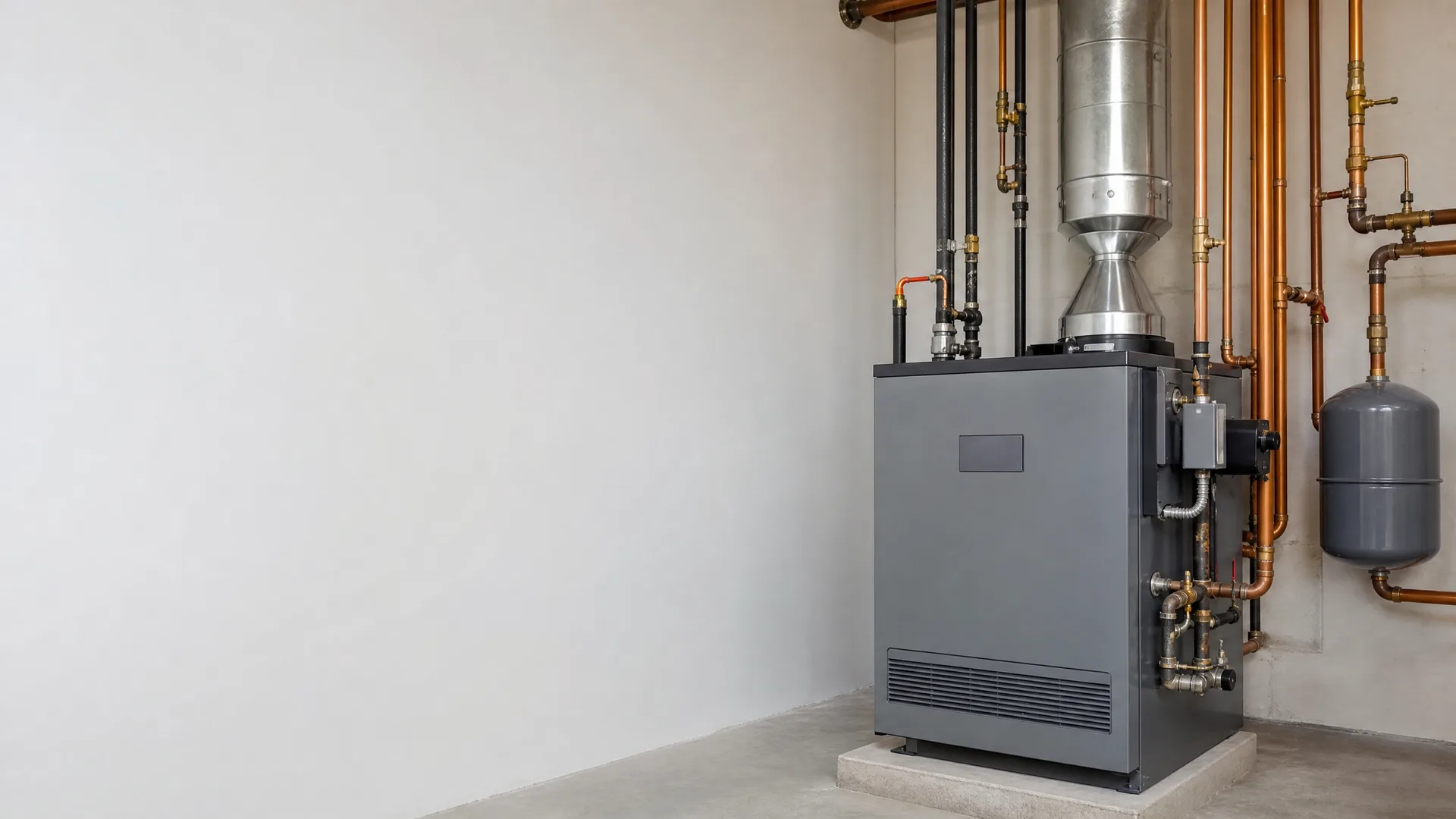
A gray floor-standing boiler with a metal flue stands against a concrete block wall, connected to copper pipes, brass valves and a gray expansion tank, on a bare concrete floor.

Running right

No puddle on the floor, no rust-colored ring, no drip tracking down a pipe toward the concrete. The pressure relief valve stays dry. The fittings and joints around the copper lines hold tight, and the expansion tank on the wall does its job without a trace of water finding its way out.

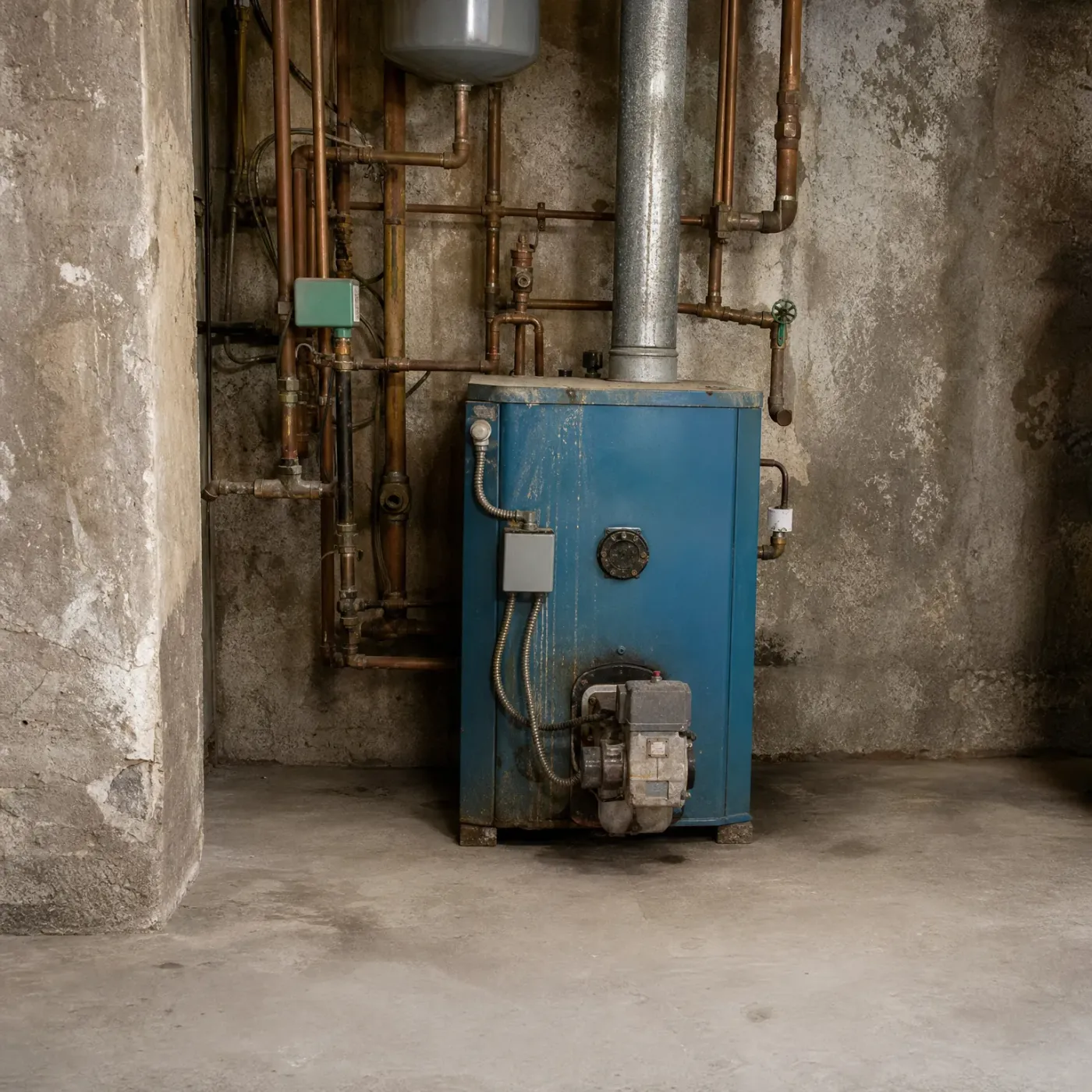
A blue oil-fired boiler with a burner unit and pressure gauge stands in a concrete basement corner, connected to copper pipes and a metal flue.

Leaking now

Water sits at the base of the unit or tracks down from a joint near the burner assembly. On an older oil-fired boiler like this one, the casing and fittings have had years to wear, and a leak here often means a gasket, valve, or fitting that needs a hand before the spot on the floor spreads.

A blue cabinet boiler with a metal flue pipe and copper piping stands against a bare concrete wall in a basement with a concrete floor.
Before you get your boiler repair
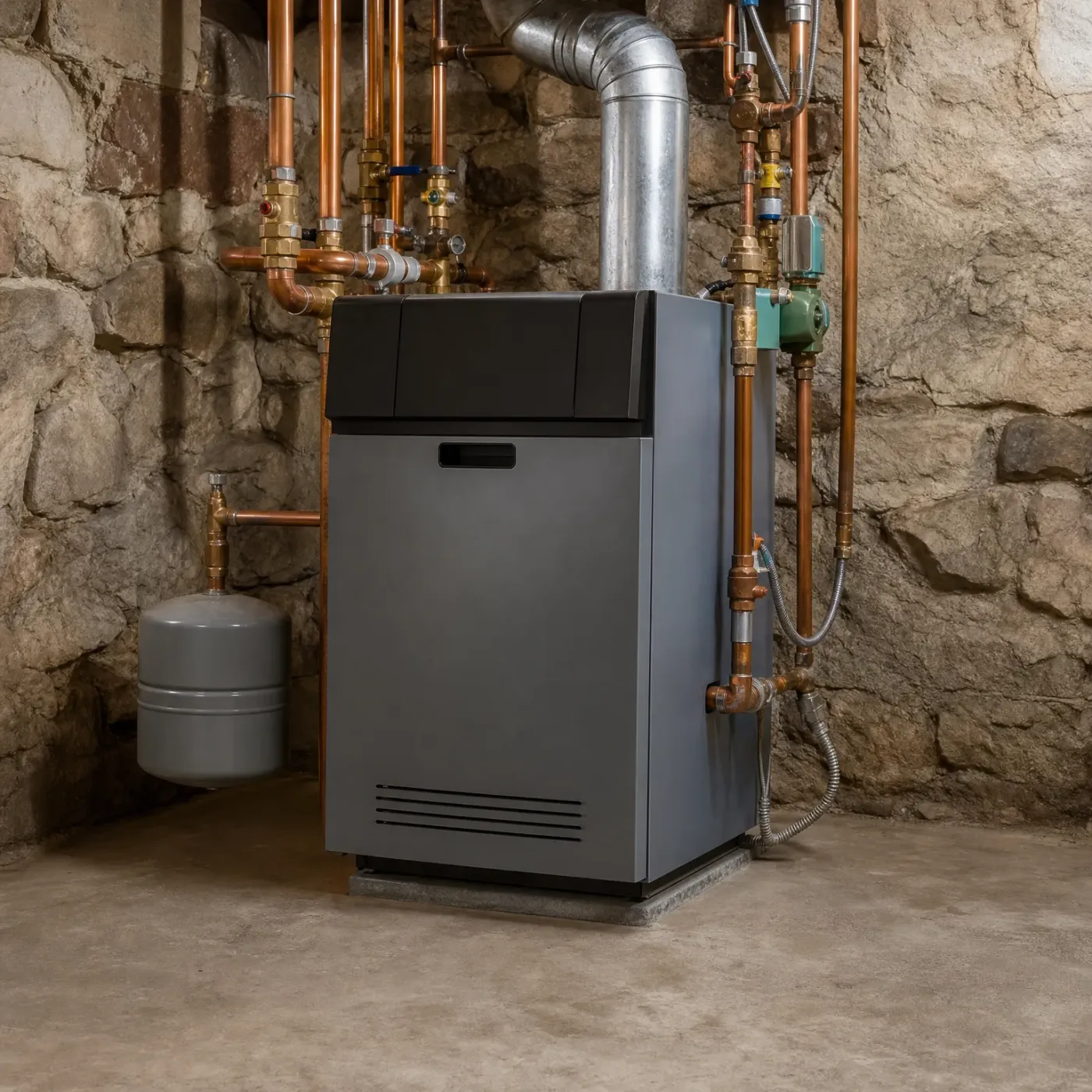
A gray residential boiler on a concrete pad in a basement with stone walls, connected to copper piping, brass valves, a circulator pump, an expansion tank, and a metal flue duct.
After you get your boiler repair
A dark gray floor-standing boiler on a concrete pad in a basement, surrounded by copper piping, brass valves, a gray expansion tank, a circulator pump, and a metal flue pipe against concrete block walls.

Holding steady

No drip at the relief valve, no rust-colored water pooling on the concrete. The copper lines, brass fittings and ball valves stay dry at every joint. The expansion tank and circulation pump do their job without anything weeping out around them.

A blue boiler on a raised concrete pad in a basement corner, with copper and steel pipes, a gauge cluster, an expansion tank, and a metal flue running up the bare concrete walls.

Something's wrong

Water has found a way out somewhere along that flue and pipe run, and it's tracking down to the floor below. Left alone over a Maine winter, that drip doesn't stay small, and it's sitting near wiring you'd rather it stayed away from.

Winter nights average 13°F statewide

On a 13°F night your boiler is cycling hard just to keep the house warm, and every cycle pushes pressure through that same worn gasket or fitting. A leak that's slow in October won't stay slow once nights settle into the teens.

NOAA nClimDiv 1991-2020 county normals weighted by homes

A woman in a dark gray sweater reclines on a couch with her eyes closed and a knit blanket over her lap, an open book resting face-down in front of her, with a lit table lamp and shelving blurred in the background.
A bearded man in a dark navy sweater over a collared shirt smiles and looks off to the side while seated at a dinner table with a glass of red wine, a lit candle, and a plate of food in the foreground of a dimly lit room.
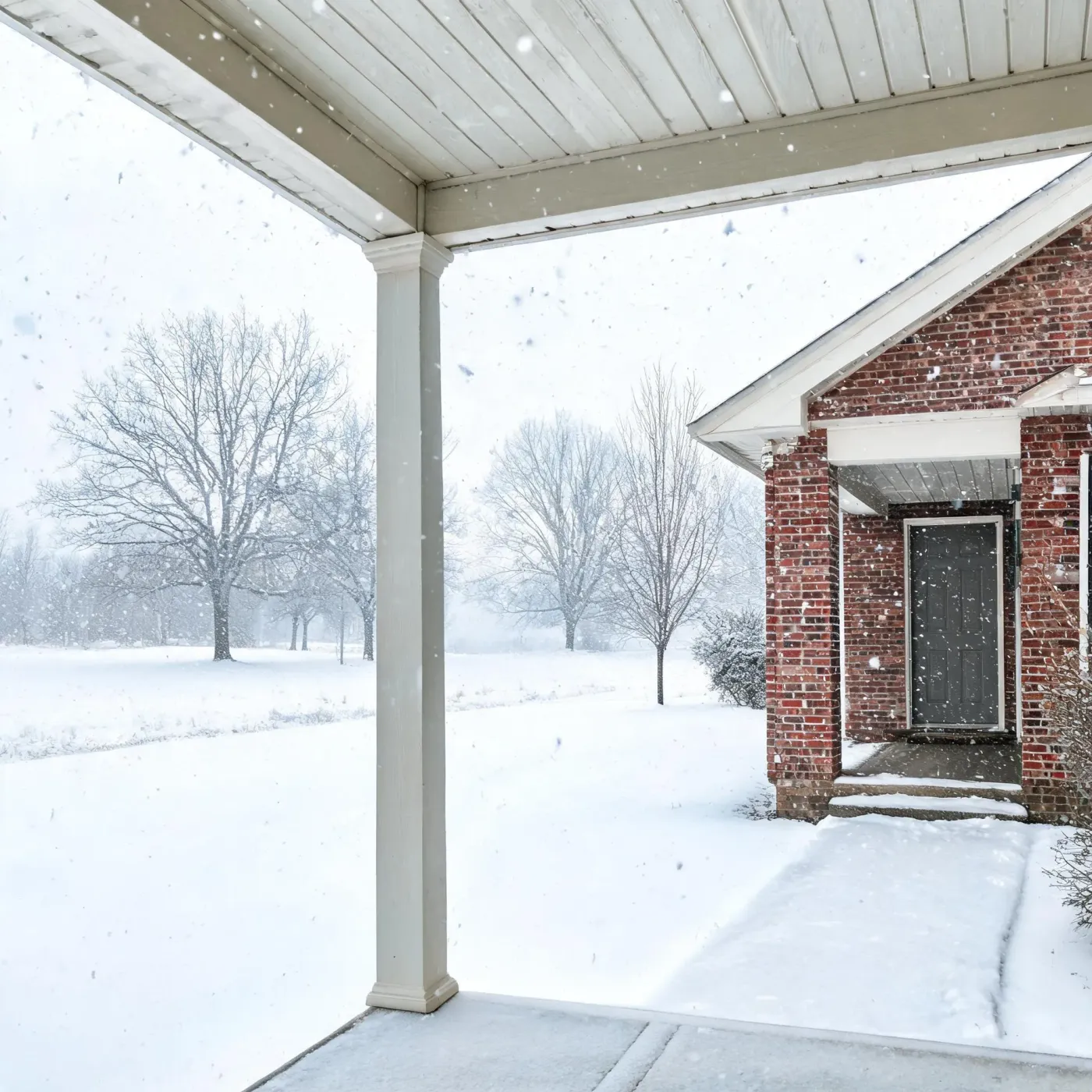
View from under a covered porch with a white column toward a red brick house with a dark door, with falling snow, snow-covered ground and bare trees in the background.

Maine winter nights average 13°F statewide, per NOAA. At that temperature your boiler is firing often, and every firing cycle runs more hot water through the same gasket or fitting that's already weeping. A leak that's a small drip in October tends to turn into a steady run once the cold settles in for good. You'll likely notice it as a faster-growing puddle, a louder drip, or the boiler losing pressure between checks instead of holding steady for days. Once that's happening, you don't want to spend the evening calling around to find out who's free. Send the request once and let someone else chase down the right contractor while you keep an eye on the floor underneath.

NOAA nClimDiv 1991-2020 county normals weighted by homes

Hand off the search today

A boiler that's already dripping in October isn't going to fix itself before the cold sets in for good. You could start calling around, but finding someone who works on boilers specifically, not just furnaces, takes time you don't have while that leak keeps tracking down the pipe. Most homes here run oil heat, and a leak near the burner or the lines feeding it isn't something to leave for later. Send the request and you're done with the search part. No calling three or four places, no explaining the same drip and the same rust-colored puddle over and over, no sorting through quotes trying to guess who actually knows boilers. One contractor gets your information and takes it from there. With the kind of nights Maine gets once winter settles in, you want that leak looked at while it's still just a leak, not after the relief valve finally gives out on a night in the teens.

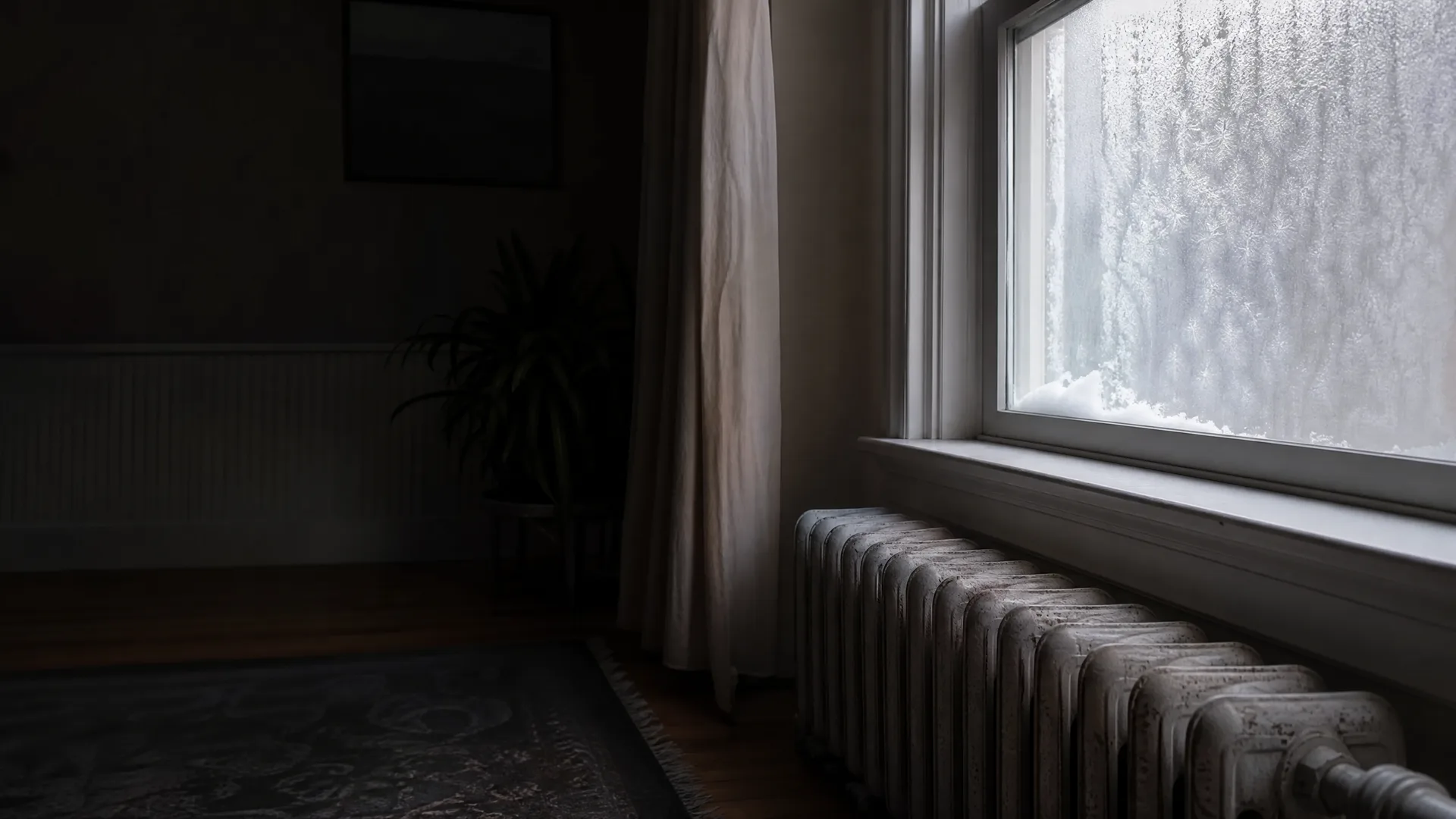
A dimly lit room with a cast-iron column radiator beneath a wide window covered in frost and snow, with a pale curtain, a potted plant, and a patterned rug on a wood floor.

It's just past six and still dark outside. You're down in the living room with coffee before anyone else is up, and the radiator under the window has a crust of ice on the inside of the glass above it. The cast iron feels warm under your hand, but there's a thin line of rust-colored water tracking down one leg and pooling on the floor. You press a sock against it to keep it from spreading toward the rug. Outside, the thermometer on the porch post reads 13. You'll call someone before you head to work.

A closed silver laptop and a glazed ceramic mug on a wooden table, with a blurred kitchen counter, potted plant, cutting board and window in the background.

What a leak in the basement actually costs you

A boiler leak doesn't stay a basement problem. Water finding its way across the floor toward where the oil line or electrical panel sits is the kind of thing that turns a repair into something bigger, fast. And every gallon that drips out is a gallon your boiler reheats from cold, which matters when you're already paying some of the highest electric rates in the country to run the circulation pump and keep the system firing on oil through a Maine winter.

You don't have to spend your evening on the phone finding out who actually works on boilers, not just furnaces, and who can get to your house this week instead of next month. You don't have to call three places, explain the puddle and the rust ring and the drip at the fitting each time, then sit with three quotes trying to guess which contractor is worth trusting. Send the form once. The search for someone qualified stops being your job.

Interior corner of a dining room with a round wooden table, a ceramic vase holding olive branches, a dark spindle-back chair near a curtained window, and a sideboard with a lamp against beige walls.
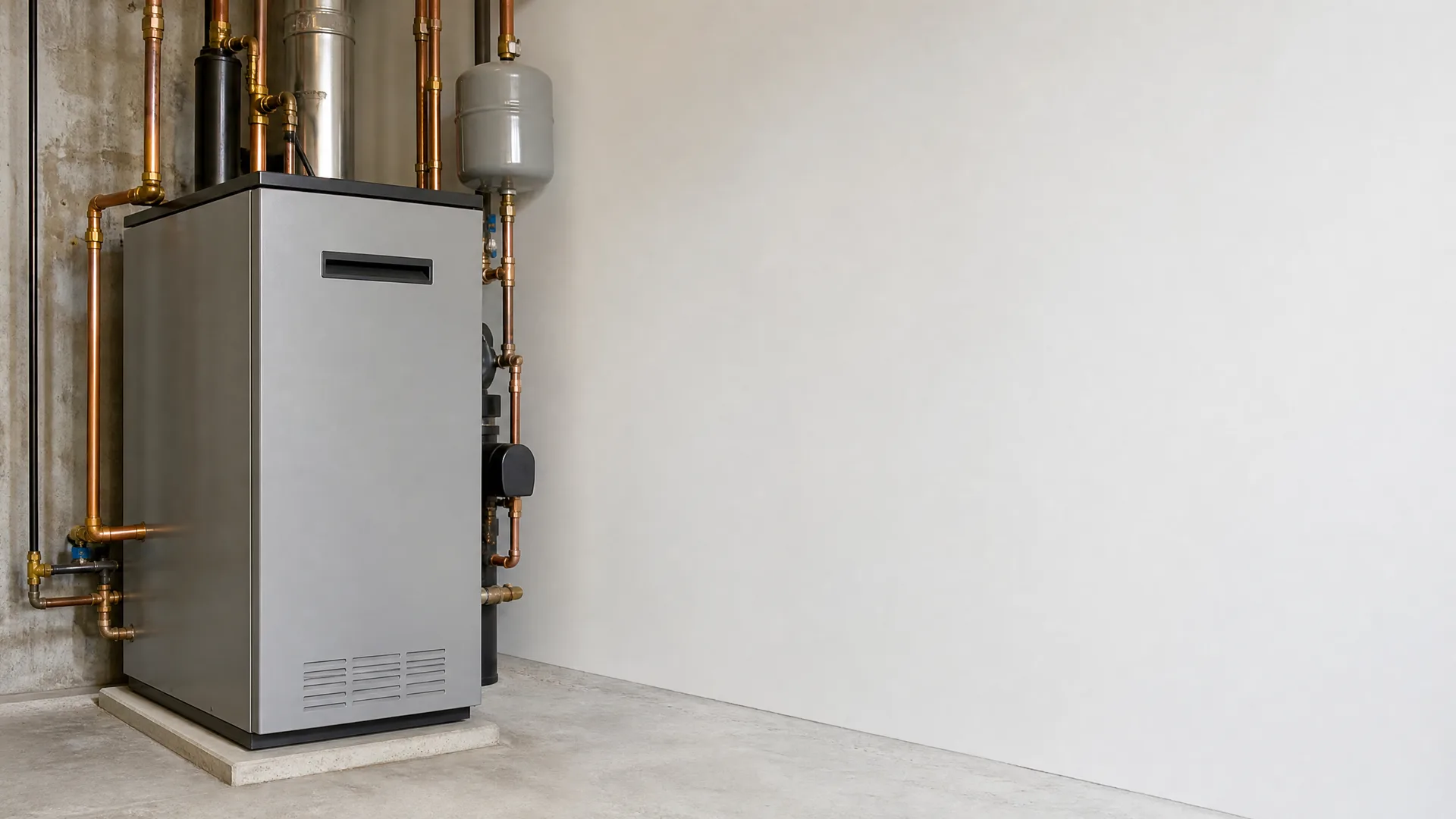
A gray floor-standing boiler on a concrete pad in a bare room, connected to copper pipes and an expansion tank against a plain light wall.

Catch it before you call

Shut off the power switch to the boiler first, it's usually a red switch at the top of the basement stairs or right on the unit. Close the valve on the oil line if you can get to it without trouble. Set a bucket or a few towels under the leak so you're not stepping in it later tonight. None of this fixes the leak. It just buys you a few hours without more water on the floor or near the electrical panel.

A gray boiler on a concrete pad in a plain room, connected to copper and black pipes and a stainless steel flue.

What waiting actually means

Right now it's a form and someone else does the calling, the checking who's licensed, the explaining the problem twice. Wait a few days and it's you on the phone during dinner, describing the same drip to three different shops, asking who even works on oil boilers instead of furnaces, hoping one of them picks up before the next cold snap. The leak doesn't wait while you sort that out.

A leaking boiler comes down to a few things: a relief valve doing its job under too much pressure, a gasket or fitting that's worn and weeping, or a pump seal giving out. None of those get better left alone, and in a Maine winter, with the boiler firing all night to keep up, a slow drip in October is a bigger problem by January. You don't need to know which one it is before you ask for help. What you don't have to do is spend your evening searching for a boiler repair contractor near you, calling a few numbers, explaining the same leak over and over, then sitting with quotes trying to figure out who actually knows cast iron and oil-fired systems instead of just furnaces. Send the form once and that part of it is off your plate. The leak still needs a contractor's hands on it, but finding the right one stops being something you have to do tonight.

A dark standing-seam metal roof with a stone chimney and metal cap, seen against a backdrop of autumn-colored forest and layered hills under an overcast sky.

Stop chasing a boiler pro

Skip the calls

You're not committing to anything by asking.

A boiler that's leaking tonight will still be leaking tomorrow, except by then you've spent an evening on the phone finding out who even works on boilers around here. Send the request and skip that part. Someone qualified gets in touch, and the search is no longer your problem to carry.