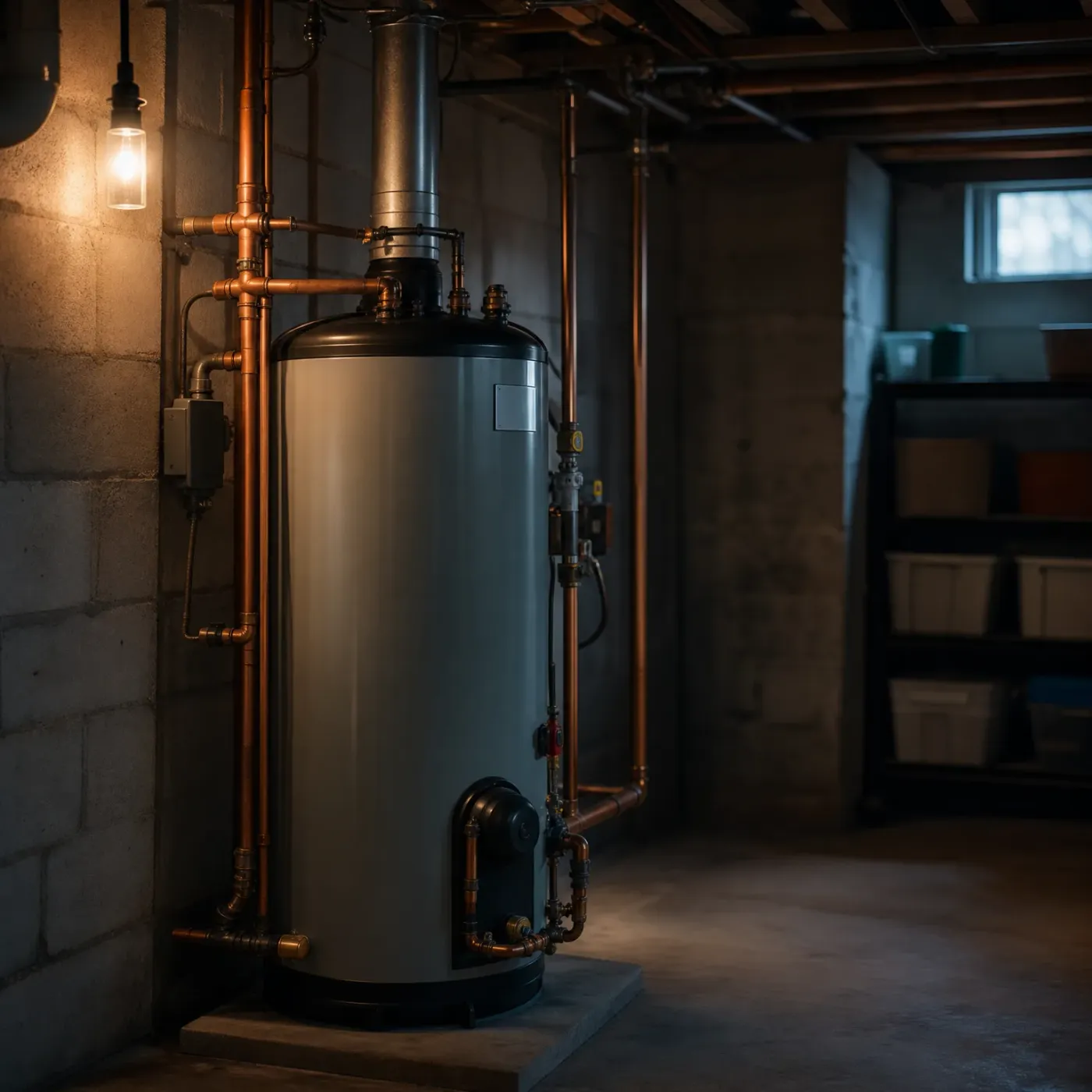






A cylindrical water heater or boiler with a flue pipe and copper piping stands on a concrete pad in a dim basement with concrete block walls, a hanging bulb at left and a shelving unit with bins at right.

Explain it one time

Why one radiator stays cold in a Maine winter

One cold radiator with the rest working fine usually means trapped air, a stuck valve, or a problem with the boiler's circulation, not a dead system. This page walks through what causes it and what fixes it. Skip calling around to a handful of boiler companies and repeating the same description of your radiator each time. One local contractor who works on Maine boilers all winter can take it from here.

Answer a few questions

A cold radiator while the rest of the house heats fine is almost always one of three things. Air gets trapped at the top of the radiator and pushes the hot water out, so the top stays cold while the bottom might still warm up a little. The valve feeding it, either the inlet valve or the one at the far end, can be shut or stuck enough that water barely moves through. Or the boiler's circulator pump is losing its fight against one far or high radiator while closer ones still get plenty of flow. Which one it is changes the fix. Trapped air calls for bleeding the radiator, a few minutes with a key. A stuck valve might free up or might need replacing. A circulation problem means looking at the pump and the balance of the whole loop, not just the one radiator. The rest of your boiler working normally is actually useful information. It tells you this isn't a boiler failure, it's something specific to that one radiator's path.

A gray-haired man in a dark long-sleeve shirt sits on a gray sofa in a living room, looking toward a sunlit window with sheer curtains.
A gray-haired man in a dark green sweatshirt sits on a sofa in a living room, looking toward a bright window, with a houseplant, lamp, fireplace and framed art behind him.
A gray-haired bearded man in a dark green collared sweater sits on a sofa in a living room with a window, houseplant, floor lamp and bookshelves, looking off to the side.
A gray-haired man in a dark green sweater sits on a sofa in a sunlit living room, looking off to the side, with a framed landscape painting, dining table and shelving behind him.
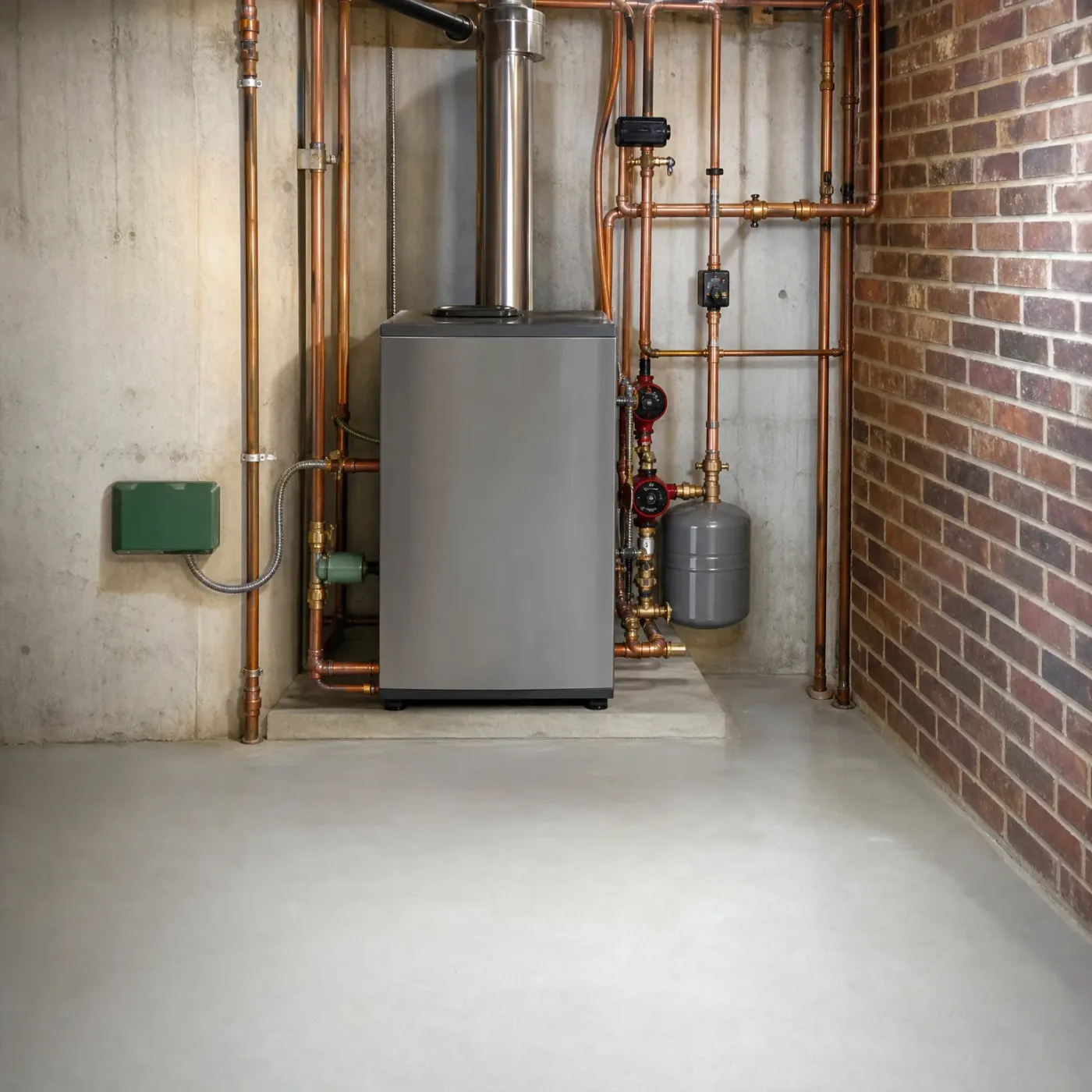
A gray boiler on a concrete pad in a basement, connected to copper piping, valves, pumps and a gray expansion tank, with a concrete wall on the left and a brick wall on the right.
One pump, a full loop of radiators, and nothing trapped anywhere means every room gets the same hot water at the same pressure.
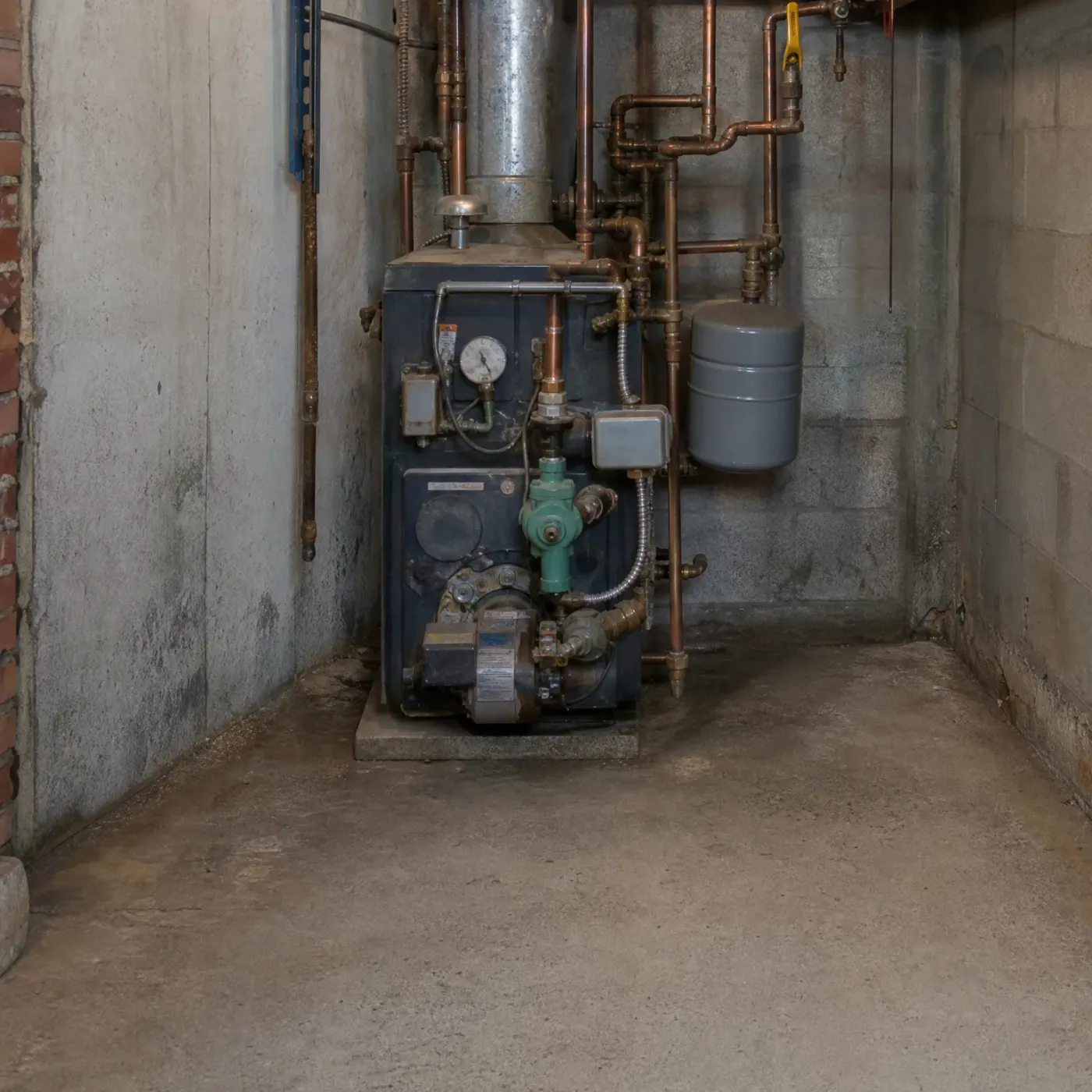
A dark cast-iron boiler with copper piping, pressure gauge, and a gray expansion tank sits on a concrete pad in a basement corner with concrete block and brick walls.
A circulator or a closed valve can cut one radiator off from that loop while every other one in the house heats the way it should.

Why does bleeding the radiator sometimes not fix it?

You bled the radiator, heard the hiss, maybe even got water out, and it's still cold or barely warm. So it wasn't air, or it wasn't only air. That's the point where a lot of people assume the bleeding didn't work right and try again, when the real problem is somewhere else in that radiator's connection to the system.

Bleeding only clears air. It doesn't open a stuck valve or fix a circulator.

The bleed valve lets air escape from the top of the radiator. That's all it does. If the radiator is cold because the inlet valve is stuck shut or seized partway, no amount of bleeding brings heat in, because water was never getting there in the first place. Same with a failing circulator or a loop that's lost pressure somewhere else in the system. You'll hear the hiss, maybe see a little water, and the radiator stays cold anyway. If bleeding made no difference at all, that's a sign the problem is mechanical, in the valve or the pump, not trapped air. A boiler tech can tell which one it is by checking the valve first, since that's the faster thing to rule out.

A middle-aged woman with shoulder-length dark hair, wearing a gray cardigan over a cream top, sits in an upholstered armchair and looks toward a sunlit window, with a shelf holding framed pictures and a plant behind her.
A woman and a child wrapped together in a thick knitted blanket on a sofa, both with eyes closed, with a lit table lamp and houseplant in the dim background.

Why one side stays cold

Bleeding lets air out of a radiator, but it does nothing for a valve that's stuck or a loop that's partly blocked. Those three causes feel the same from the couch: one radiator cold, everything else warm. A technician checks the valve by hand first, since a valve that won't turn or won't seat is common on older cast iron radiators. If the valve moves fine and the radiator still won't bleed properly or take heat after bleeding, the next place to look is the circulator and the near-boiler piping, not the radiator itself.
Why it's worth getting right

Oil runs the boiler in most Maine homes, and electricity here costs more than almost anywhere else in the country, so a boiler working harder than it needs to shows up on both bills. A radiator that never gets warm is one room losing heat it paid for, and a circulator or valve problem left alone tends to get worse, not better, as the heating season goes on. A local boiler technician who works on these systems all winter has likely seen the same cold radiator in a dozen other houses on your street.

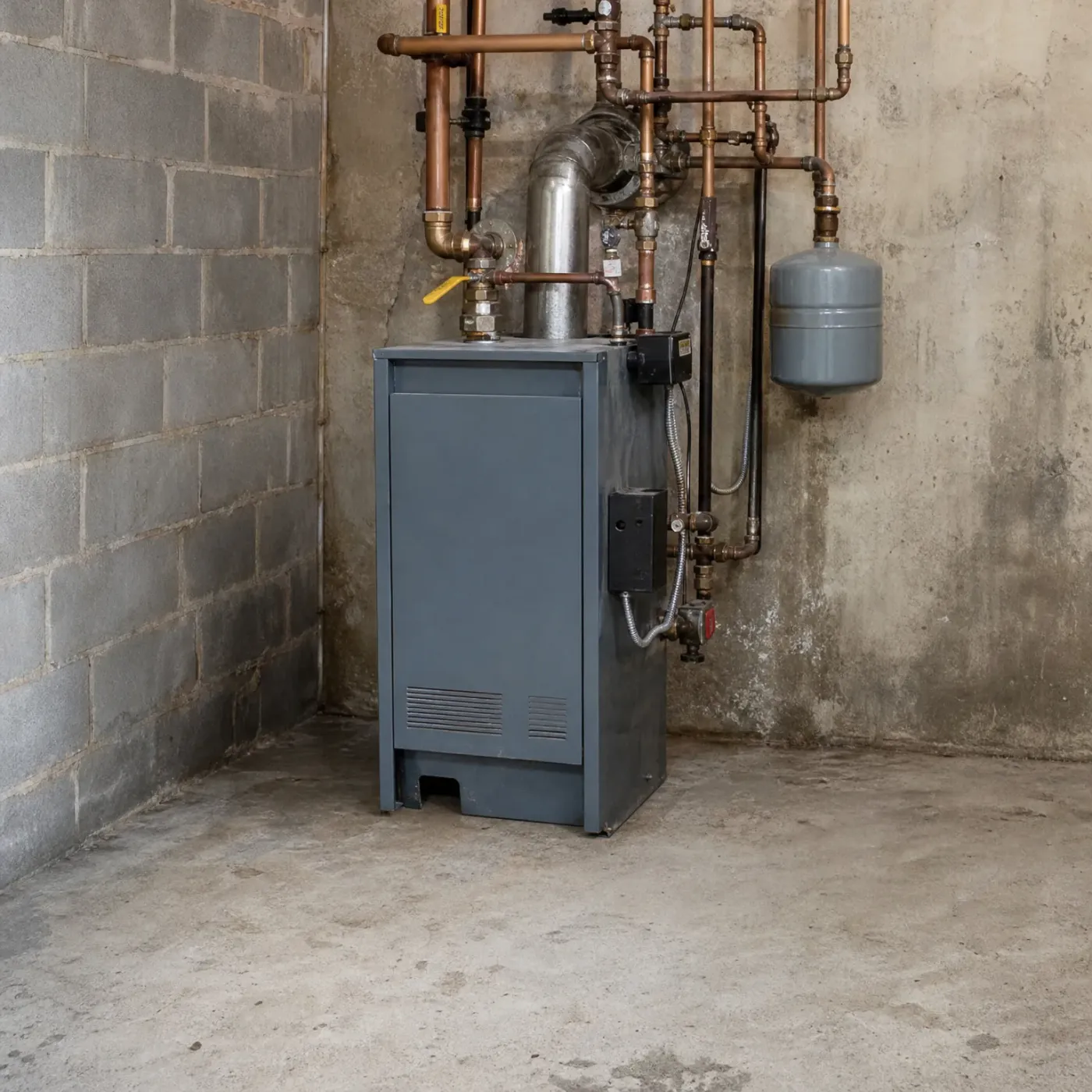
A gray floor-standing boiler in a basement corner with copper and black piping above it, a flue vent, and a gray expansion tank mounted on the concrete wall beside a concrete block wall.
Before you get your boiler repair
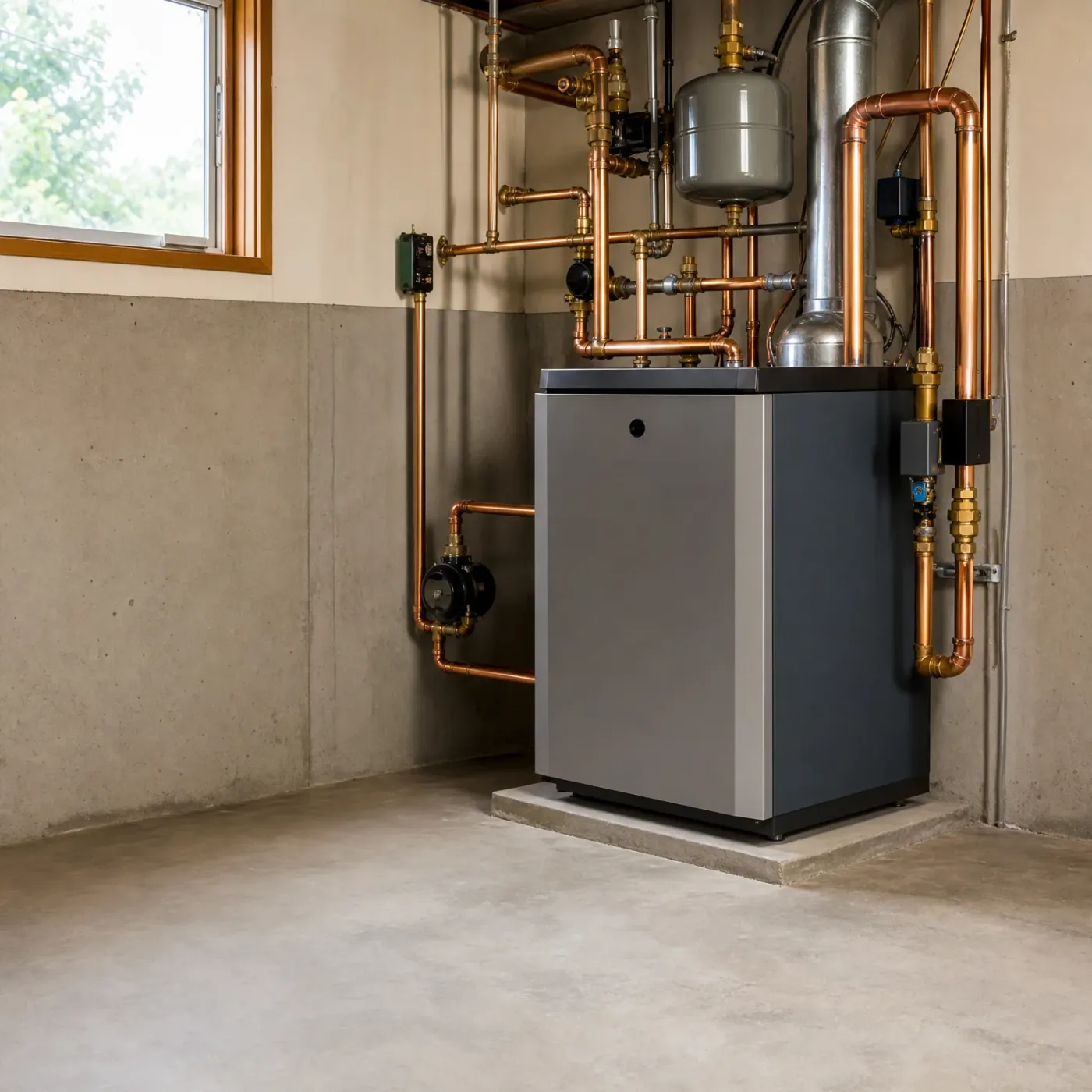
A gray floor-standing boiler on a concrete pad in a basement corner, connected to copper piping, brass valves, a circulator pump, an expansion tank, and a metal flue, with a window at upper left.
After you get your boiler repair

Skip the calls to every shop

Your request stays with one local pro.

You only hire the pro if you want to.

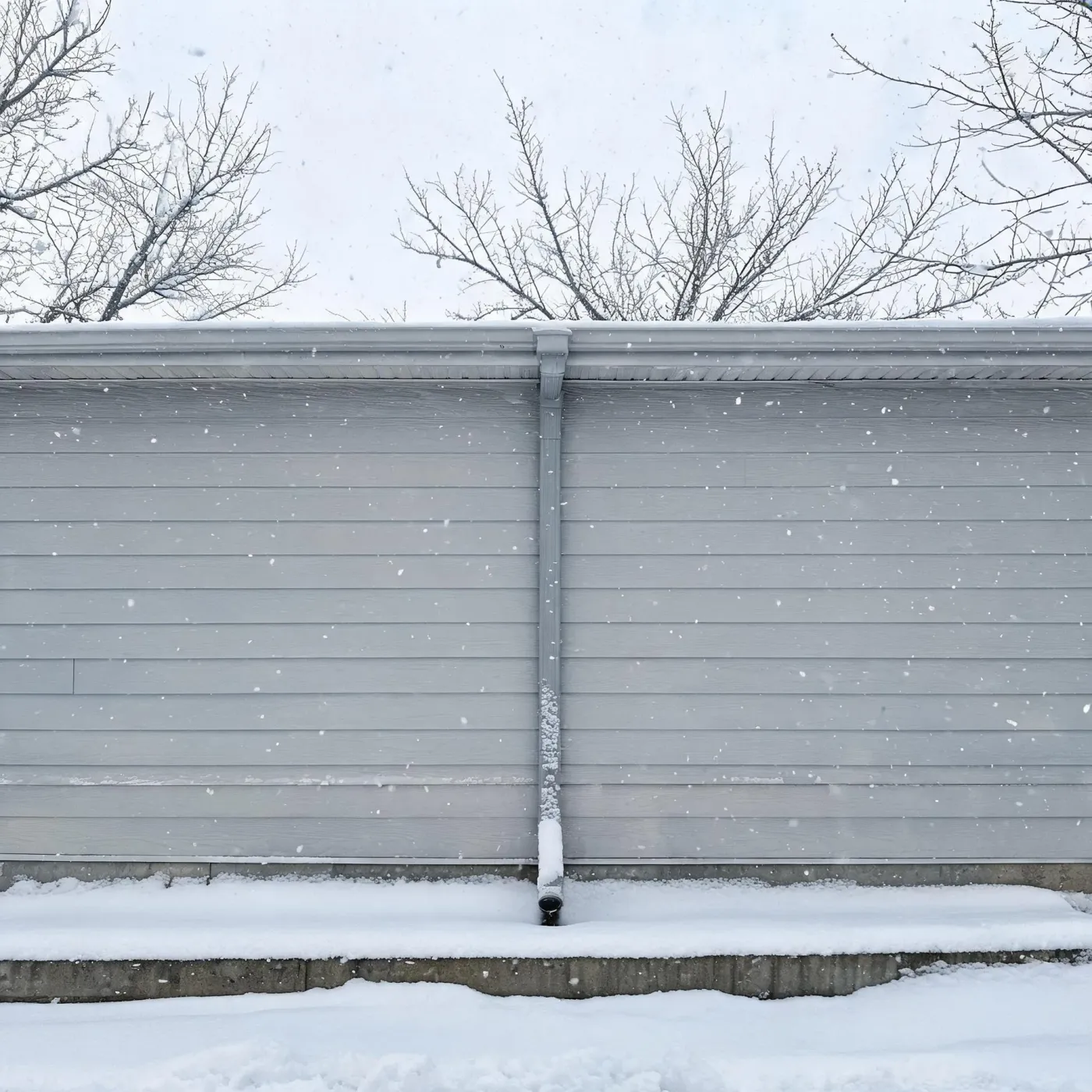
Gray horizontal lap siding on a building wall with a central downspout, seen during falling snow, with snow-covered ground and bare tree branches above the roofline.

Statewide, winter nights average 13°F, according to NOAA. At that temperature a boiler is running long, frequent cycles just to hold the house steady, and that's exactly when a cold radiator gets noticed. The room with the trapped air or the stuck valve never catches up, so you feel the difference most on the coldest nights, not the mild ones. The rest of the system keeps working harder to compensate, which means the boiler runs more than it should while one room stays short. With oil heat and some of the highest power costs in the country, a system working around a problem instead of past it is running longer than it needs to.

NOAA nClimDiv 1991-2020 county normals weighted by homes

Fix It Yourself or Call Someone

Try yourself

  • Bleeding the radiator takes a key and ten minutes, and it's the first thing worth ruling out yourself.
  • If the valve is just shut or barely open, opening it the rest of the way might be all that's needed.
  • You can feel along the radiator and the pipes feeding it to narrow down whether the cold spot is at the top, the bottom, or the valve itself.
  • If bleeding brings the radiator back, you've solved it without spending anything.
  • A problem with the circulator or the near-boiler piping isn't something bleeding or a valve adjustment will reach.

Call a technician

  • Someone who works on boilers all winter in Maine has likely seen the same cold radiator a dozen times this season and knows where to look first.
  • A technician can pressure-test the loop and check the circulator, which tells you for certain whether the problem is isolated to that one radiator or building toward something bigger.
  • One call to a licensed local contractor replaces the work of finding a few companies, getting someone on the phone, and sorting through separate quotes.
  • If the valve itself is seized or corroded, a technician can replace it rather than leave you bleeding a radiator that will just fill with air again.
  • With oil heat and power costs what they are in Maine, a boiler running long cycles to compensate for one cold radiator is burning more than it should.
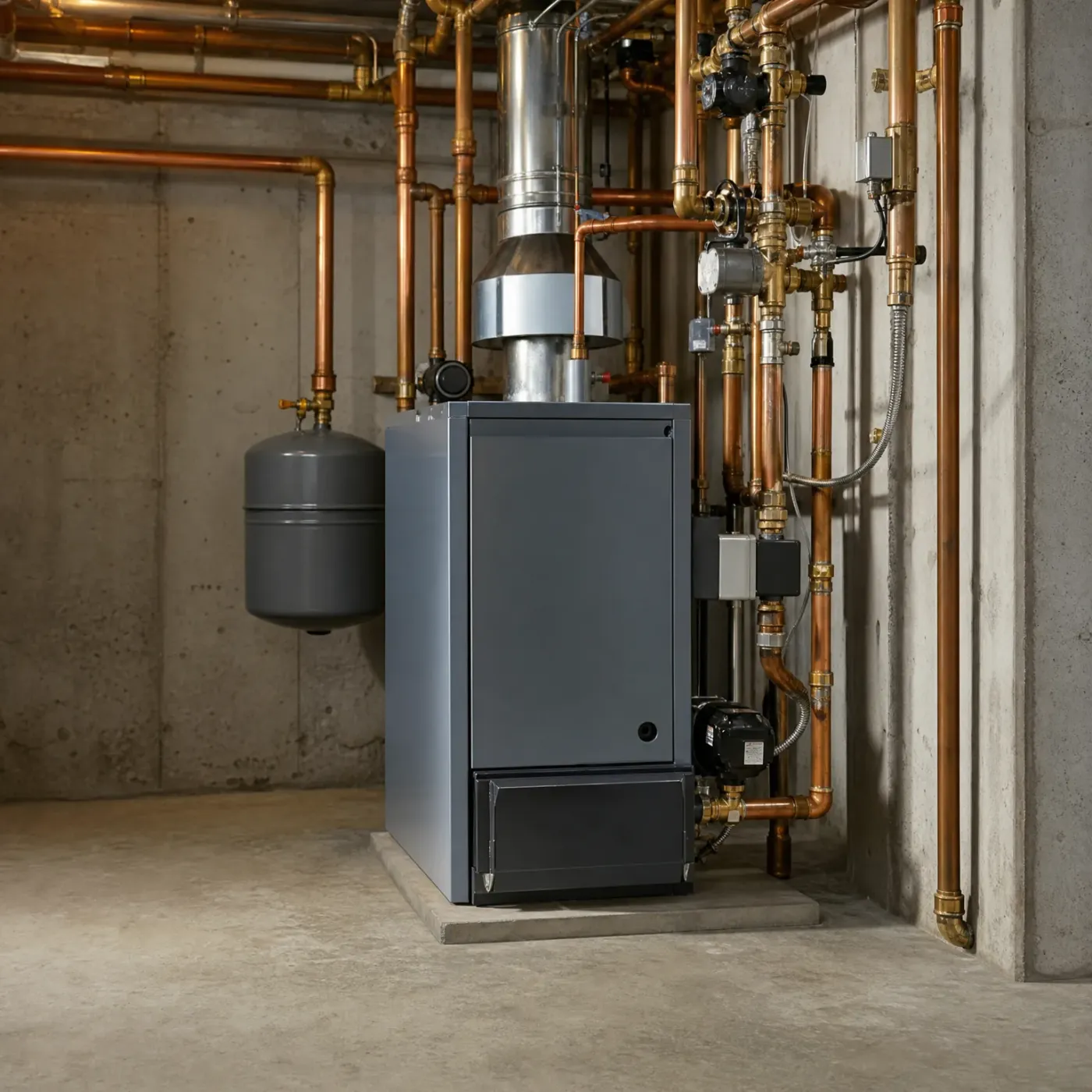
A gray boiler on a concrete pad in a basement, connected to copper piping, valves, circulator pumps, a metal flue, and a wall-mounted expansion tank.

The loop working the way it should

One pump pushes hot water through every radiator in the house and back to the boiler, copper and brass fittings holding the whole loop tight. No air pocket, no stuck valve, so heat reaches the far end of the house the same as the near end.

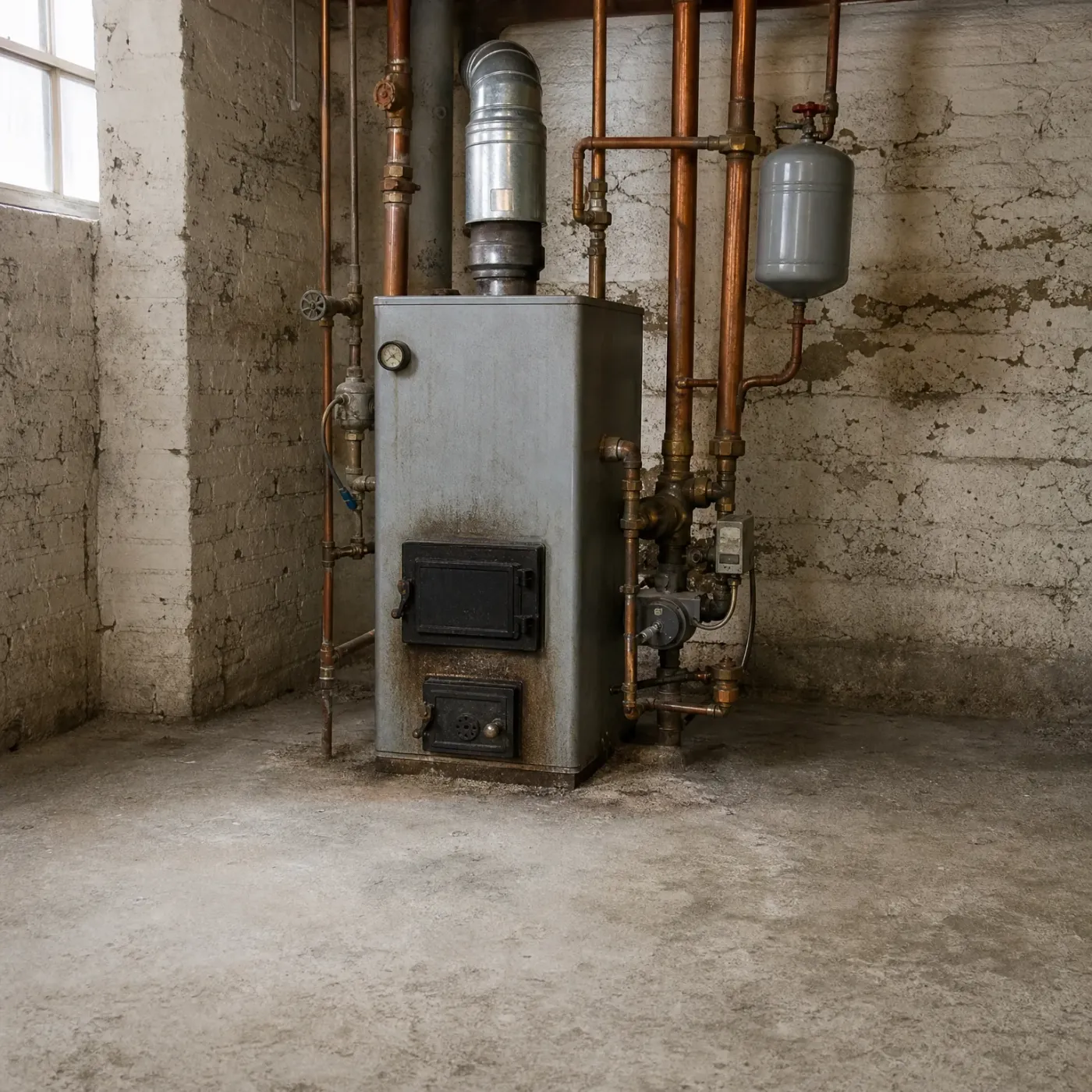
An old gray boiler with copper piping, a flue duct, pressure gauge and an expansion tank stands in the corner of a basement with painted masonry walls and a bare concrete floor.

The same boiler, one radiator cut off

This cast iron boiler still fires and still heats the loop, but something between it and one radiator is breaking the path: a valve not fully open, a pump not pushing water that far, air sitting where it shouldn't. Everything else in the house stays warm.

Why is that one room never quite warm enough

You've probably started closing that door or running a space heater in there instead. The radiator might be cold at the top and warm at the bottom, or warm on one end and cold on the other, or just cold straight through while you can hear the rest of the house ticking and clanking as it heats. You've maybe already tried the key on it once or twice. Left alone, that room pulls harder on whatever else is heating it, and the boiler keeps cycling to chase a temperature it can't reach in every room. With oil prices and electric rates what they are here, a room that never heats right is a room you're paying to heat twice.

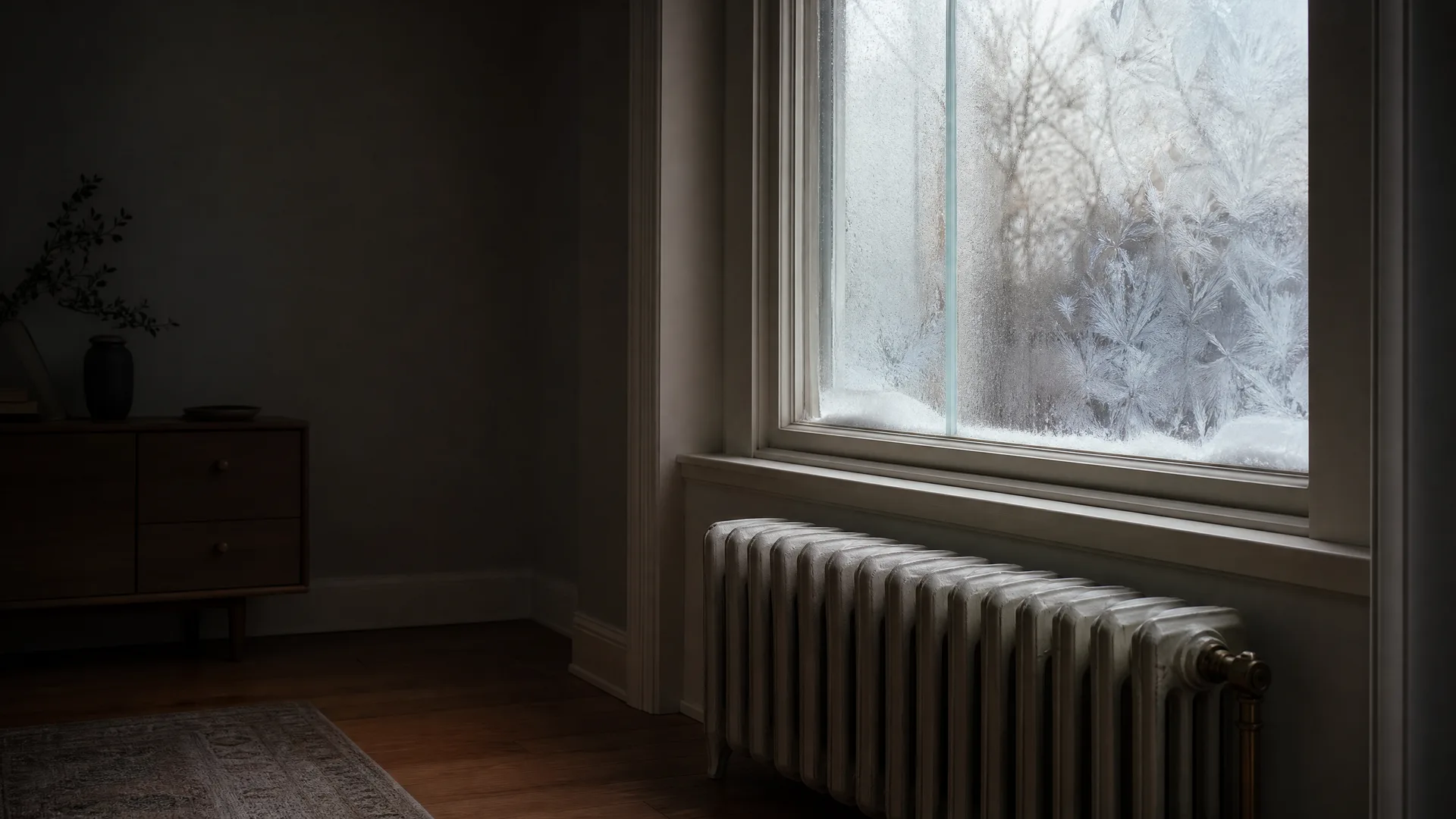
A cast-iron column radiator beneath a frost-covered window in a dim room, with a wooden sideboard, vase of dried branches, wood floor and rug on the left.

Seven below this morning and the sky still dark. You come down before the woodstove crowd is even up, and the living room window has frosted over on the inside, a thin white skin at the corners of the glass. The radiator under it is cold, stone cold, while the one in the kitchen ticks away like it should. You put your palm flat on the top fin, then the bottom, same nothing. The dog won't go near that side of the room anymore. You pull a blanket off the couch and sit near the kitchen doorway instead, close enough to feel the other radiator working, close enough to see your breath isn't quite visible yet, but almost.

Winter nights average 13°F statewide

At 13°F overnight, that boiler can't afford to waste a radiator. One cold one means another room is picking up the slack, running longer to make up for it, which is more hours on a system already working hard in a Maine winter.

NOAA nClimDiv 1991-2020 county normals weighted by homes

A wooden table in the foreground holds a closed laptop and a ceramic mug of coffee, with a spindle-back wooden chair behind it, a beige wall with paneled wainscoting, a window at left, and a kitchen counter with a cutting board, bowl of fruit and greenery at right.

One cold radiator, three possible causes, one visit to sort out

Trapped air, a closed valve, or a circulation problem. You can rule out the first two yourself with a key and a look at the valve. If the radiator is still cold after that, the cause is inside the loop somewhere a bleed key can't reach, and that's a job for someone who works on boilers for a living.

Finding that person is the part that takes time: searching, calling a few companies, explaining the same cold radiator three times, waiting on quotes to compare. Submit this and that work is done. A licensed boiler contractor local to Maine gets your details once and calls you, someone who sees this exact complaint every winter and knows which of the three it usually is before they walk in the door.

A wooden table holding a stone vase with a bare branch, two stacked books and a small dark bowl, beside a window with green foliage outside and a sofa in the dim background.
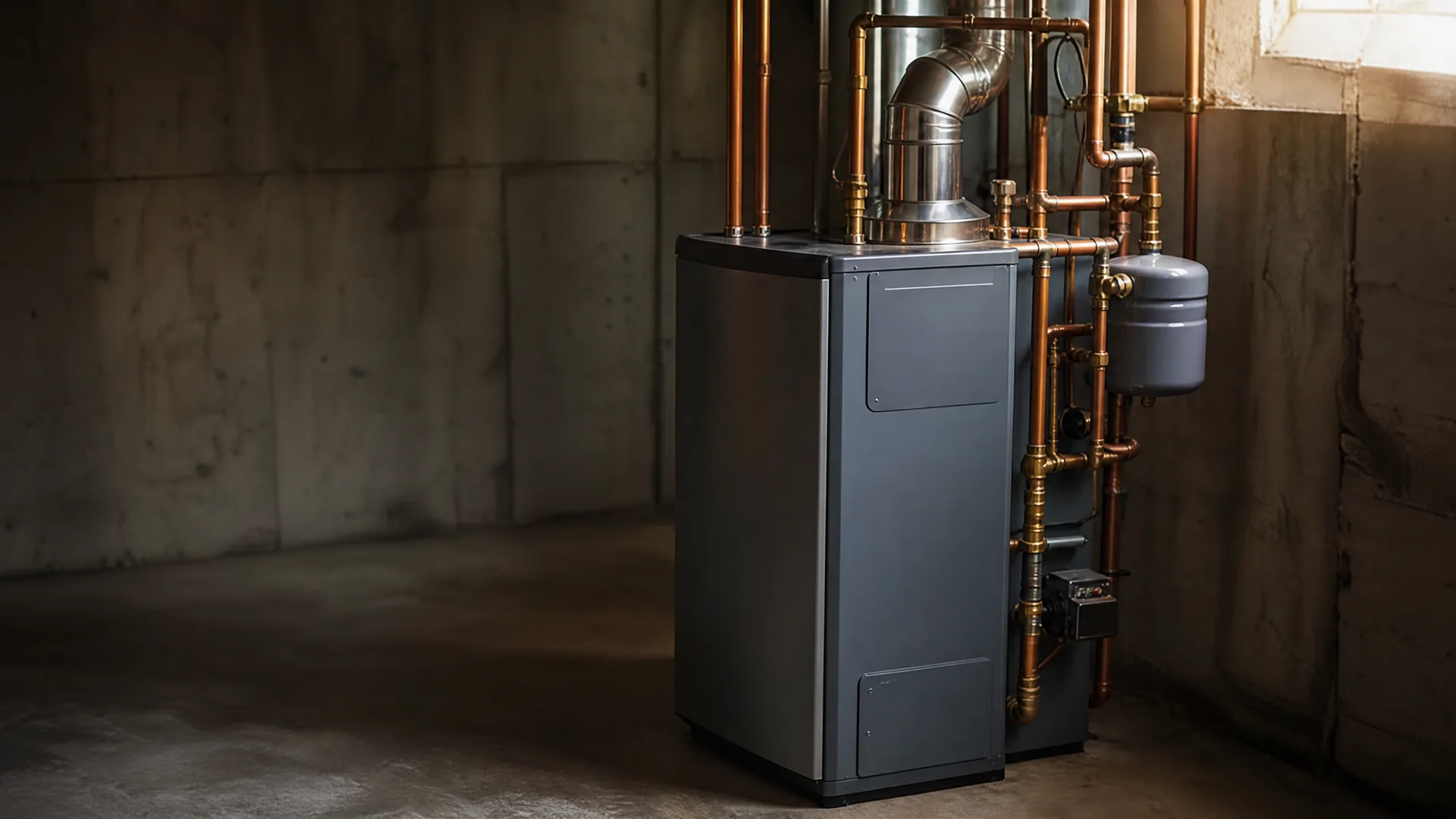
A gray boiler unit in a concrete-walled basement, connected to copper piping, a metal flue duct, and a wall-mounted expansion tank.

Skip calling around

Step 1 of 3: Equipment