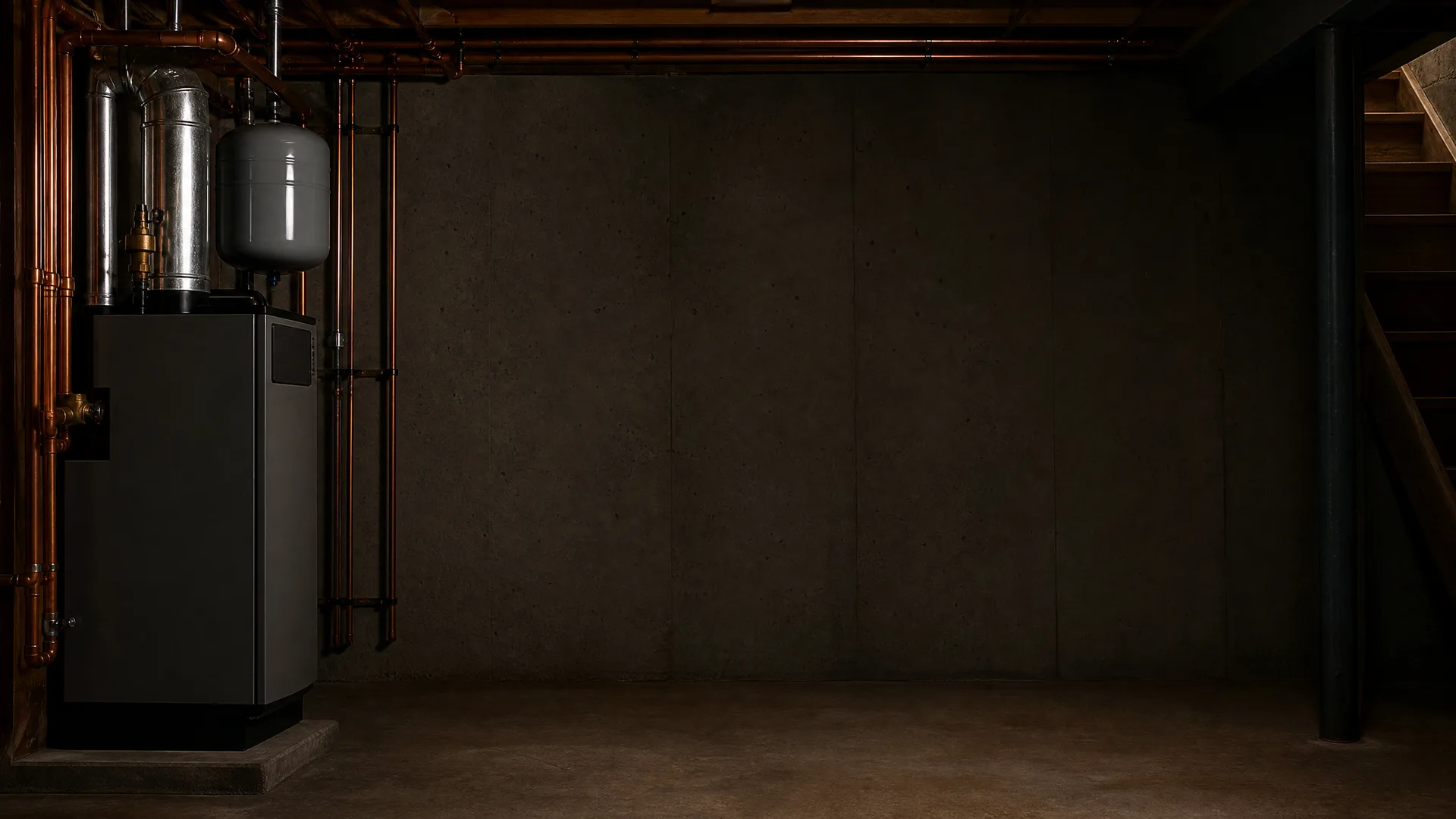
A floor-standing gray boiler unit on a concrete plinth in a basement, with copper pipes, an expansion tank, and a flue pipe above, a wall light, a small potted plant on a wooden shelf, and a window in the background.

One request and it's handed off

What your boiler pressure should be in Maine

Most boilers want somewhere between 12 and 15 psi when the system is cold. Too low and it won't circulate right. Too high and the relief valve starts weeping. This page covers what your gauge should read, what the needle creeping up or down means, and when it's worth having someone check the pressure and the rest of the system before winter asks more of it.

Hand it off

A cold boiler should read 12 to 15 psi on the gauge. That's cold meaning the system hasn't fired in a while, like first thing in the morning. Once it heats up and the water expands, you'll see the needle climb a few pounds, and that's normal. What matters is where it sits before the burner kicks on. Most Maine homes run oil-fired boilers through long winters, and the system works hardest from late fall into early spring, so pressure that's drifted low by then means air is getting in somewhere or the expansion tank isn't holding its charge. Pressure that's crept above 15 and keeps climbing means the relief valve is likely to open and drip, which wastes water and, on an oil system, wastes the fuel it takes to reheat it. Either way the boiler isn't moving heat through the house the way it should, and that shows up as cold rooms or a bill that doesn't match the warmth you're getting.

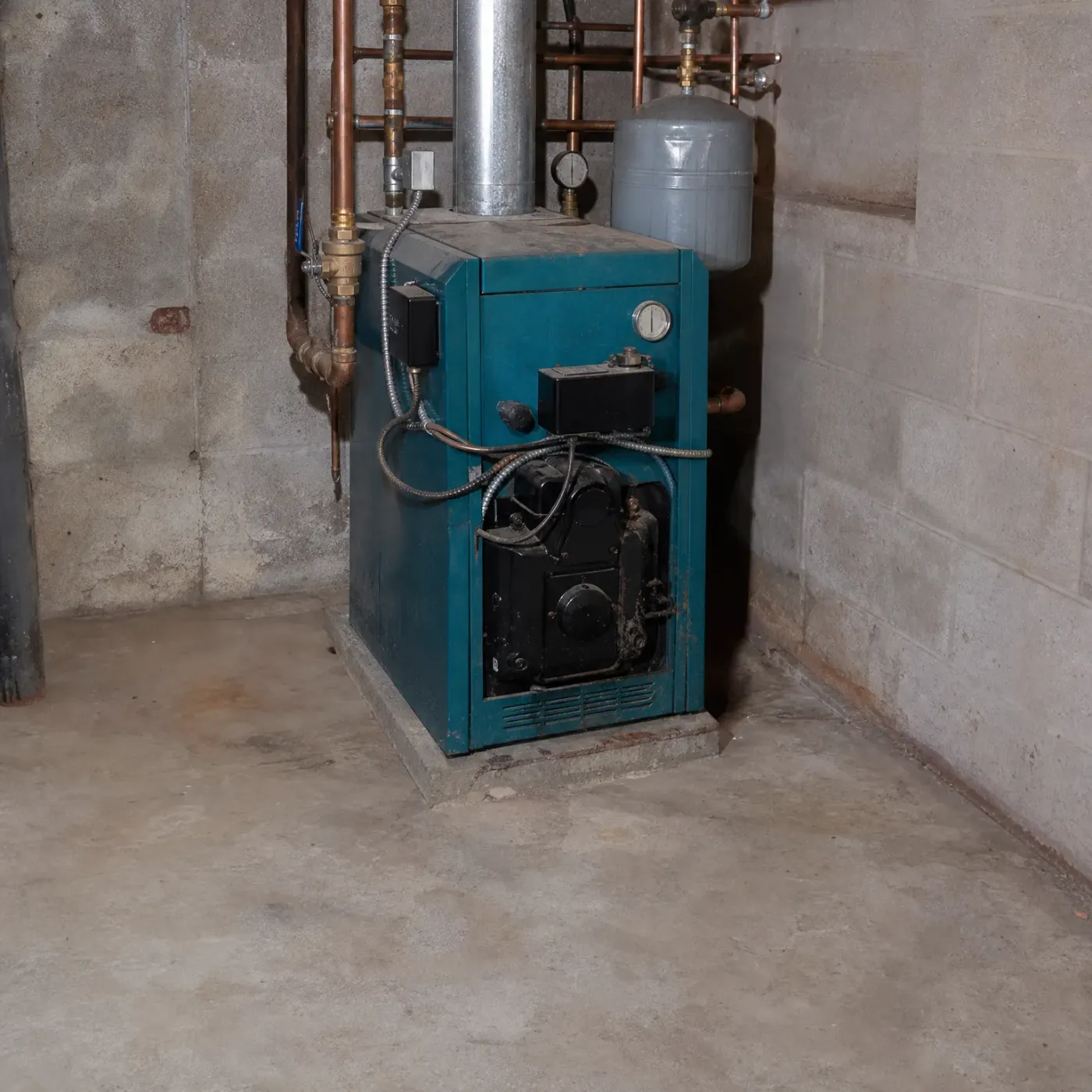
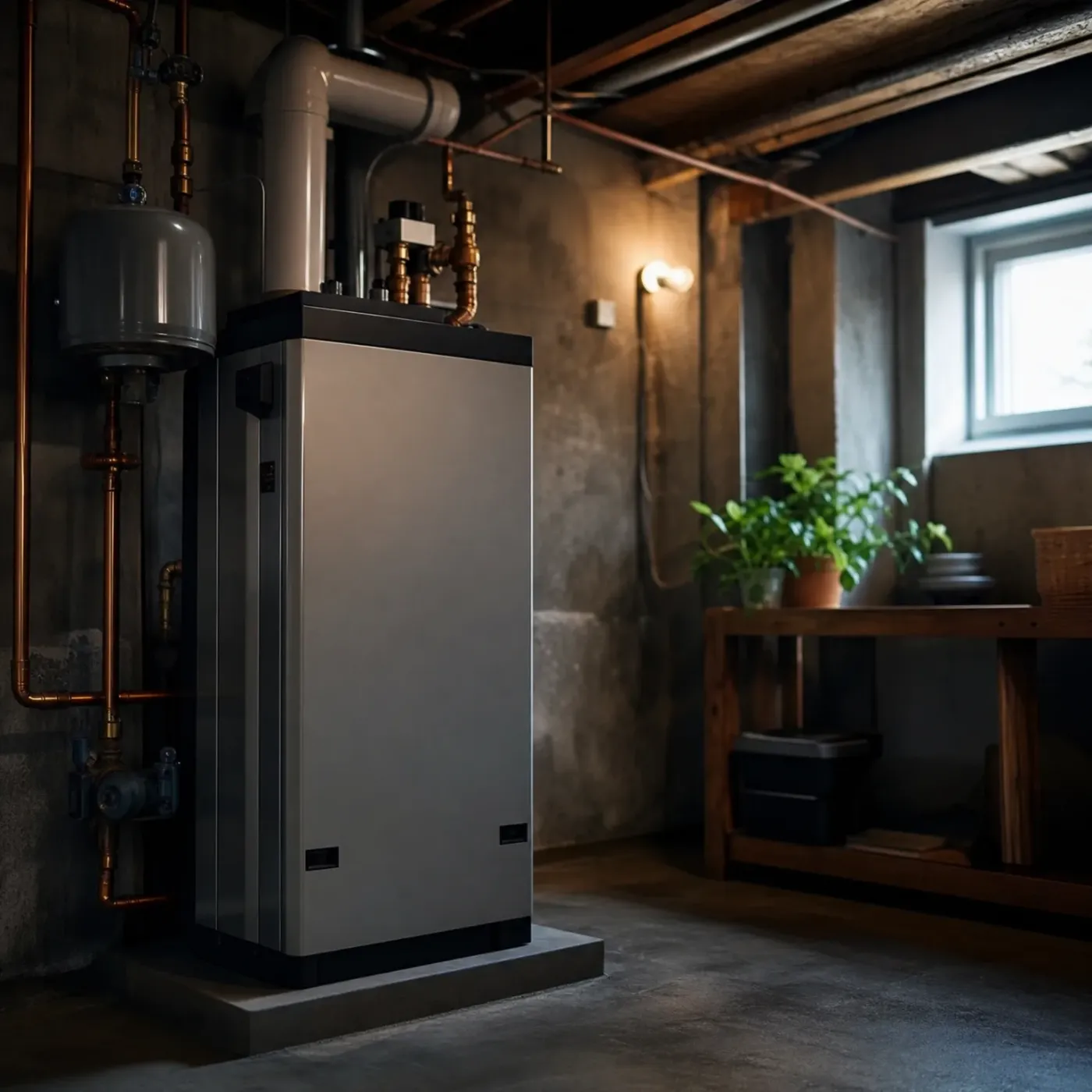
An oil-fired boiler with a blue and gray cabinet and burner sits on concrete blocks in a basement corner with stone walls, connected to copper pipes, a metal flue, and a wall-mounted expansion tank.
Before you get your boiler maintenance
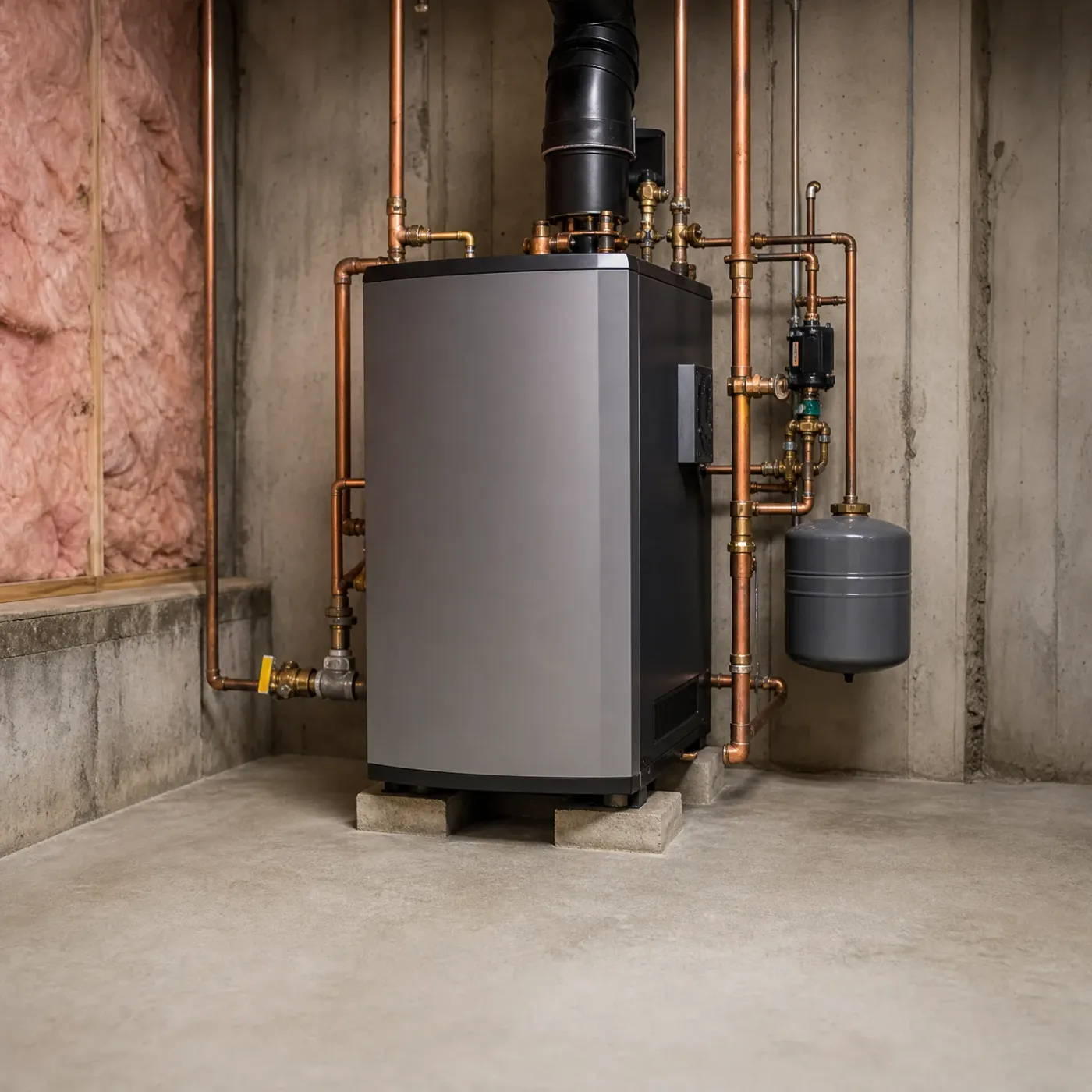
A gray and black boiler unit sits on concrete blocks in a basement corner, connected to copper piping, valves, a black flue duct, and a gray expansion tank, with bare concrete walls and exposed pink insulation at left.
After you get your boiler maintenance

Your boiler is a closed loop, so the water inside has nowhere to go when it heats up except to push against the gauge. That's why a cold reading sits low, around 12 to 15 psi, with room built in before the relief valve opens at 30. The expansion tank is what makes that room work. It holds a pocket of air that compresses as the water expands, so the system can heat up without the pressure spiking. When that tank's bladder fails and waterlogs, there's no cushion left, and the needle will jump as soon as the burner lights.

Through an oil-fired winter in Maine, the boiler is cycling on and off most nights, and you'll see the needle rise and fall with each cycle. That's normal. What isn't normal is pressure that keeps dropping over time. A feed valve on the cold water line is built to mask that, refilling the system automatically so you don't notice a slow leak until the valve itself can't keep up or something downstream fails.

How the pressure actually moves

  • The pressure relief valve is set to open at 30 psi, so a cold reading of 12 to 15 psi leaves room for the rise when the boiler fires.
  • The expansion tank holds a cushion of air that absorbs the water as it expands with heat, keeping the pressure from climbing too far on its own.
  • If that tank's bladder waterlogs, the gauge will climb fast once the burner kicks on and the relief valve may open to vent the excess.
  • Oil-fired boilers cycle on and off through the night in a Maine winter, and each cycle pushes the needle up and lets it fall back as the water cools.
  • A feed valve on the cold water line tops off the system automatically when pressure drops, so a slow leak can hide for weeks before the gauge shows it.
  • Water lost through a weeping relief valve or a loose fitting doesn't come back on its own, the feed valve just keeps replacing it until something gives.
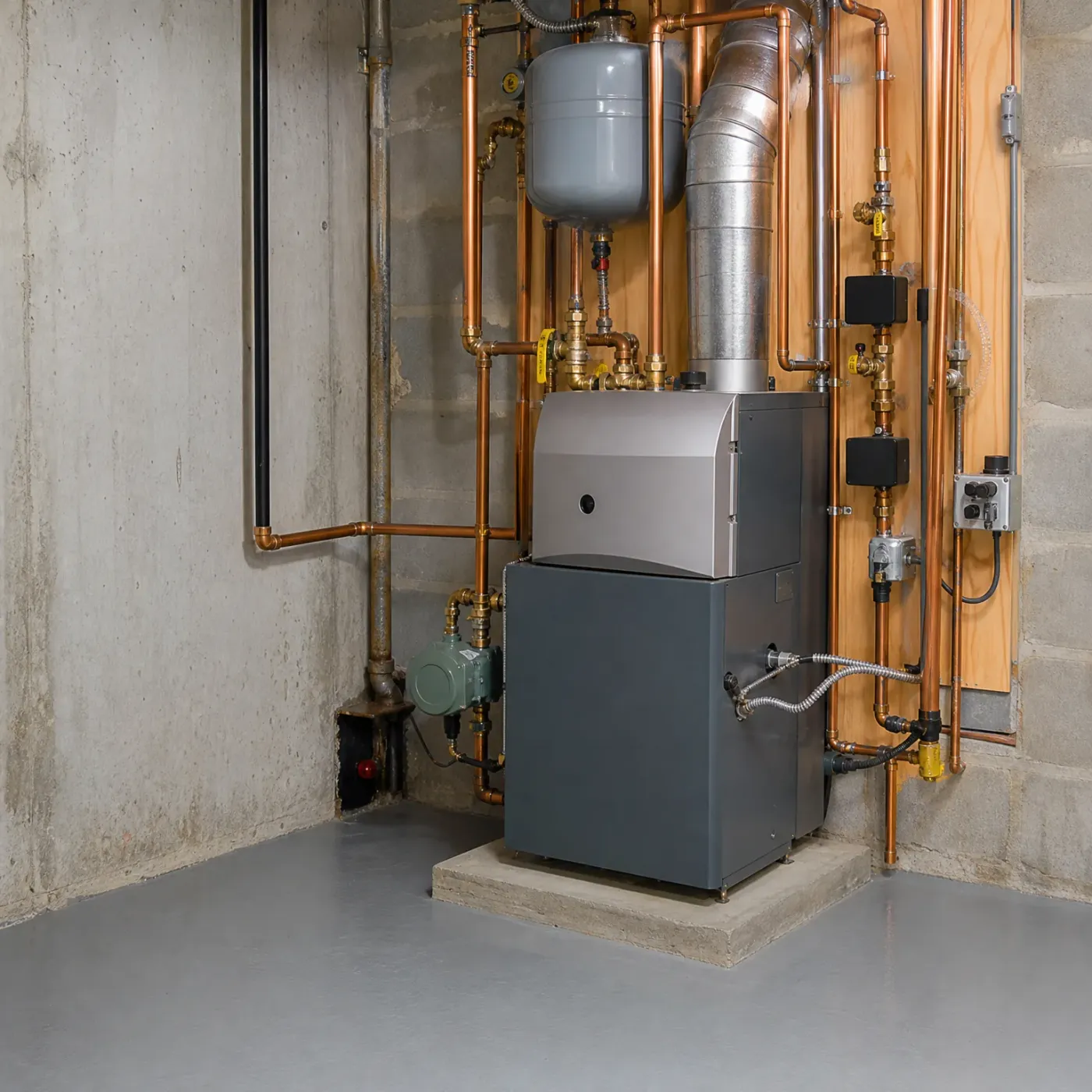
A gray residential boiler on a concrete pad in a basement corner, connected to copper piping, an expansion tank, circulator pumps and insulated flue ducting against concrete and plywood walls.
The gauge sits steady in the 12 to 15 psi range, and the pipes and fittings show no sign of a weep or a stain.
A teal boiler with a pressure gauge and black burner unit sits on a concrete pad in a basement corner, with copper pipes, a flue vent, and a gray expansion tank above against concrete block walls.
A gauge that won't hold, a corroded fitting, or a relief valve left to drip are how a slow leak finally gets your attention.
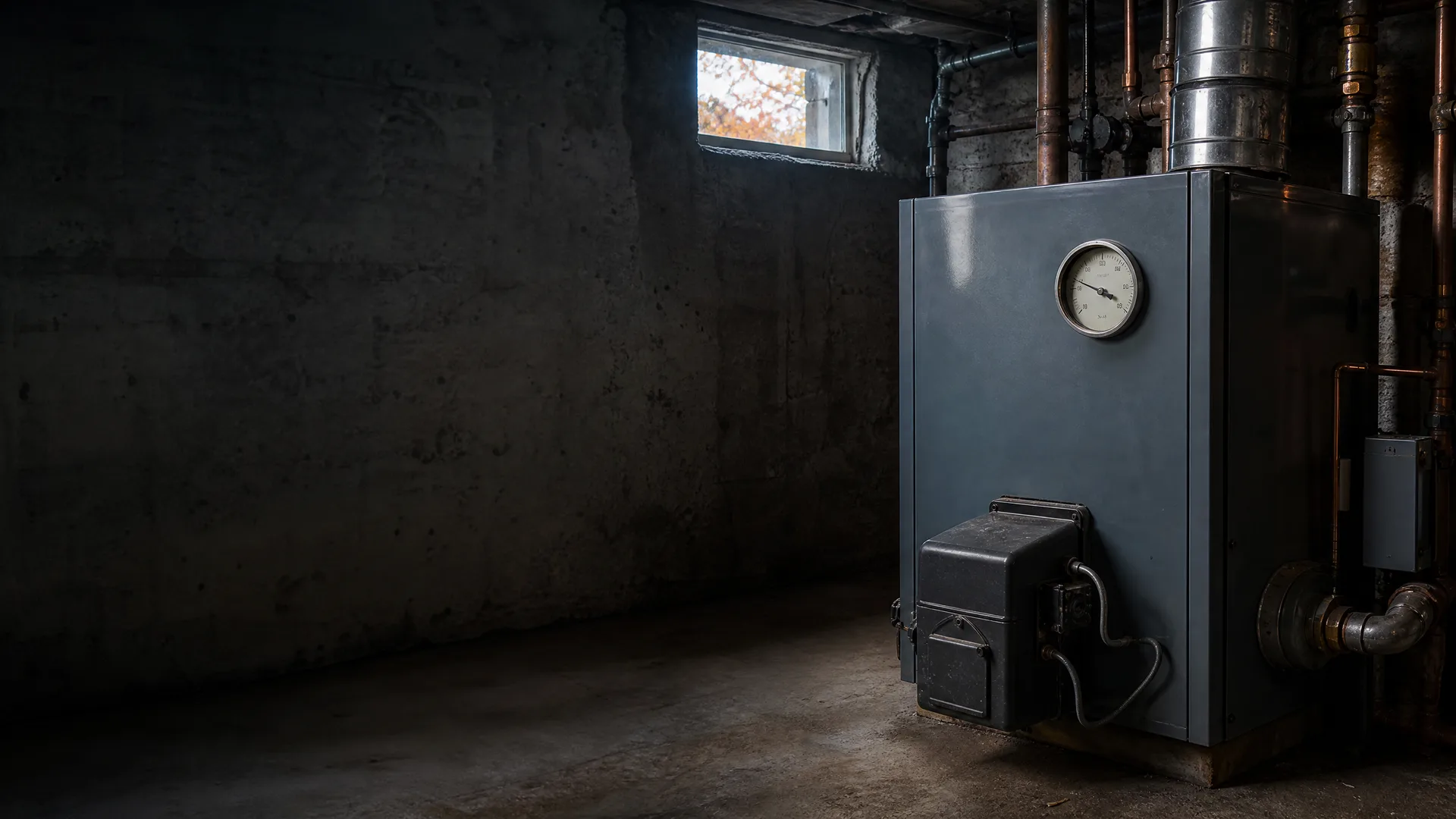
A gray boiler with a round pressure gauge and copper and metal pipes stands in a dim concrete basement lit by a small window.

You're down in the basement before work, coffee still in hand, because the furnace fan kicked on upstairs and sounded off somehow. The morning's cool enough that you had the heat running overnight, first time this fall. You crouch by the boiler and check the gauge out of habit. The needle sits under 10, well below where it was in the spring. Outside the small basement window the maple next door has gone orange. You tap the glass front of the gauge once, like that might change the reading, then just stand there a second, doing the math on how long it's been dropping without you noticing.
Done looking for a boiler pro

A boiler running low keeps doing it quietly all winter. The pressure drops a pound or two, nobody notices, and the system works harder to push heat through the same radiators. In a Maine house heated with oil, that difference shows up on the delivery bill before it shows up on the gauge. Power here already costs more than most of the country, so a boiler that's circulating poorly isn't a small thing to let ride until spring. Someone who services boilers in Maine every winter knows which fittings on which systems tend to weep first, and which gauges read wrong long before they fail outright. That's the kind of thing a maintenance visit catches early, instead of in January when the relief valve is already dripping and the basement is cold. Send the request and let someone local who does this work every season take it from here. You've got enough to watch without adding the boiler to the list.

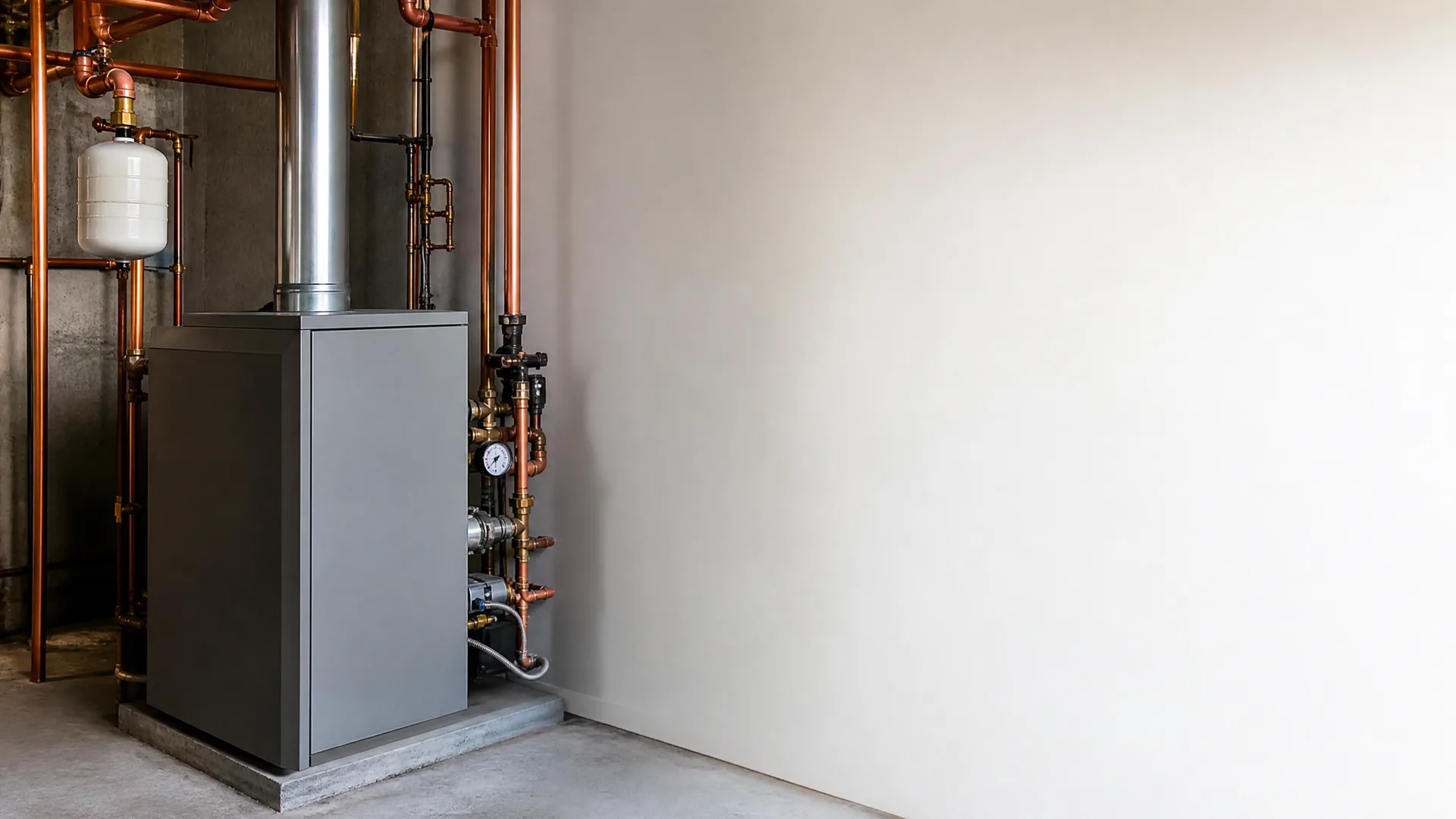
A grey floor-standing boiler with a metal flue and copper pipework, valves and a pressure gauge stands in the corner of a room with plain light walls and a concrete floor.

Why the needle moves on its own

Water expands as it heats, and a boiler loop is a closed space, so that expansion has to go somewhere. The gauge will climb a few pounds once the burner's been running a while, then settle back down as it cools. That's the system doing what it's built to do. A gauge that keeps climbing past where it used to, or won't come back down overnight, is telling you something upstream changed, not just that the weather turned colder.

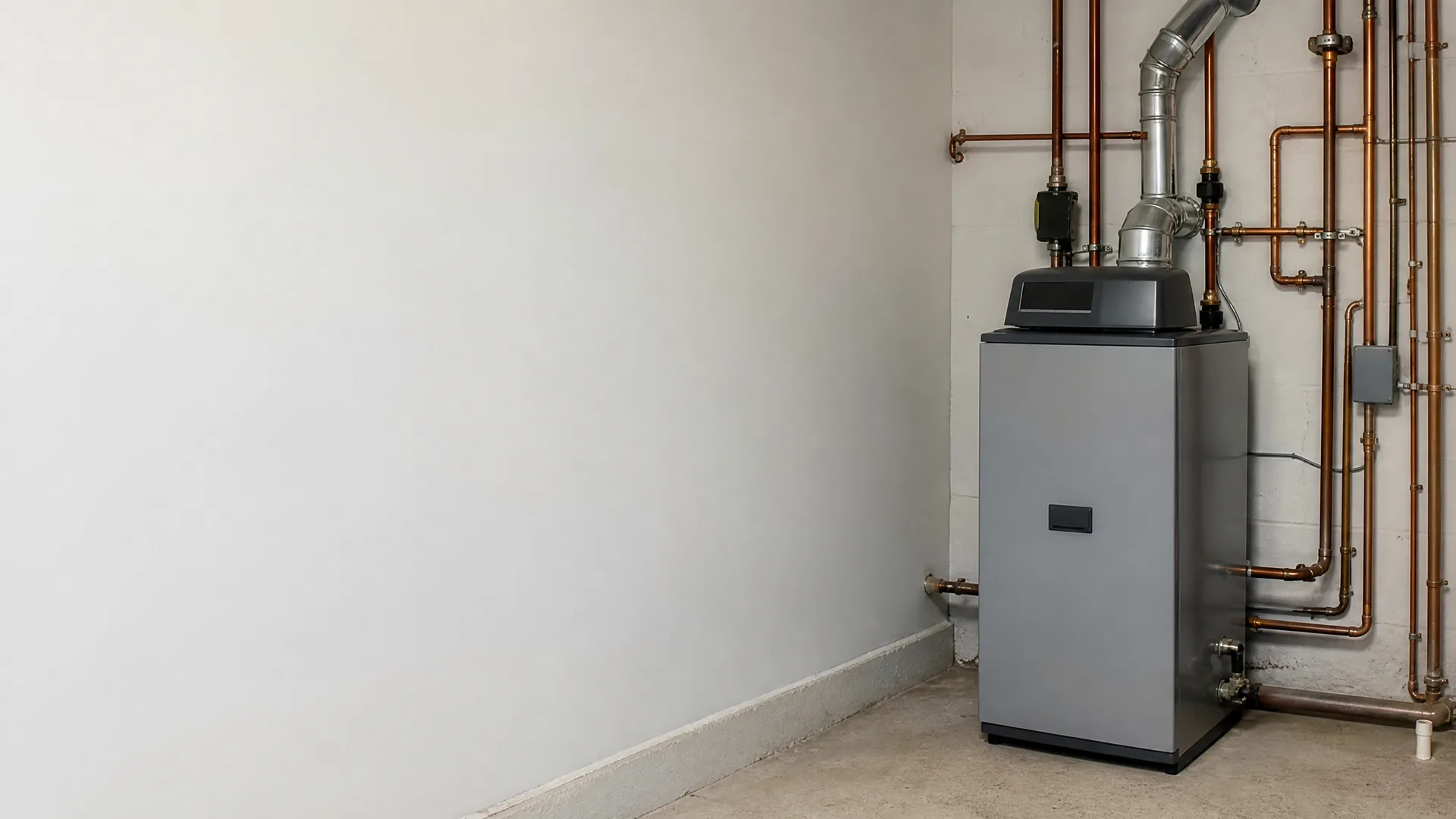
A gray floor-standing boiler with a metal flue pipe stands in the corner of a plain painted basement room, connected to copper pipes running along the wall.

What the feed valve does

Most boilers draw makeup water through an automatic feed valve connected to the house supply. It's there to top off the system after it's bled for air or after a small amount of water is lost over time. If that valve is stuck open, it'll keep feeding water in and pushing your cold pressure up past 15 psi without you touching anything. If it's stuck shut, a system that loses even a little water has nothing to replace it, and pressure drifts down instead.

Winter nights average 13°F statewide

At 13°F, your boiler is firing most of the night to hold the house. That's a lot of cycles on a system that only has 12 to 15 psi of cushion to work with cold. A gauge that's drifted low makes the burner run longer to do the same job.

NOAA nClimDiv 1991-2020 county normals weighted by homes

A smiling bearded man in a dark green hooded jacket and blue t-shirt sits on a couch in a living room with shelves, a potted plant, and a bowl of popcorn on a wooden table.
A smiling man in a green long-sleeved shirt sits on a beige sofa in a living room, with a bowl of popcorn in the foreground, a large potted plant and shelving behind him.
A smiling man in a dark blue T-shirt sits on a couch in a dimly lit living room with a bowl of popcorn and a remote on a wooden table, a lit floor lamp and bookshelves behind him, and windows showing greenery.
A smiling bearded man in a dark green long-sleeved shirt sits on a leather couch in a living room, with a bowl of popcorn and a remote control on a wooden table in the foreground.
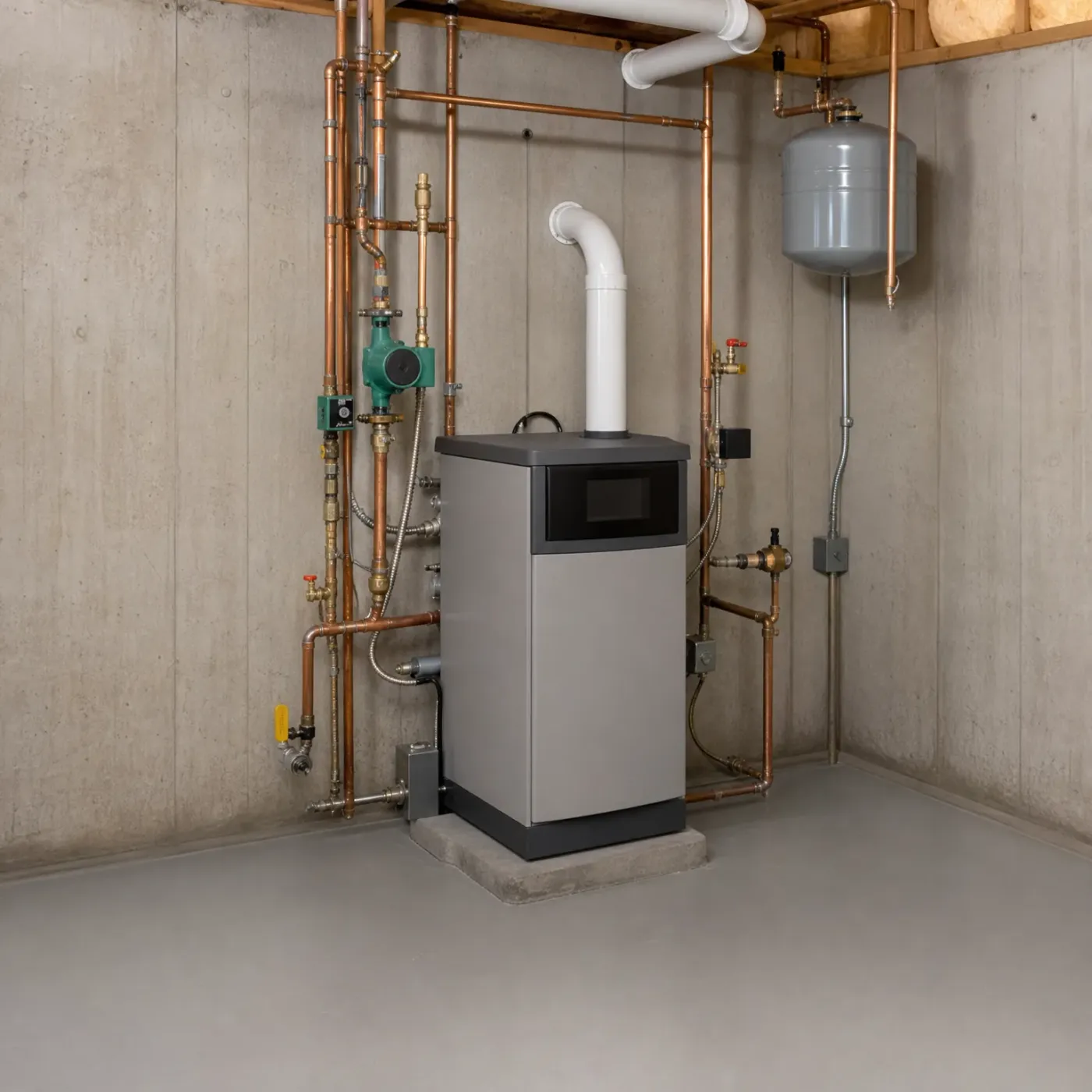
A gray floor-standing boiler on a concrete pad in a basement corner, with copper piping, a circulator pump, a white PVC flue, and a gray expansion tank mounted on the wall.

Running the way it should

The gauge holds steady, the pump runs quiet, and the copper lines and fittings are dry. An expansion tank on the wall gives the water somewhere to go when it heats up, so the needle barely moves. Nothing here is asking for attention.

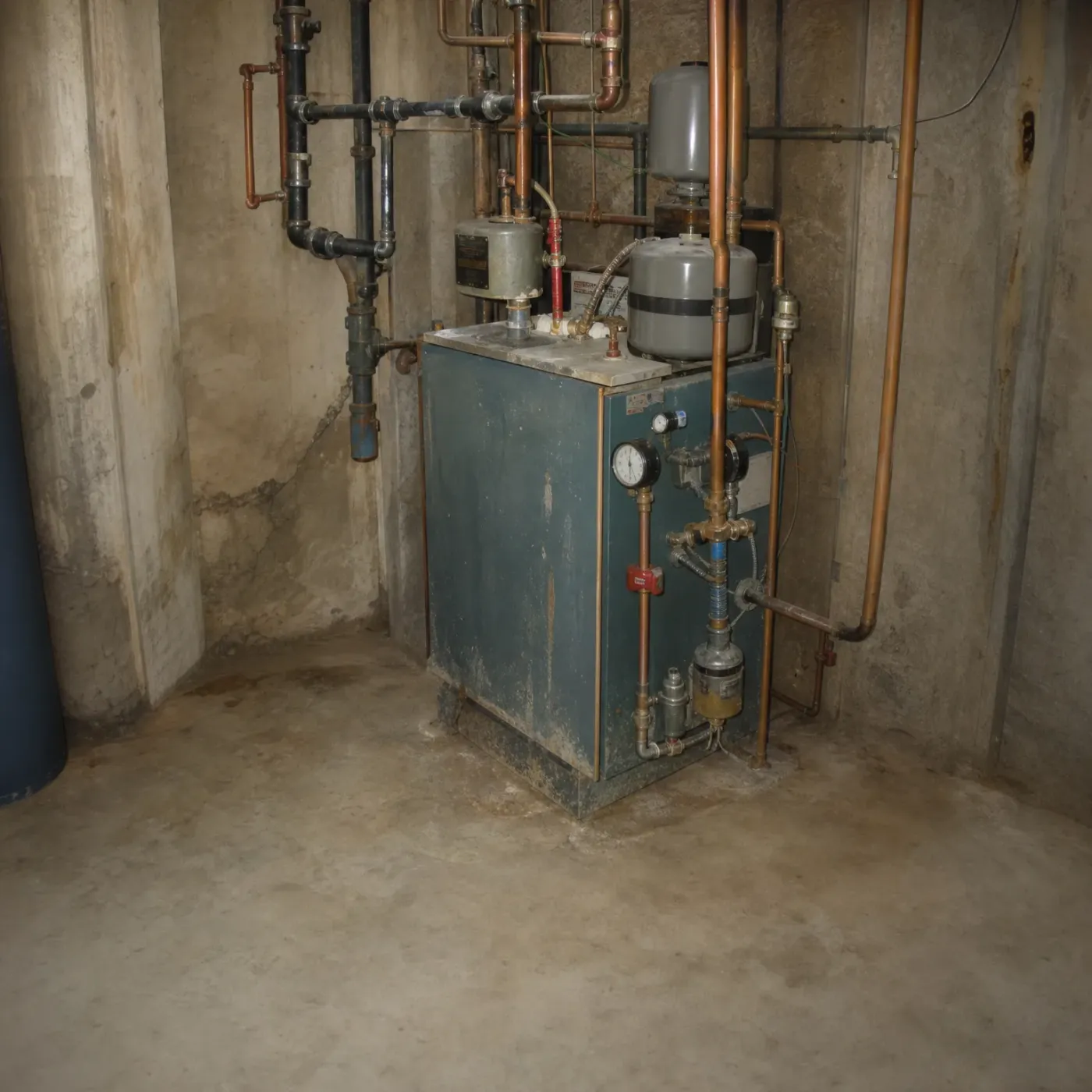
A green metal boiler with pressure gauge stands in a concrete basement corner, surrounded by copper and black iron pipes and two tank-shaped vessels.

Running on borrowed time

Old cast iron like this has seen a lot of winters, and the pipe fittings around it show it. A gauge that's hard to read, a valve with a stain under it, mineral buildup on a joint. None of it stops the heat today, but it's where a leak starts.

A woman in a dark gray sweater reclines on a light sofa with eyes closed and a slight smile, under a textured gray blanket with an open book resting on her lap, with a lit table lamp and plant in the background.
A smiling bearded man in a navy crewneck sweater sits at a dinner table with a glass of red wine, plates and glasses in the foreground, in a dimly lit room with a lamp and framed picture behind him.

Where Your Gauge Should Sit

  • A cold boiler reading 12 to 15 psi is doing its job, and a gauge that holds that line all winter needs nothing from you.
  • A number that's drifted off that range, up or down, is the one thing worth walking down to the basement to check.
  • A local contractor who services boilers all season in Maine has seen which gauges, fittings, and tanks tend to go first on this equipment.
  • One contractor means one visit scheduled, not a string of calls from companies competing for the job.
  • Oil heat in a Maine winter runs the burner hard enough that a small pressure problem doesn't stay small for long.
  • Knowing the right number is the easy part, having someone who works on these systems every week is what catches the rest.

A cold boiler reads 12 to 15 psi. That's the number, and now you have it. Check it when the system's been off for a while, and if the needle sits in that range, there's nothing to do. If it's drifted, up near the relief valve's territory or down low enough that the pump struggles to circulate, that's worth a look before the cold really sets in.

Maine winters don't leave much room for a system that's working harder than it should. Oil isn't cheap here, and a boiler running on low pressure fires longer to push the same heat through the same radiators. That cost shows up on the delivery bill before it shows up anywhere else.

This is where having the right person matters more than having the right number. A contractor who services boilers all winter in Maine homes has seen the gauges that stop holding, the fittings that start to weep, the tanks that lose their cushion of air after enough seasons. They know what tends to go on this equipment because they're down in basements like yours every week of the heating season, not guessing from a chart.

When you send the request, it goes to one contractor, local to you, not a handful of companies calling to bid on the job. That's one visit to schedule, one person who already knows what to look for when they get there. The gauge told you what's true right now. Whether it stays that way through January is the part that takes someone who does this for a living.

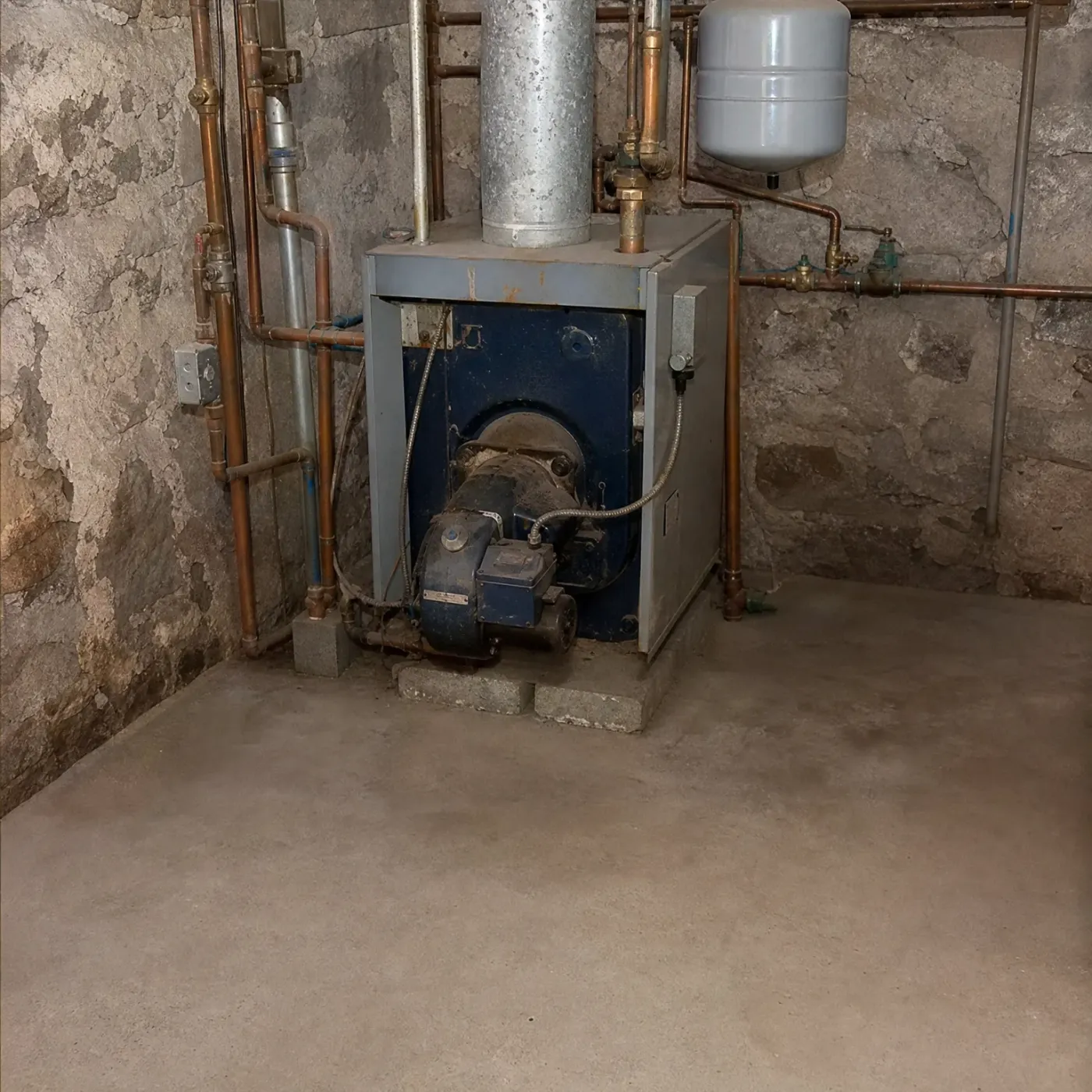
A dark basement with a gray boiler unit, expansion tank, and copper pipes along a concrete wall, with a steel support post and wooden stairs at right.

It's off your list after this

The pro who reaches out is licensed in Maine.

Step 1 of 3: Equipment