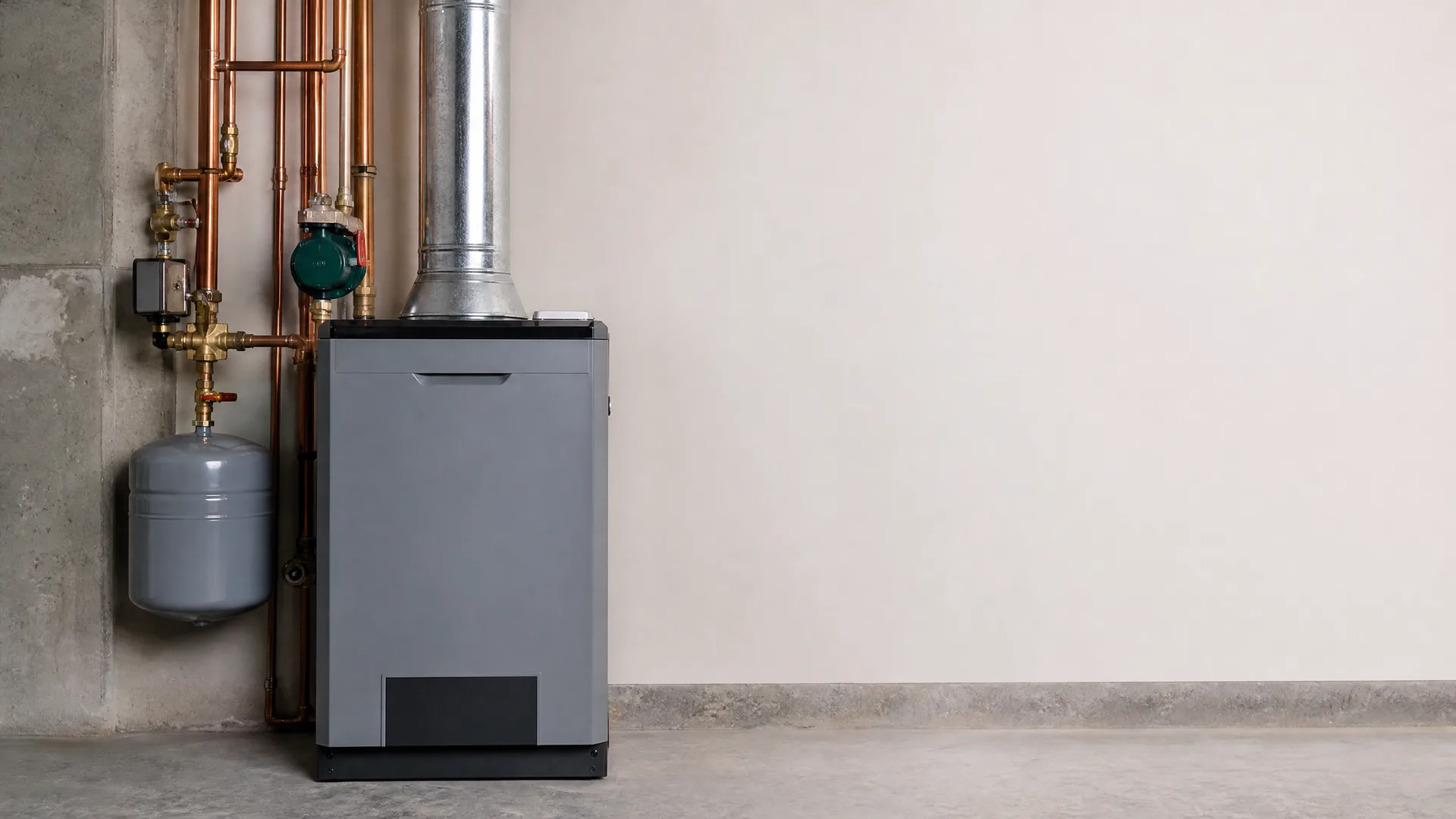
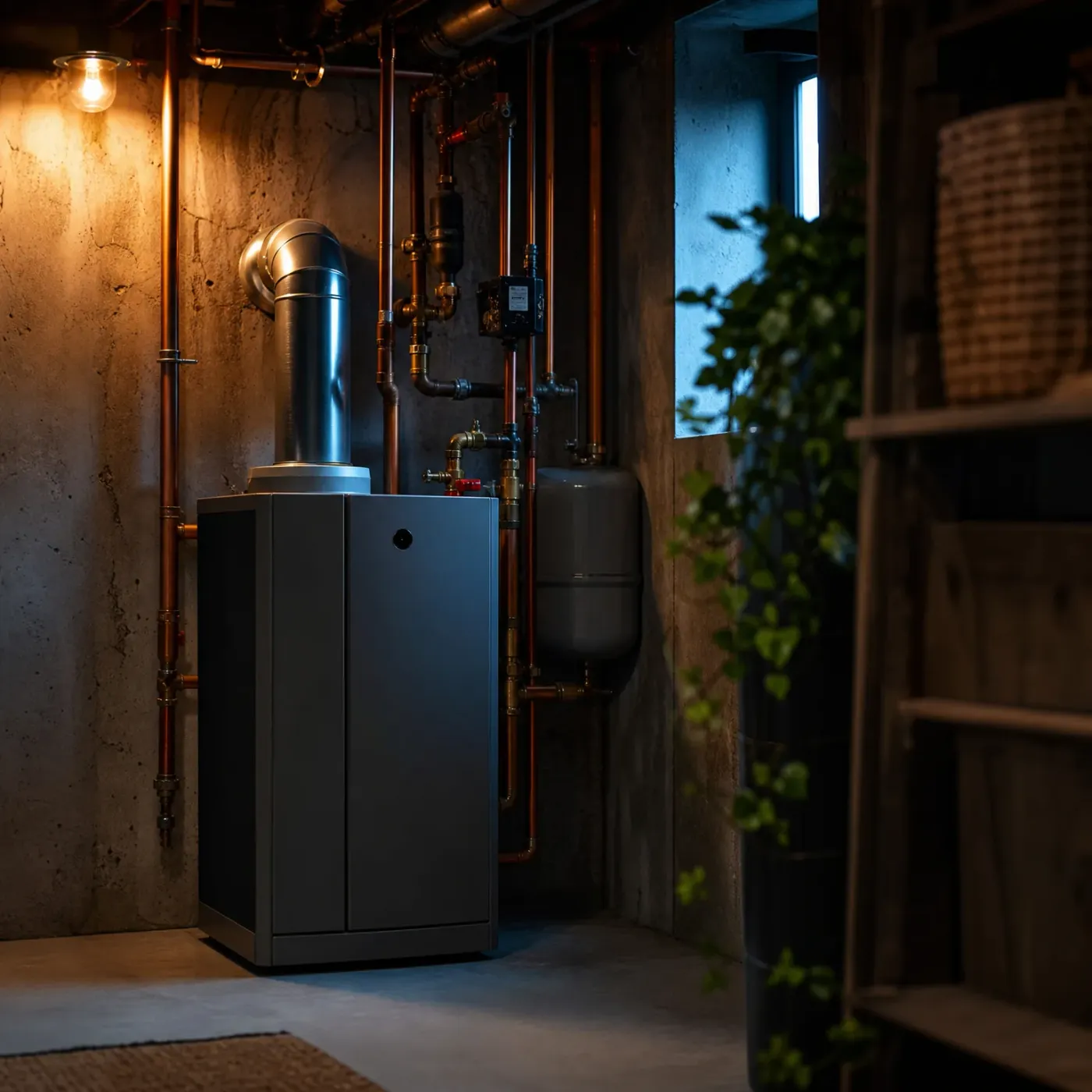
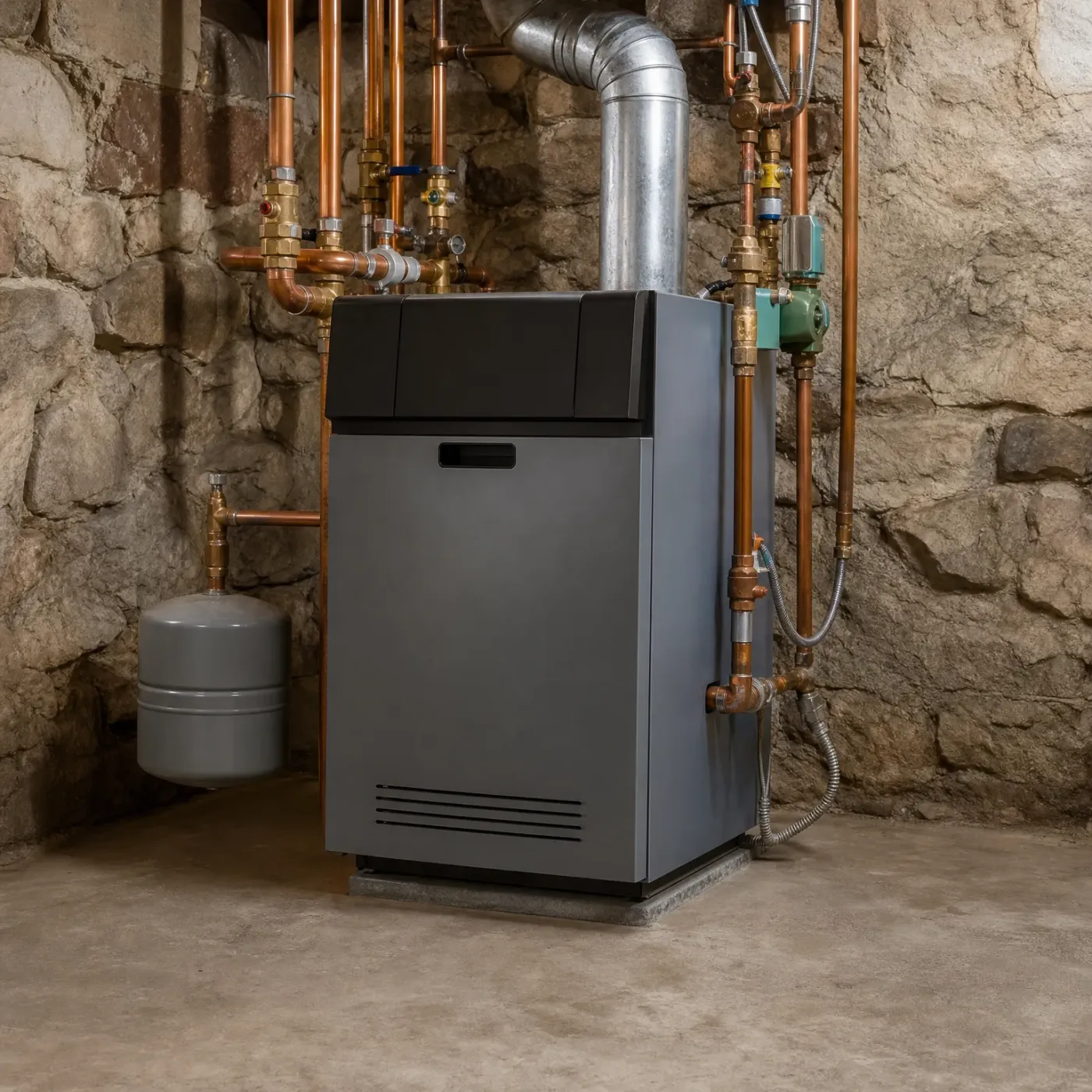
A dark grey floor-standing boiler with a metal flue stands against a concrete basement wall, surrounded by copper pipework, valves and a wall-mounted expansion tank, with ivy and a shelving unit at right.

A pro who works on boilers

What size boiler a Maine home needs

The right boiler size for your Maine home comes down to a heat loss calculation, not square footage alone. Your oil use, your insulation, and how the house holds heat through a Maine winter all factor in. Get matched with a contractor who can size it properly and reach out to walk through your home's numbers.

Match me with a pro

There's no chart that gives you the right boiler size from square footage alone. The number that matters is a heat loss calculation, done room by room, that accounts for how much heat your house actually loses on the coldest night it sees. Two homes the same size can need different boilers because one has more windows, less insulation, or walls that hold heat worse than the other. A boiler sized too big for the house short cycles, turning on and off more than it should, which wears it out faster and never quite gets the comfort right. One sized too small runs constantly in January and still falls short. Oil is how most Maine homes heat, so getting the size right also means not burning more of it than the house needs. A contractor doing the calculation will walk the house, check the insulation, and measure against local winter design temperatures before landing on a number.

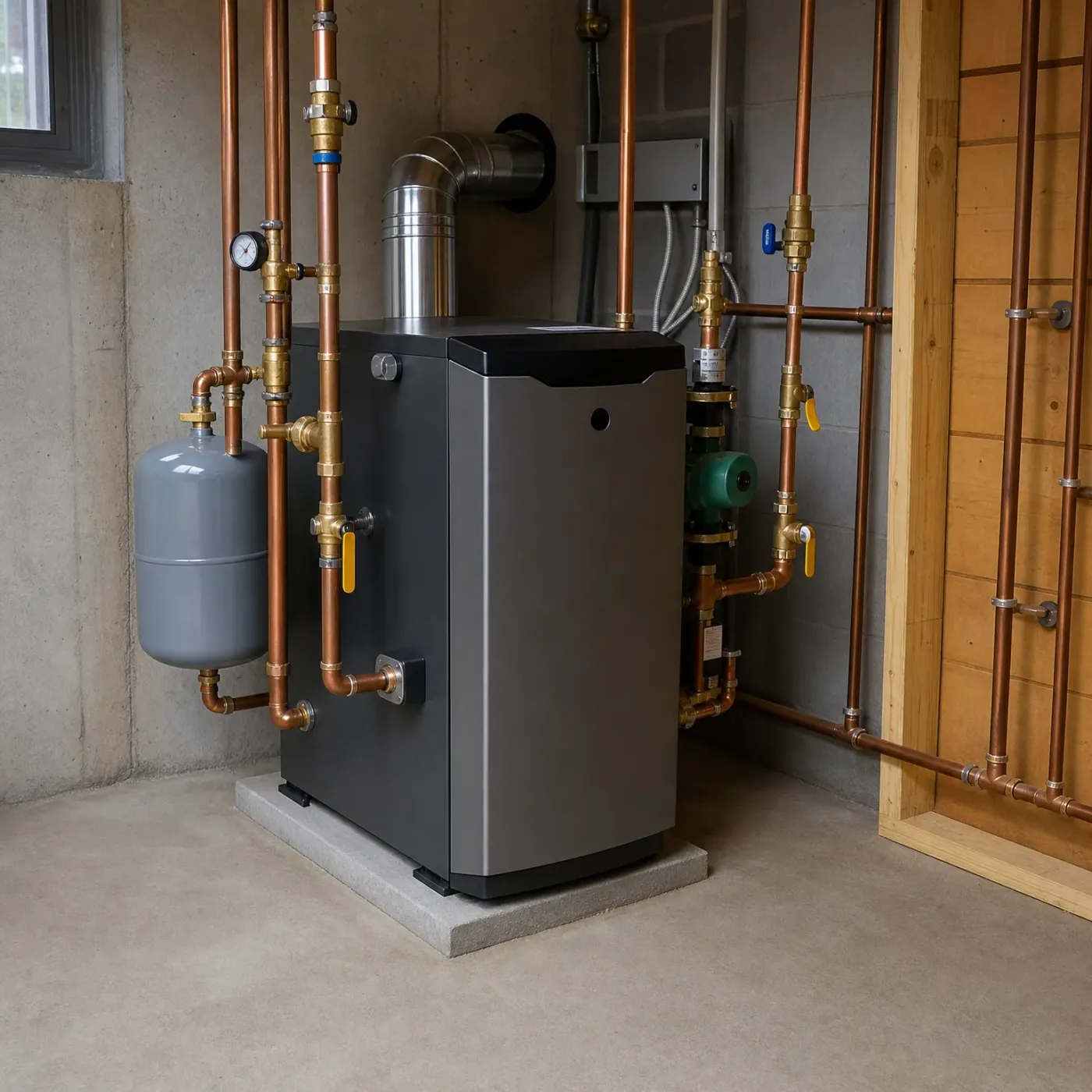
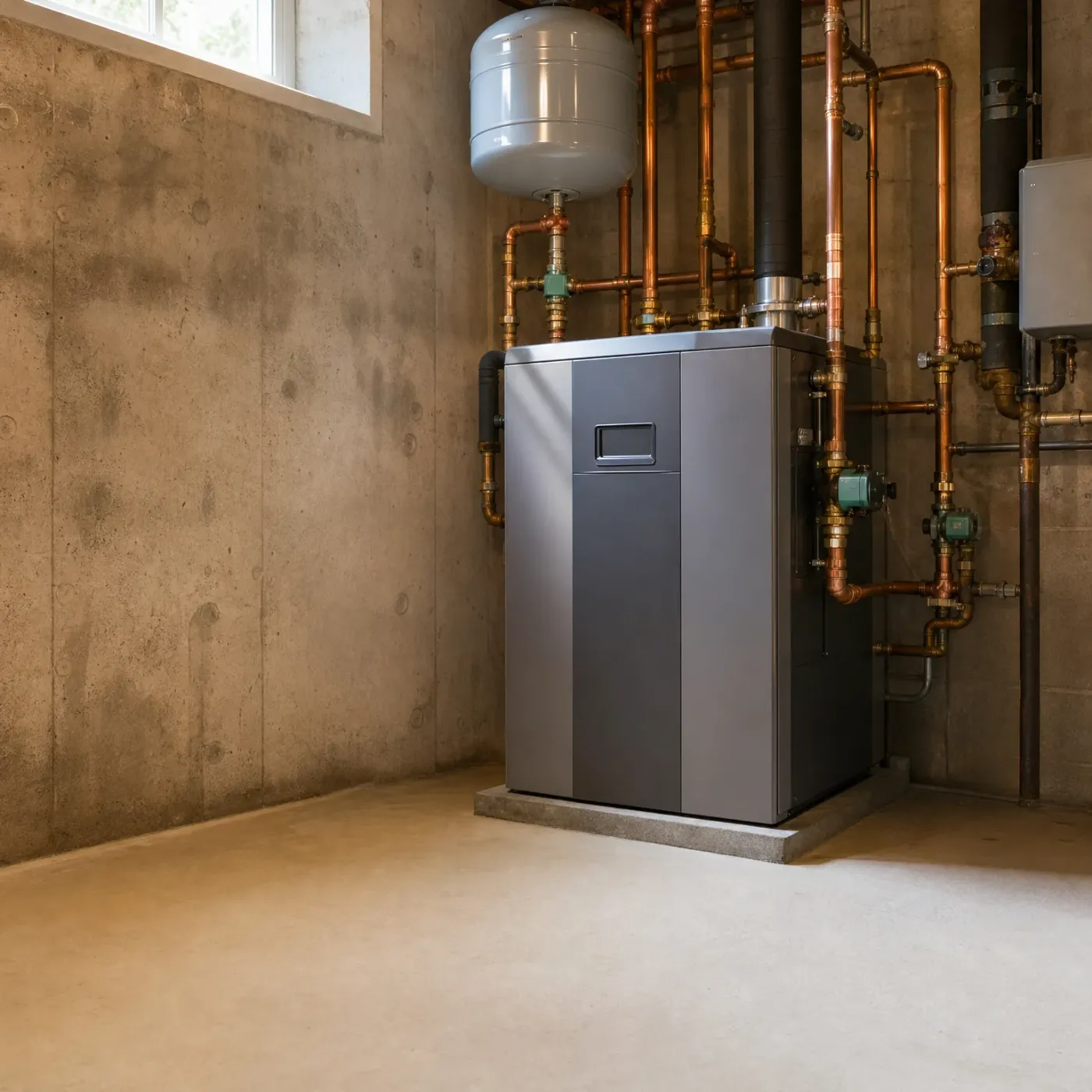
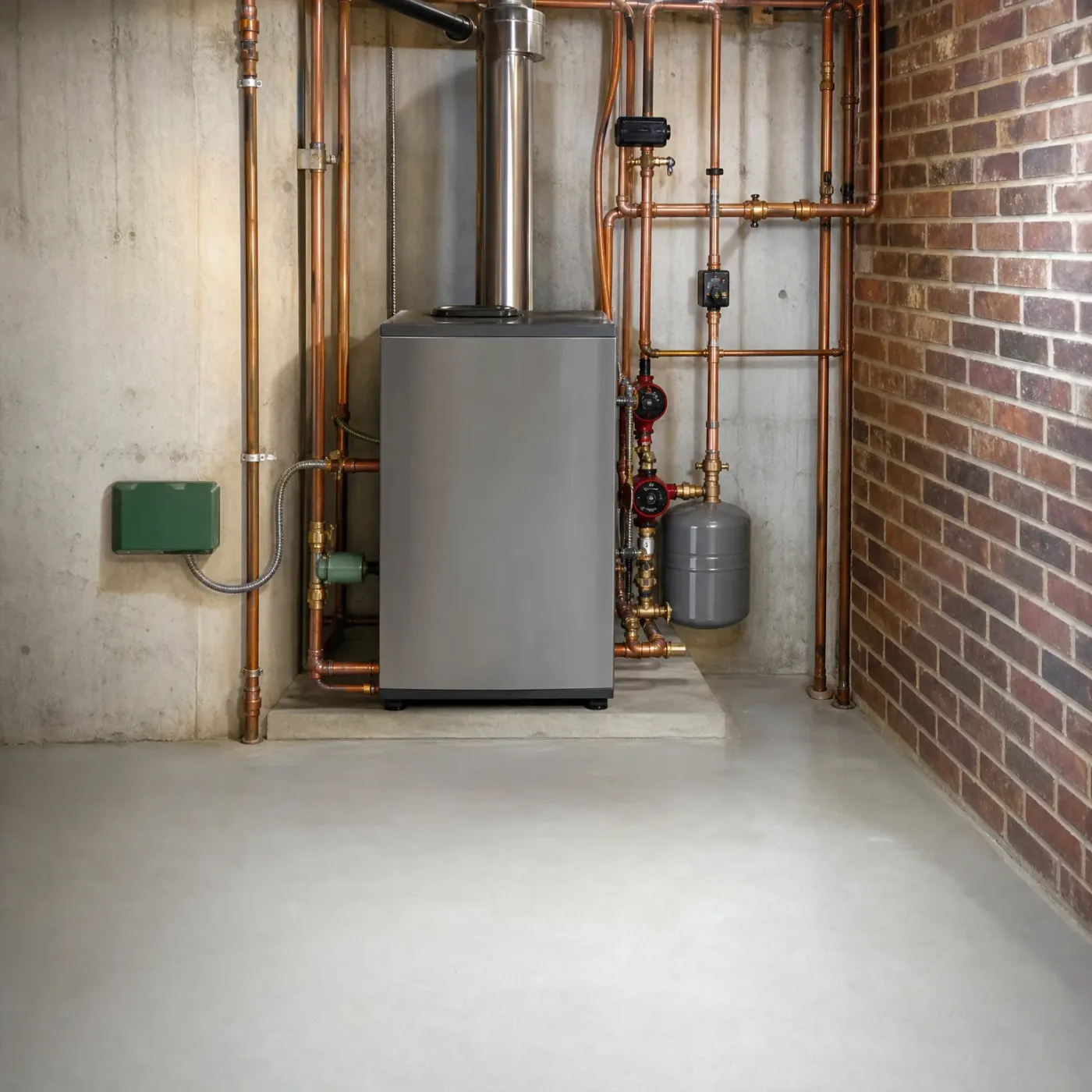
A gray residential boiler on a concrete pad in a basement with stone walls, connected to copper piping, brass valves, a circulator pump, an expansion tank, and a metal flue duct.

Sized Right

This boiler matches what the house loses on the coldest night. It runs long, steady cycles instead of shutting on and off, and the circulator and expansion tank stay at normal pressure. Oil use tracks the weather, not the equipment working against itself.

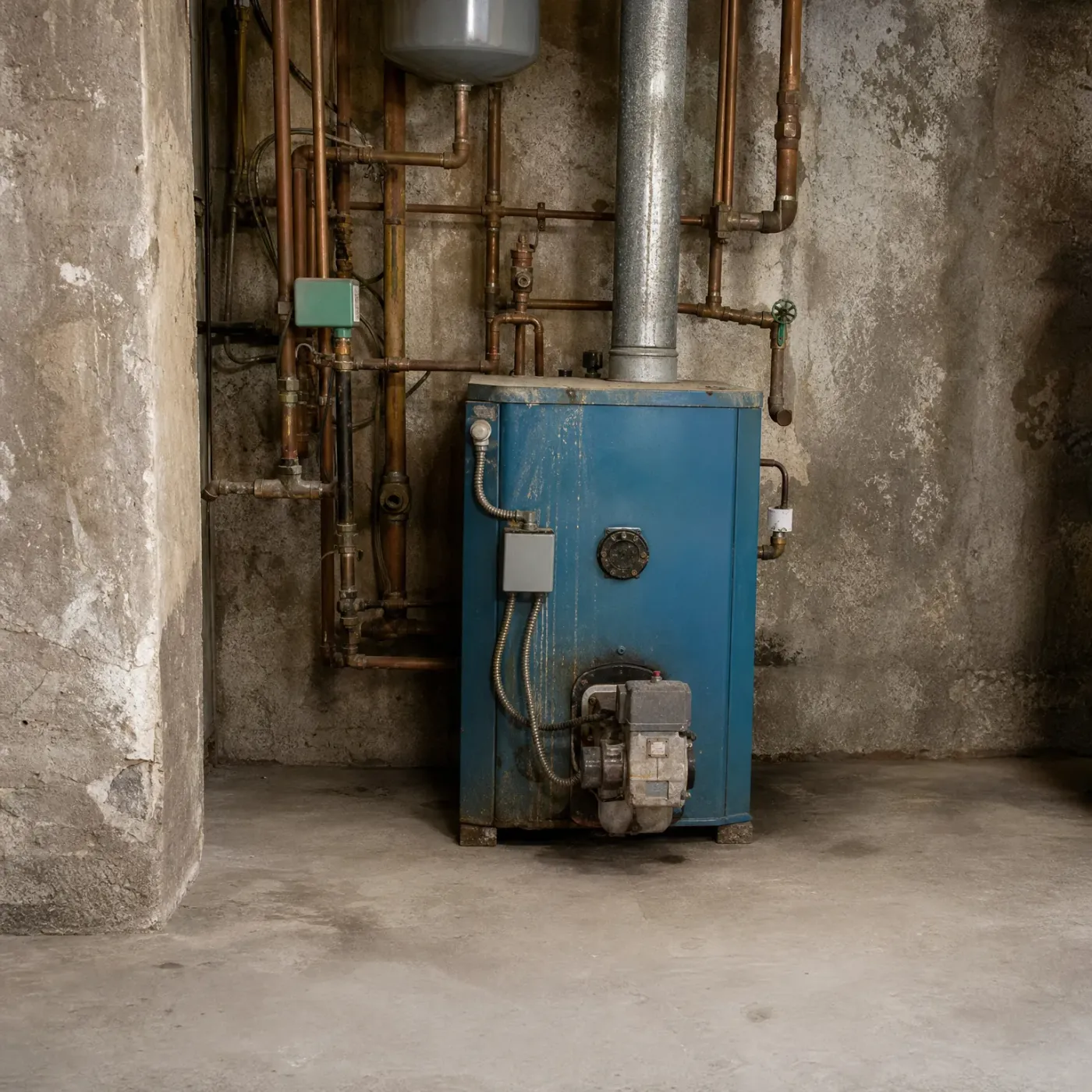
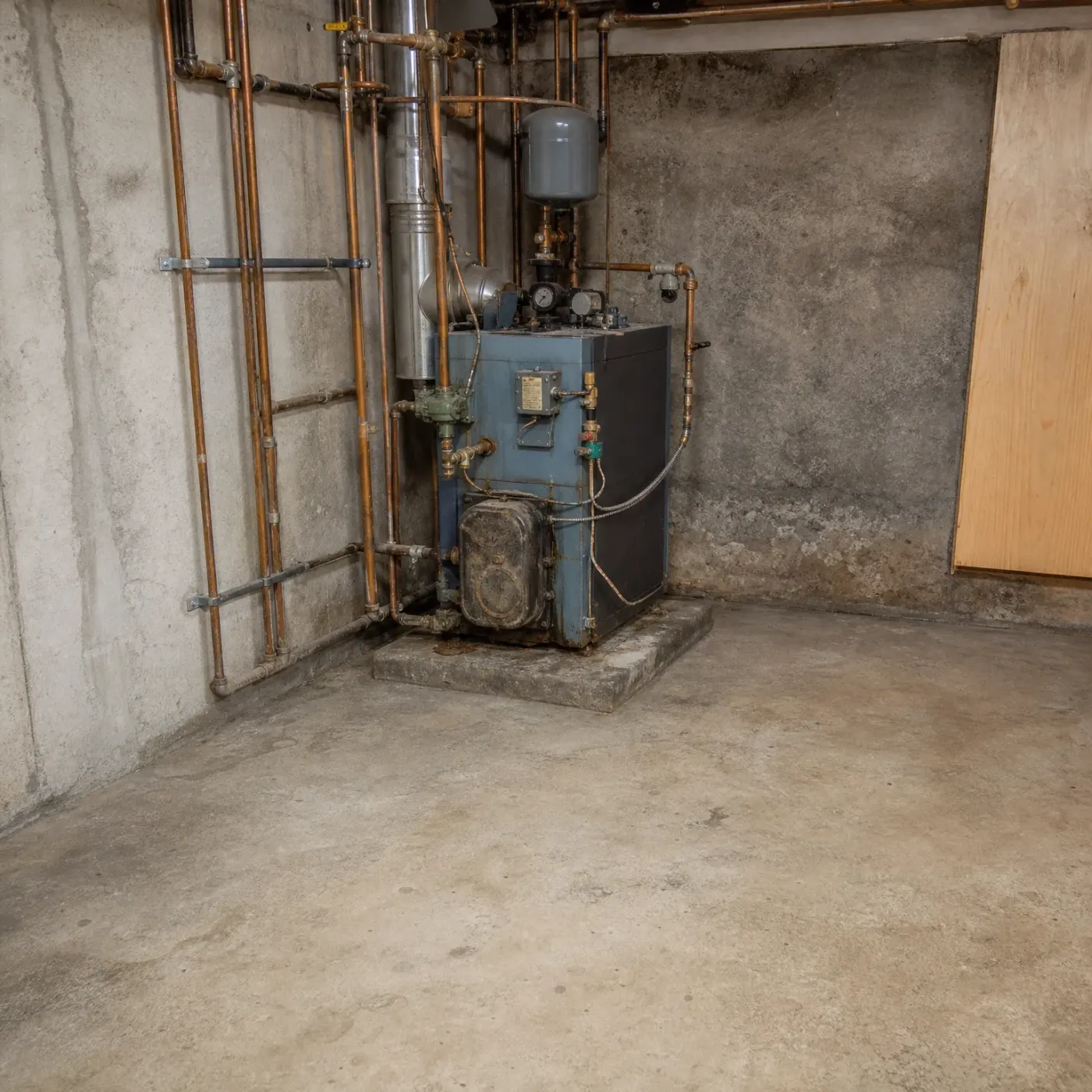
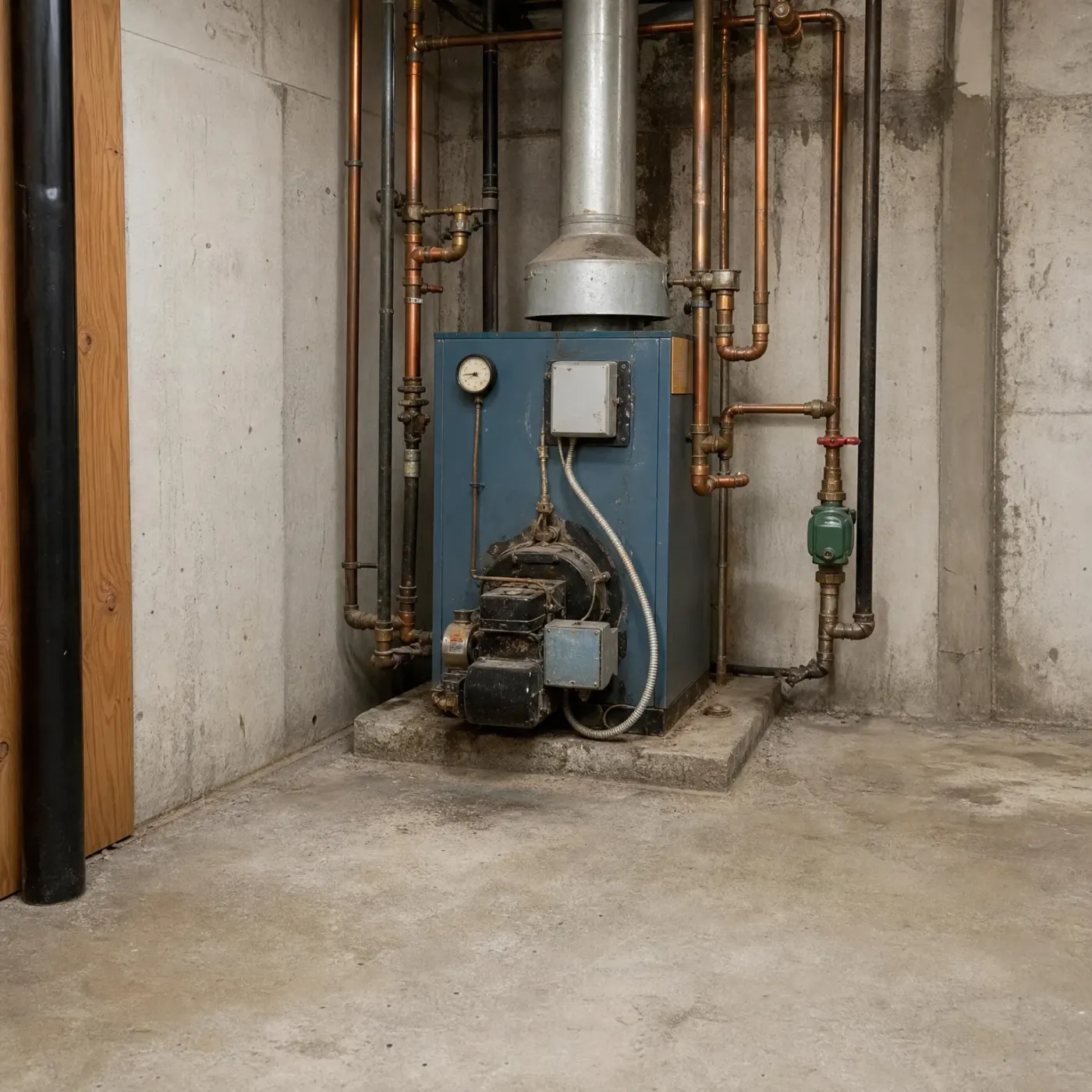
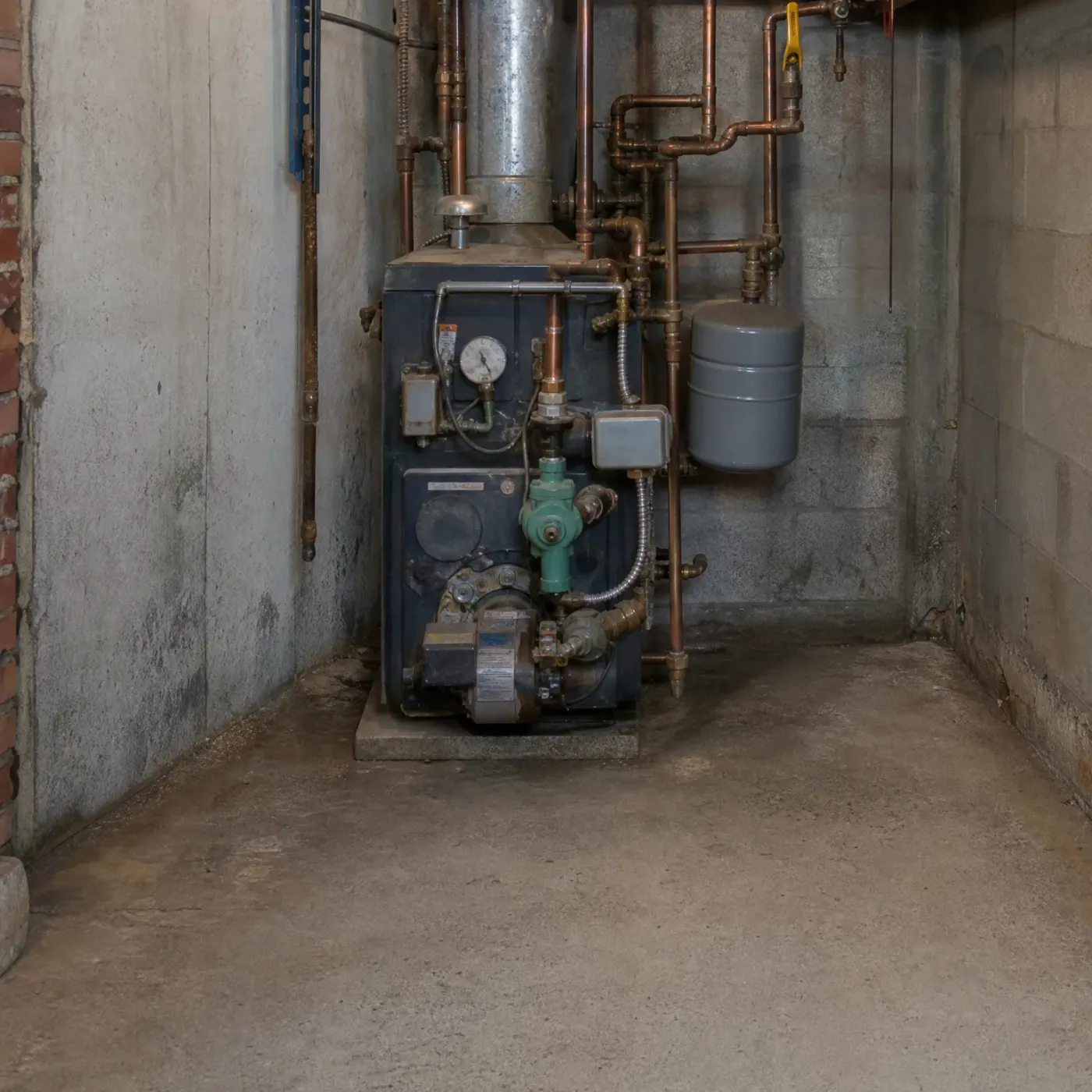
A blue cabinet boiler with a metal flue pipe and copper piping stands against a bare concrete wall in a basement with a concrete floor.

Sized Wrong

An oversized boiler short-cycles, firing hard and shutting off before the house catches up. That wear shows up at the burner and the flue first. An undersized one runs constantly and still can't hold the house warm on the coldest days, and the oil bill reflects both mistakes.

A gray-haired woman in a cream knit sweater stands in a dimly lit kitchen at night, looking to her right, with a round loaf of bread in the foreground and a dark window and potted plant behind her.
A woman and a sleeping child wrapped together in a cream knitted blanket on a couch, with a potted plant, framed photo and lit lamp in the background.

How a contractor sizes your boiler

  • A heat loss calculation adds up every wall, window, and ceiling in the house to find the BTUs needed on the coldest night.
  • Manual J is the method most contractors use, and it works room by room instead of treating the house as one box.
  • Oversizing a boiler causes short cycling, where it fires, satisfies the thermostat fast, and shuts off before the water and cast iron fully heat.
  • Short cycling wears the igniter and burner faster and leaves rooms far from the boiler colder than ones close to it.
  • A correctly sized boiler runs longer cycles at a steady output, which matches how cast iron radiators and baseboard actually release heat.
  • Square footage alone skips insulation, window count, ceiling height, and how many exterior walls a room has, all of which change its heat loss.

A contractor doing this right starts with the coldest night your house sees, not the square footage on a listing. Every wall gets measured. Every window gets counted, along with what kind of glass it has. Ceiling height matters, because a room with an eight-foot ceiling loses heat differently than one with a cathedral ceiling above it. A room with two exterior walls loses more than one tucked in the middle of the house with just one wall facing outside. Add all of that up, room by room, and you get a BTU number that actually describes your house. That's Manual J, and it's the method that holds up because it treats each room as its own problem instead of averaging the whole house into one guess.

Get that number wrong on the high side and the boiler fires, satisfies the thermostat in a few minutes, and shuts off again before the cast iron or the water in the system ever gets to a steady temperature. That's short cycling. It happens over and over through the day, and every start wears the igniter and the burner a little more. Rooms near the boiler get warm fast. Rooms at the far end of the baseboard run, or upstairs, stay cooler, because the system never ran long enough to push heat that far. A boiler sized to the actual heat loss runs longer, steadier cycles, and that's the kind of heat cast iron radiators and baseboard were built to deliver.

A woman with long wavy brown hair in a grey ribbed sweater sits on a couch indoors, looking toward a window, with a potted palm-like plant and fireplace behind her.
A woman with long brown hair wearing a green V-neck top and beige cardigan sits on a light sofa, looking off to the side, with a dining table, lamp and framed picture in the background.
A woman with long dark hair in a cream knit sweater sits on a beige sofa indoors, looking toward a bright window with a houseplant and framed picture in the background.
A woman with long dark hair in a green knit sweater sits on a couch indoors, smiling and looking toward a window with a blurred room behind her.

Get the size wrong and the house tells on it. A boiler too big for the job fires up, blasts heat for a few minutes, and shuts off before that heat ever makes it to the far end of the house. It does that over and over, all night, every night Maine asks for heat. Each of those starts burns oil. The igniter and the circulator take the wear from all that cycling, and that's more service calls down the road. Go too small and the opposite happens. It runs and runs but can't catch up when the temperature drops hard, so the bedrooms farthest from the boiler stay cold no matter what the thermostat reads. Either way it lands on the oil bill, and at Maine prices that adds up fast. A boiler sized to what the house actually loses on the coldest night runs long, steady cycles and holds heat evenly through the house overnight. Nobody wakes up cold, and the oil truck comes when it's supposed to, not more often than it should.

What the Wrong Size Costs You

  • A boiler sized too big for your house will short cycle, and every start burns oil before the heat even reaches the radiators.
  • Short cycling wears out the igniter and the circulator faster, so you're looking at more service calls over the life of the system.
  • An undersized boiler can't keep up when Maine hits its coldest stretch, and you'll notice the far bedrooms stay cold while the thermostat says otherwise.
  • With oil prices what they are here, a boiler running longer than it needs to on every cycle shows up directly on your delivery bill.
  • A properly sized boiler holds steady heat through the house overnight, so the people sleeping in it aren't waking up to a cold room.
  • Getting the size wrong now means living with it for the life of the boiler, since resizing later means replacing it again.
A blue boiler on a raised concrete pad in a basement corner, with copper and steel pipes, a gauge cluster, an expansion tank, and a metal flue running up the bare concrete walls.
Before you get your boiler installation
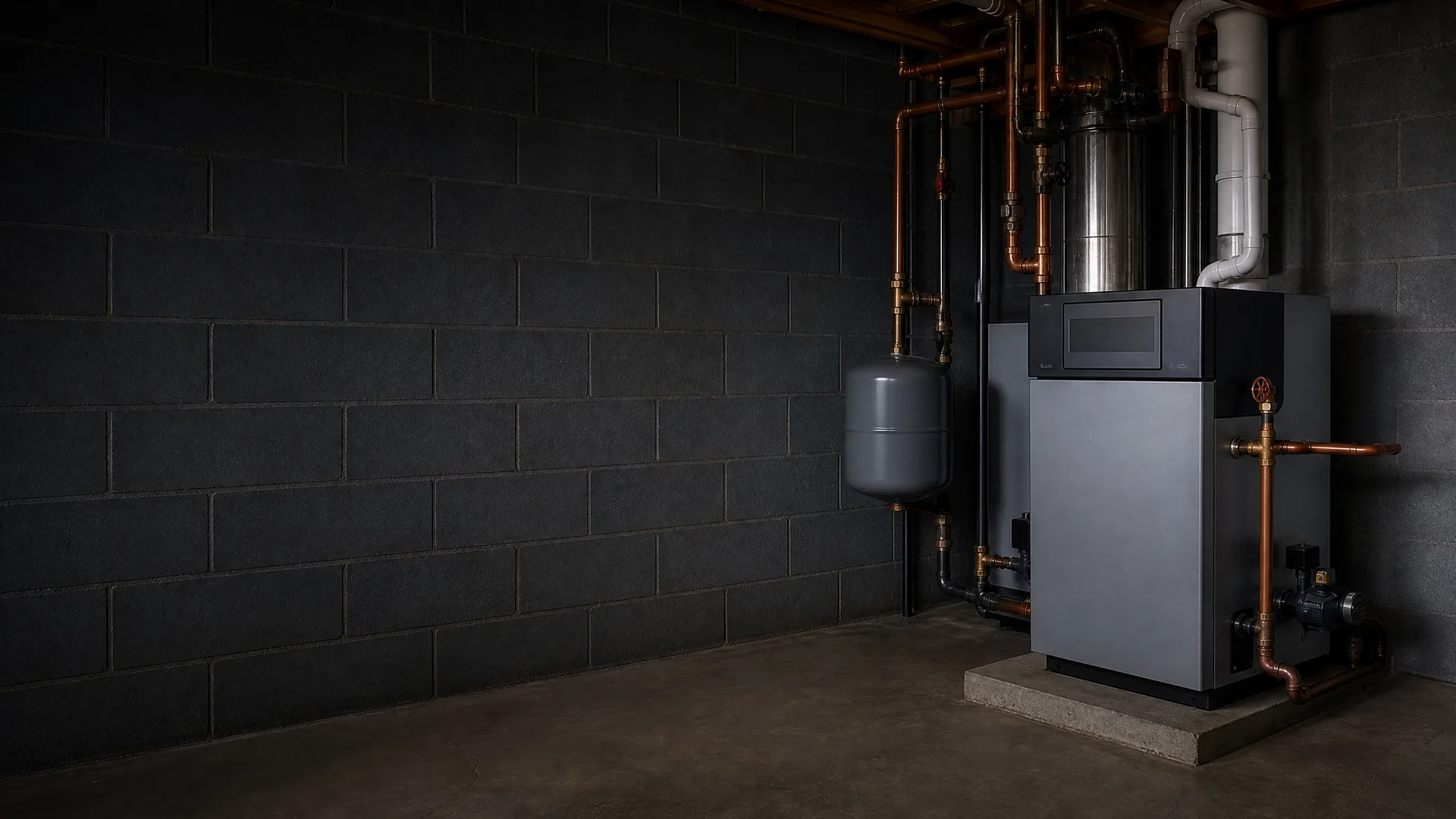
A dark gray floor-standing boiler on a concrete pad in a basement, surrounded by copper piping, brass valves, a gray expansion tank, a circulator pump, and a metal flue pipe against concrete block walls.
After you get your boiler installation

Get your boiler to the right pro

Once you send the form, finding a pro is off your list.

It costs nothing to send, and you don't have to hire anyone.

A gray floor-standing boiler with a metal flue pipe, copper piping, a circulator pump and a gray expansion tank, installed against a concrete wall.

Why oil use is the tell

A boiler sized right will use oil in proportion to how cold it is outside. A harder January pulls more from the tank than a mild one, and that's the only reason it should swing. If your oil deliveries don't track the weather that way, something else is going on. Either the boiler is bigger than the house needs and cycling on and off instead of running steady, or it's undersized and running flat out just to keep up. A heat loss calculation is what rules that out before the install, not after.

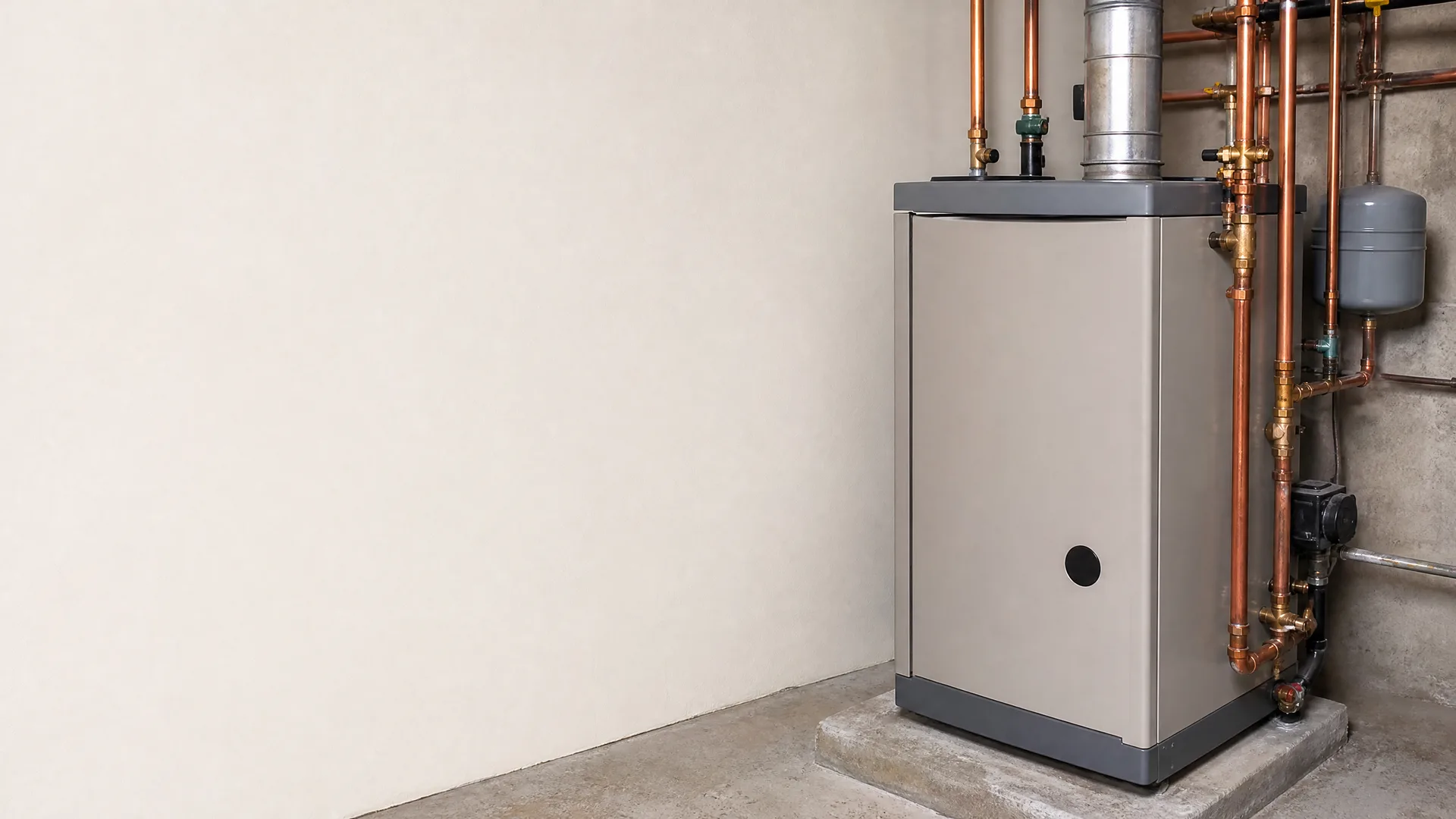
A tall grey floor-standing boiler on a concrete plinth in a corner of a room, with copper pipework, a flue, a circulator pump and an expansion vessel to its right, beside a plain cream wall.

What a cast iron boiler expects

Most boilers in Maine homes are cast iron, built to run long and steady once they're up to temperature. That design only pays off if the BTU output matches what the house actually loses on a cold night. Oversize it and the iron heats up fast, satisfies the thermostat, and shuts down before the heat has moved through the radiators. Undersize it and it never gets ahead of the loss, running longer than it should on the coldest days of the year. Either way, the calculation is what tells a contractor where that match point is.
Matching the Old Size vs. Measuring the House

Old Boiler, Same Size

  • The replacement gets specified at whatever size the old boiler happened to be, with no new heat loss calculation run.
  • If the original install guessed high, which was common for years, the mistake just carries forward into the new equipment.
  • An old cast iron boiler losing efficiency over the years may have been oversized to begin with, masking the real number the house needs.
  • Oil deliveries keep showing the same pattern as before, so there's nothing to tell you whether the size was ever right.
  • Insulation work, new windows, or an addition since the last boiler went in never gets factored into the replacement.
  • The installer can quote faster and the job moves along without the extra step of measuring the house room by room.

New Heat Loss Calculation

  • A contractor measures every wall, window, and ceiling to find the BTUs your house actually loses on the coldest night it sees.
  • Changes since the last boiler, like new windows or added insulation, show up in the number instead of getting carried over by habit.
  • The boiler that comes out of it runs longer, steadier cycles instead of short bursts that burn oil without warming the radiators.
  • It takes more time upfront, since someone has to walk the house and work room by room rather than read a nameplate.
  • Oil use afterward should track how cold the winter gets, not swing for reasons that have nothing to do with the weather.
  • The circulator and expansion tank run at the pressure they were built for instead of absorbing the strain of a mismatched boiler.
A gray boiler unit on a concrete pad in a basement corner, connected to copper piping, circulator pumps, and a ceiling-mounted expansion tank against bare concrete walls.

Running the way it should

This is what a boiler sized to your house looks like once it's installed: clean copper runs, a circulator for each zone, an expansion tank set to the right pressure. Nothing here is working harder than the house asks it to.

A blue oil-fired boiler with a pressure gauge, burner unit and metal flue sits on a concrete pad in a basement corner, surrounded by copper and black pipes against bare concrete walls.

Running the way it shouldn't

An older boiler crammed into a corner, flue duct bent to fit, pressure gauge creeping past where it should sit. When the size was never checked against the house, the unit ends up carrying weight it wasn't built to carry, and the gauge is often the first place that shows.

What is your boiler telling you right now

Stand in the room farthest from the boiler on a cold night and put your hand on the radiator or baseboard. If it takes a long while to warm up, or never gets more than lukewarm while the room near the boiler is fine, the heat isn't reaching that end of the house. Listen for the burner kicking on and off every few minutes instead of running a long, steady stretch. Check the oil gauge against how cold it's actually been. If deliveries keep coming at the same pace whether January is mild or brutal, the boiler isn't responding to the house, it's just running on its own schedule. Left alone, that pattern means paying for oil that never makes it to the rooms where people are sitting.

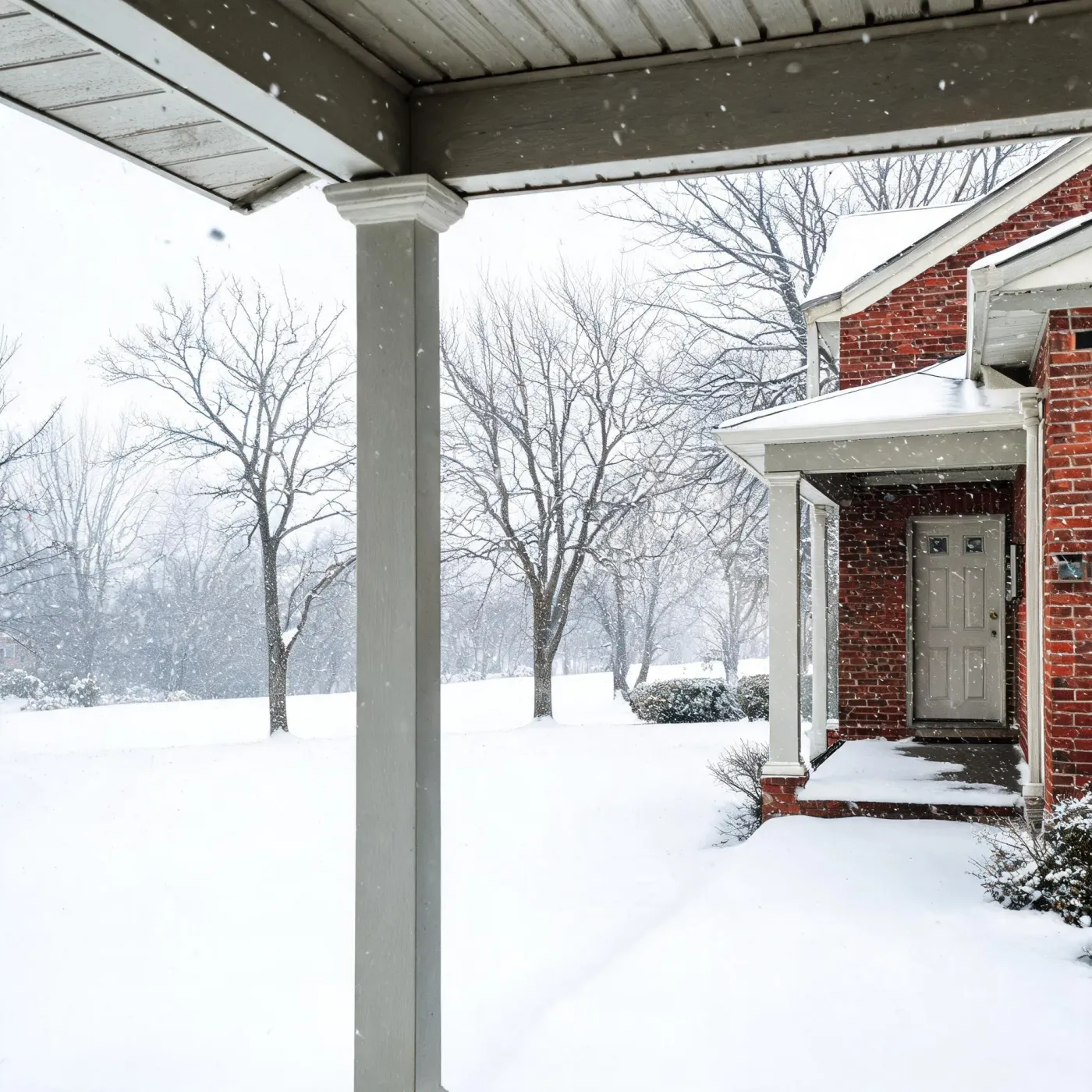
View from under a covered porch with a white column toward a red brick house entrance with a gray door, surrounded by deep snow, bare trees, and falling snowflakes.

Winter nights statewide average 13°F, according to NOAA. A boiler sized to your house has to cover that cold straight through the night, not just get close by morning. Undersized, and you'll feel it first in the far rooms, the ones down a long run of baseboard, still cool at 2 a.m. while the thermostat says otherwise. Oversized, and it'll fire hard and short against that same cold, burning oil in bursts instead of a steady, even run. Thirteen degrees is the number a proper heat loss calculation is built to handle, not guessed at. That's what keeps the whole house warm on the nights it actually matters.

NOAA nClimDiv 1991-2020 county normals weighted by homes

A gray boiler on a concrete pad in a basement, connected to copper piping, valves, pumps and a gray expansion tank, with a concrete wall on the left and a brick wall on the right.
Copper runs, brass fittings, red circulator pumps, all doing their job without strain, the expansion tank holding steady pressure.
A dark cast-iron boiler with copper piping, pressure gauge, and a gray expansion tank sits on a concrete pad in a basement corner with concrete block and brick walls.
An older oil-fired boiler crowded into a narrow alcove, the pressure gauge worth a look if the rooms upstairs run cold.

Winter nights average 13°F statewide

That 13° average includes plenty of nights that drop well below it. Your boiler has to hold its own against those, running steady through the dark hours without the far rooms going cold before morning.

NOAA nClimDiv 1991-2020 county normals weighted by homes

A woman in a cream cardigan and jeans stands with one hand raised facing an open front door of a gray horizontal-siding house, with a black lantern wall light, a potted shrub with yellow flowers, and a stone-faced porch column.

The right size comes from your house, not a guess

A heat loss calculation is the only way to know what your boiler should be. Not the old unit's rating, not the square footage, not a number pulled from a chart. Someone has to work through your house room by room and add up what it loses on the coldest night, then size the boiler to cover that. Oil use tells you afterward whether they got it right. It should rise and fall with the weather outside, nothing else.

Getting that calculation done means finding a contractor who'll actually run it instead of matching the old boiler's size. That's the part you can hand off. Once you're matched with someone who sizes jobs this way, they'll reach out and take it from there, and the sizing question stops being something you have to puzzle through on your own.

A living room corner with a beige upholstered armchair holding navy and striped cushions, a small round wooden side table with a carved bowl and a potted green plant, a framed landscape picture on a pale wall, built-in shelving, and a curtained window.
A gray boiler unit with a control panel sits on a concrete pad in a basement room with dark concrete block walls, connected to copper and metal piping, a gray expansion tank, and an insulated flue.

The right pro for this job

After you send the request, you're done searching.

Step 1 of 3: Equipment