
Is a high-efficiency boiler worth it in Maine

A local installer who puts in boilers gets your project.

Get matched

For most Maine homes, yes. Most houses here heat with oil, and a high-efficiency boiler burns less of it to make the same heat, because it captures warmth from the exhaust that an older boiler just sends up the flue. That gap matters more here than in places with mild winters, since a Maine boiler runs hard from fall through spring. Electricity here is expensive too, so a boiler that needs less of it to run its igniter and circulator pump helps on that bill as well. Summers are warm but not muggy, so the boiler sits idle for a few months and does all its work in the cold half of the year. A new high-efficiency unit also tends to need less from a chimney, since many vent straight through a wall. Whether it is worth it for your house depends on the boiler you have now and what it would take to replace it, which is worth having someone local look at.

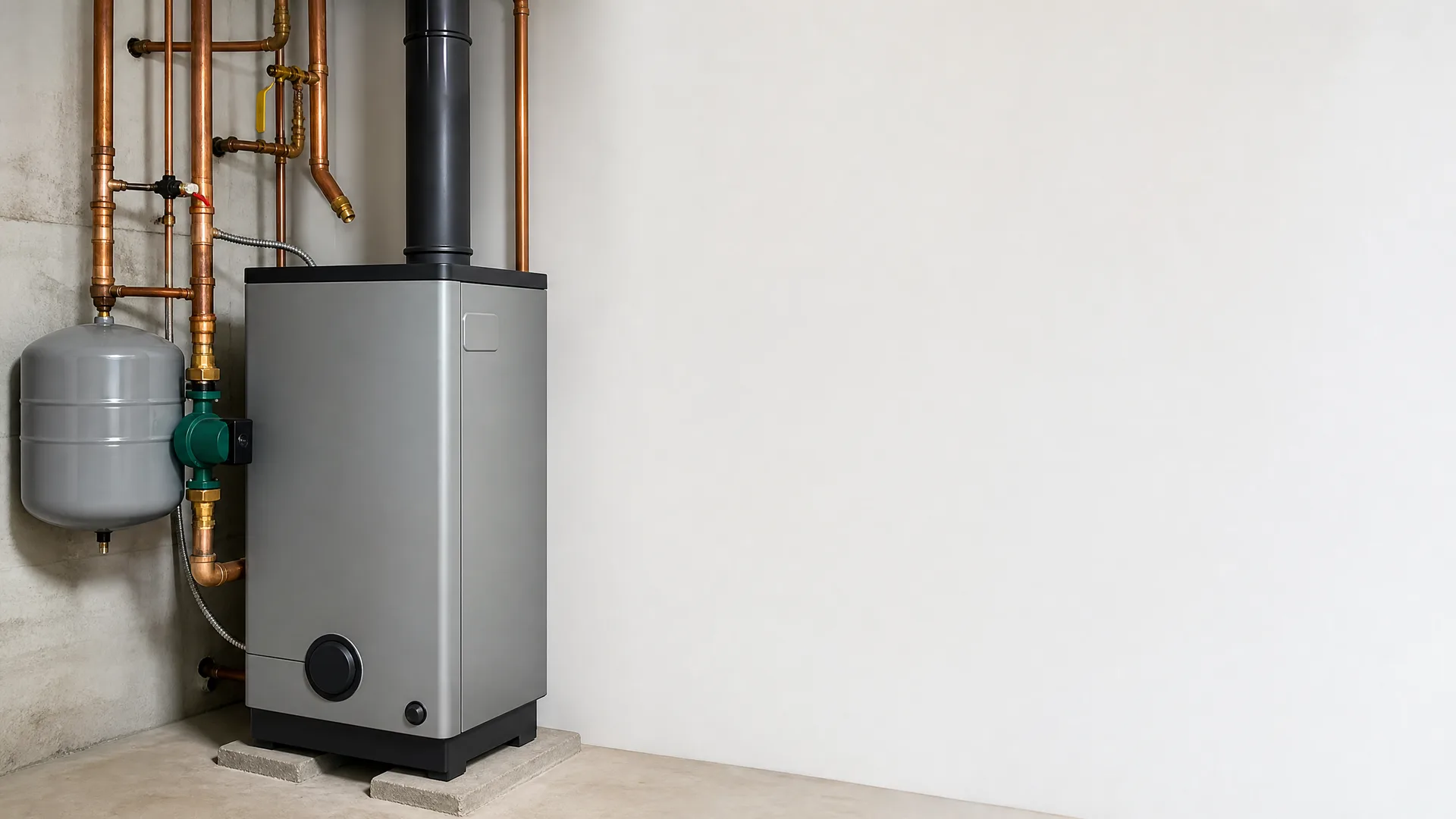
A gray floor-standing boiler with a black flue pipe stands on concrete blocks in a corner, connected to copper pipes, a green circulation pump, and a gray expansion tank on the wall.

Where the savings come from

An older oil boiler sends a lot of heat straight up the flue, since the exhaust can leave the house near 400 degrees. A high-efficiency model cools that exhaust further before it vents, pulling more of the oil's heat into your water or your air instead. It's why the flue pipe on a high-efficiency boiler is often PVC, not metal. Metal can't hold up to exhaust that cool and that wet. That single difference is most of the gain you're paying for.

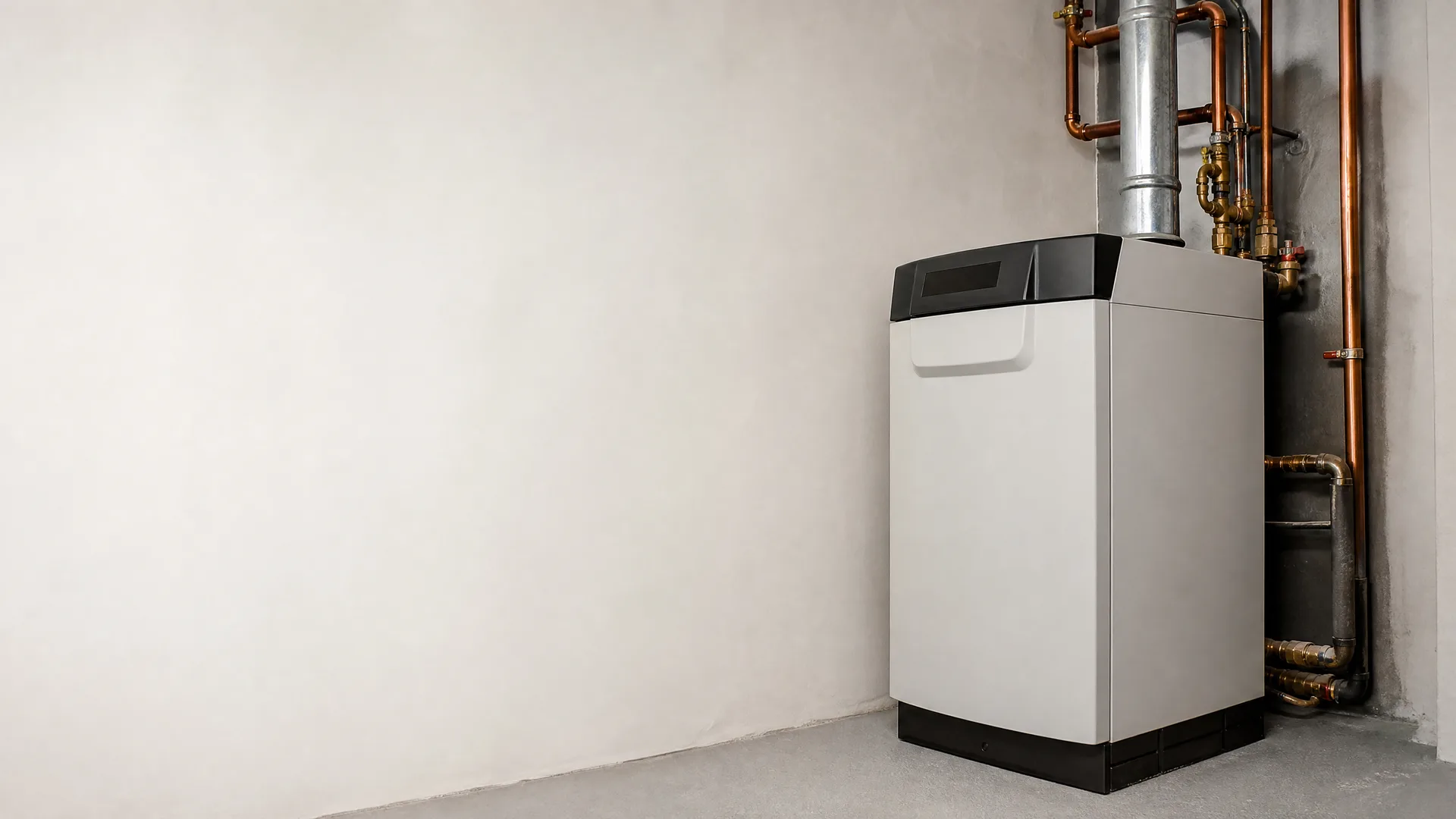
A white and black floor-standing boiler in the corner of a bare plastered room, with copper and metal pipes running up the wall behind it.

Why Maine winters show it

A boiler that only runs a few weeks a year barely matters which kind it is. Yours doesn't work that way. From the first hard frost through a long stretch of cold, it's cycling on and off most days, and every one of those cycles either wastes heat up the flue or doesn't. Run that many cycles over a Maine winter and the difference between an old boiler and an efficient one stops being theoretical. It shows up on the oil bill month after month.

How does a high-efficiency boiler actually get more heat out of the same oil?

You've heard the pitch that a new boiler squeezes more heat from the same amount of oil, but nobody explains what's actually different inside it. You want to know what's happening mechanically, not just the claim that it saves money. If you're going to pay for a new system, you want to understand what you're paying for.

It extracts a second round of heat from exhaust that a standard boiler wastes

A standard oil boiler burns fuel once, pulls heat into the water, and lets the rest of the exhaust escape through the flue still hot. A high-efficiency boiler adds a second heat exchanger in that exhaust path. As the flue gas passes through it, more of its heat transfers into the water before the gas leaves the house. Some models cool the exhaust enough that water vapor in it condenses back to liquid, which releases even more heat in the process. That's why these are often called condensing boilers. The flue gas leaving the house ends up far cooler than it would from an older unit, and that difference in exhaust temperature is heat that stayed in your home instead of going up the chimney.

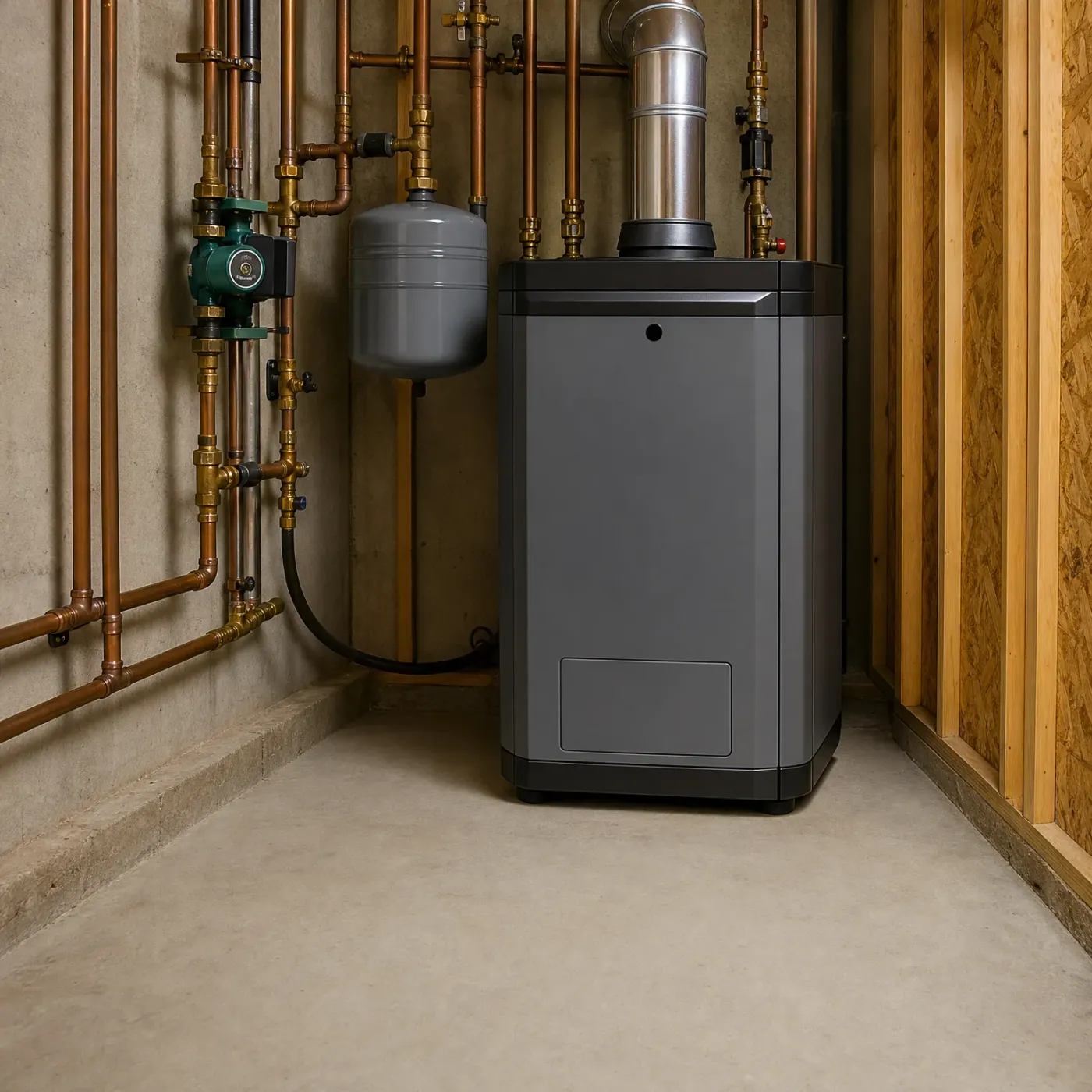
A gray floor-standing boiler with a metal flue pipe stands in a basement corner beside copper piping, brass valves, a green circulator pump, and a gray expansion tank on a concrete wall, with exposed wood framing and sheathing at right.

A boiler that's keeping up

This is what a high-efficiency boiler looks like running the way it should. The flue is stainless steel, sized for the cooler exhaust these units put out, and the pump and expansion tank are sized to match. Nothing here is working harder than it has to.
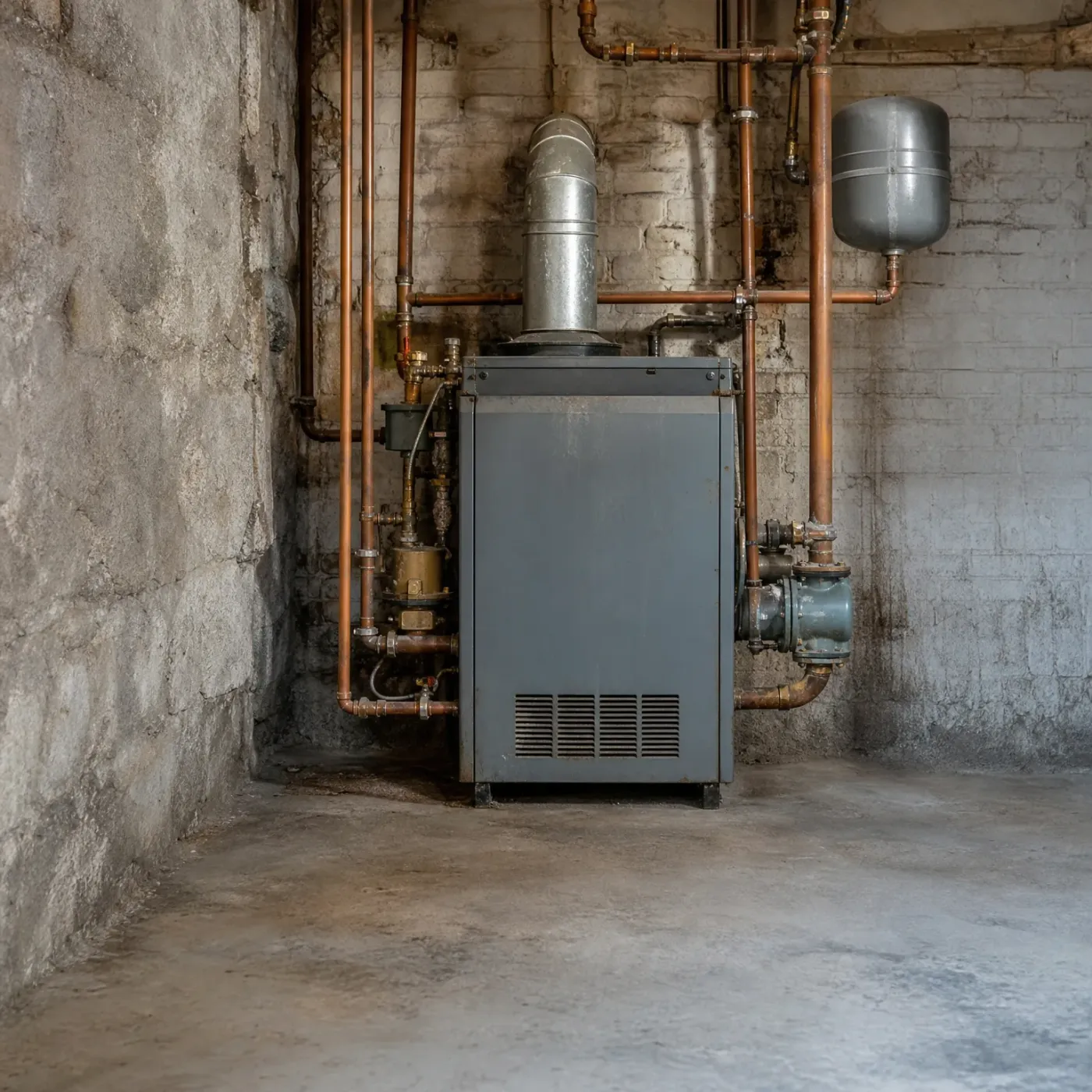

A gray boiler with a metal flue pipe and copper piping stands against a weathered painted brick basement wall, with an expansion tank mounted overhead and a bare concrete floor in front.

A boiler on borrowed time

Cast iron like this can run for decades, but the galvanized flue is a sign of how it vents: hot, and mostly up the chimney. If yours looks like this, the oil it burns this winter is doing less for you than it used to.

A woman with long gray hair wrapped in a checked blanket sits on a sofa by a window with yellow autumn foliage outside, with a lamp, framed picture and plant in the background.
An older woman in a cream knit sweater sits on a sofa by a window, looking out at sunlit trees with yellow and orange autumn leaves, with a bookshelf and lamp behind her.
A woman with gray shoulder-length hair in a dark knit sweater sits on a cushioned seat by a window, looking out at yellow autumn foliage, with a living room, armchair, houseplant and framed picture behind her.
An older woman with gray hair in a bun, wearing a cream knit sweater, sits on a sofa with a gray blanket and looks out a large window toward yellow-green autumn trees, with a lit table lamp and dark armchair behind her.
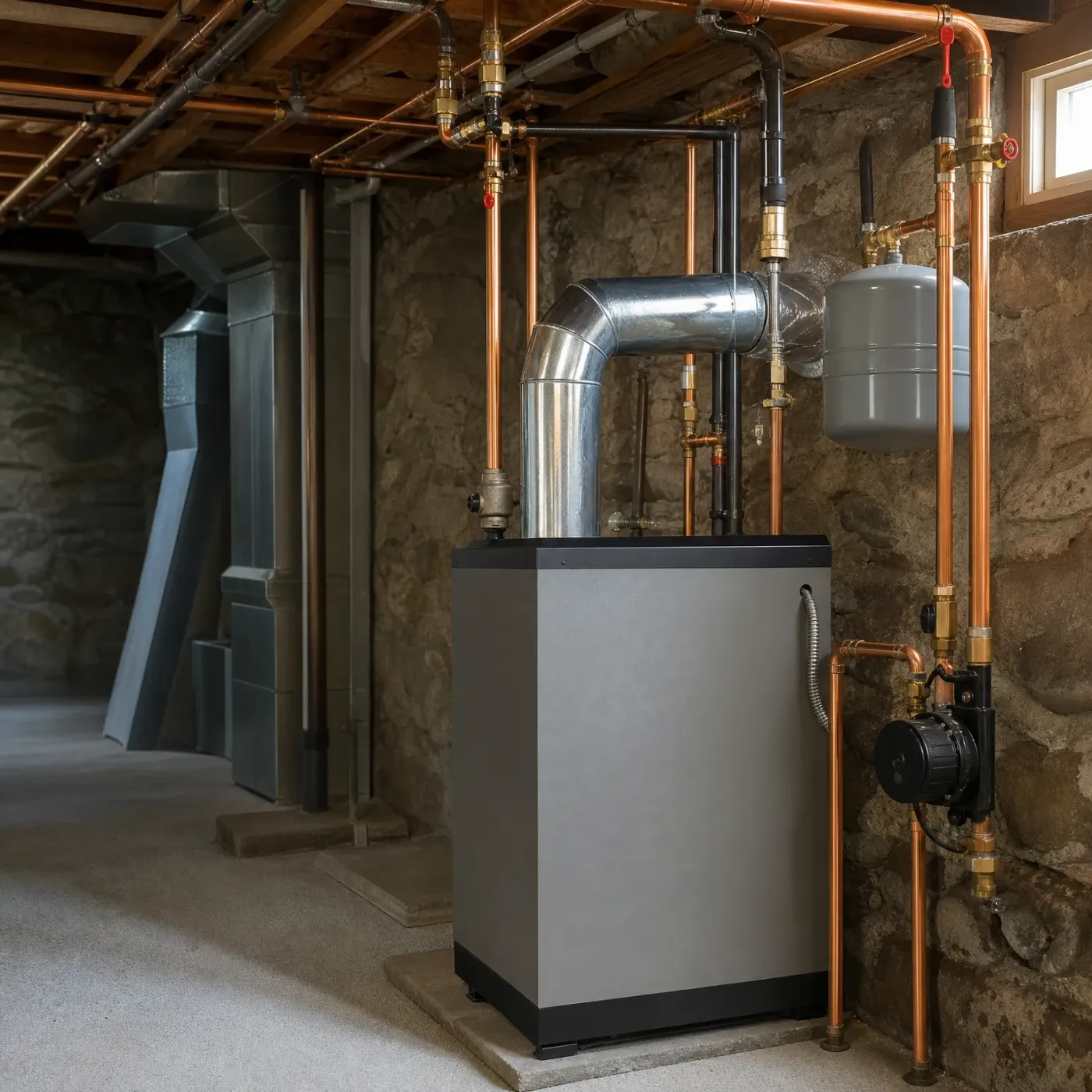
A gray boiler unit on a concrete pad in a stone-walled basement, connected to copper piping, brass valves, a circulator pump, an expansion tank, and a metal flue vent.

Matched to your boiler job

One installer gets your project, so there's no bidding war over it.

Get in touch with a local installer about a new boiler.

Find a boiler pro

Asking costs nothing, and the choice to hire stays yours.

Keep it running or replace it now

Keep the old boiler

  • No installation to pay for now, and no disruption to your heating while someone swaps equipment.
  • An older cast iron boiler can run for decades, so if yours is still holding pressure and firing clean, it may owe you nothing.
  • You already know its quirks: how long it takes to recover, what noise means trouble, when to call for service.
  • More of every gallon of oil you buy goes up the flue as heat instead of into your rooms.
  • If the heat exchanger or a major part fails, repair costs land on a machine that was already losing you money in fuel.
  • Replacement parts for an old boiler get harder to source every year it stays in service.

Install a high-efficiency boiler

  • Less oil burned for the same heat, which matters more here since most Maine homes run on oil all winter.
  • A new boiler comes with a warranty, so the parts most likely to need attention in the first years are covered.
  • The install is a chance to size the boiler and pump correctly for your house, instead of inheriting a size picked decades ago.
  • A new control board and igniter system start that first winter with zero hours on them, not years of wear.
  • The stainless steel flue it needs costs money to install alongside the unit, since the old chimney liner usually can't handle the cooler exhaust.
  • You're paying for the equipment and labor now, against oil savings that show up gradually over the winters ahead.
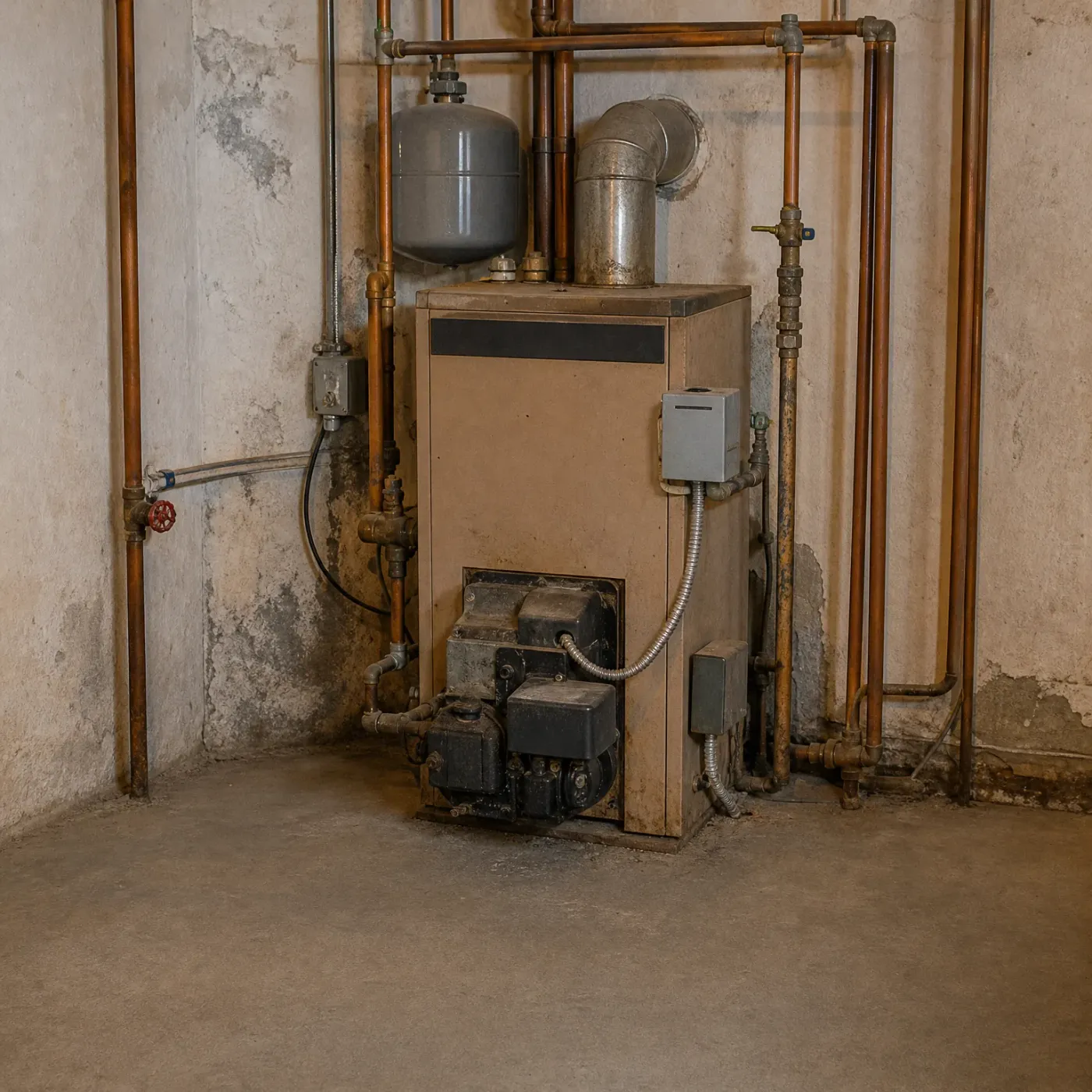
An older oil-fired boiler with a burner unit, flue pipe, expansion tank and copper piping stands in the corner of a concrete-floored basement with weathered plaster walls.
Before you get your boiler installation
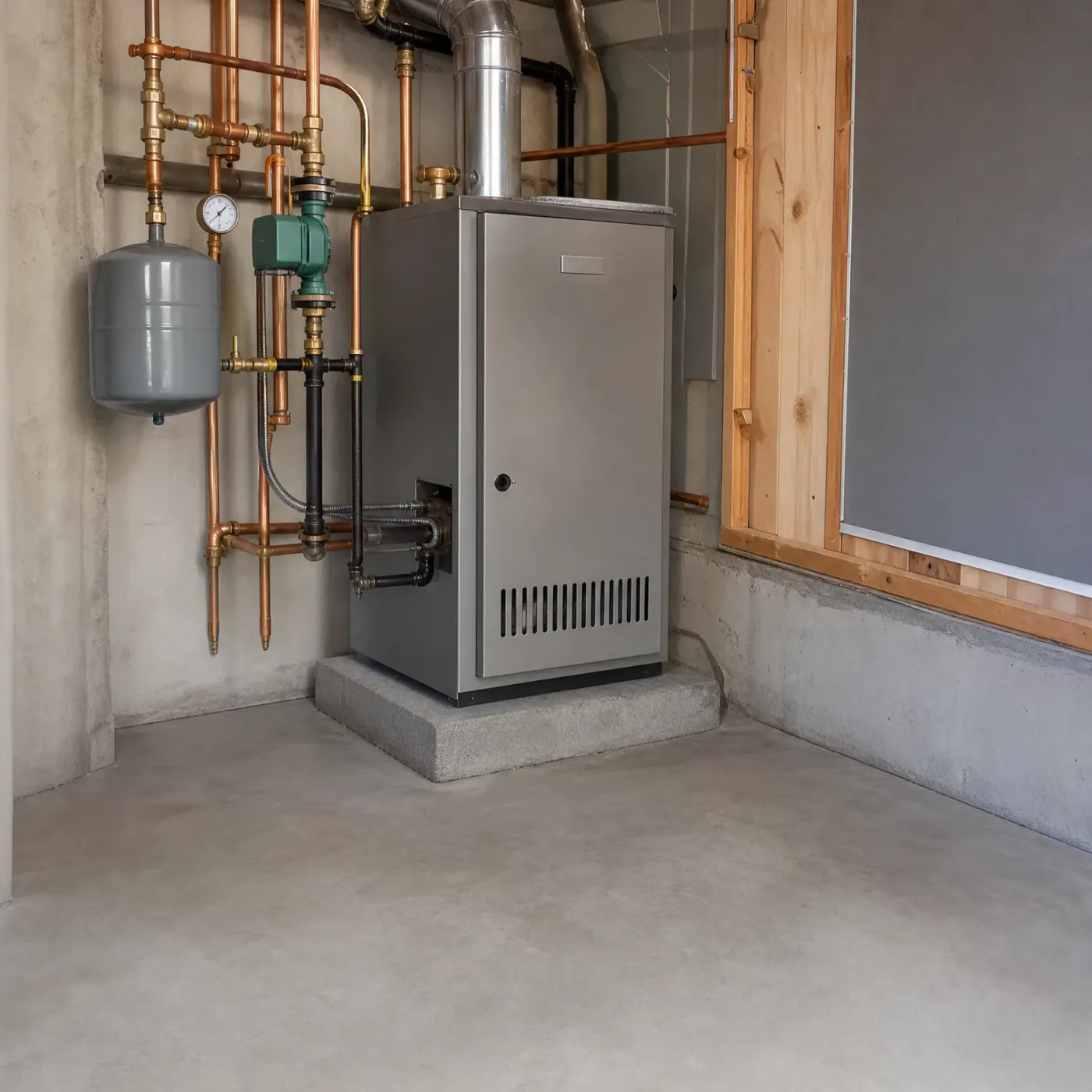
A gray boiler on a concrete pad in a basement corner, connected to copper and black pipes with a gauge, circulator pump, and gray expansion tank, beside a wood-framed wall.
After you get your boiler installation
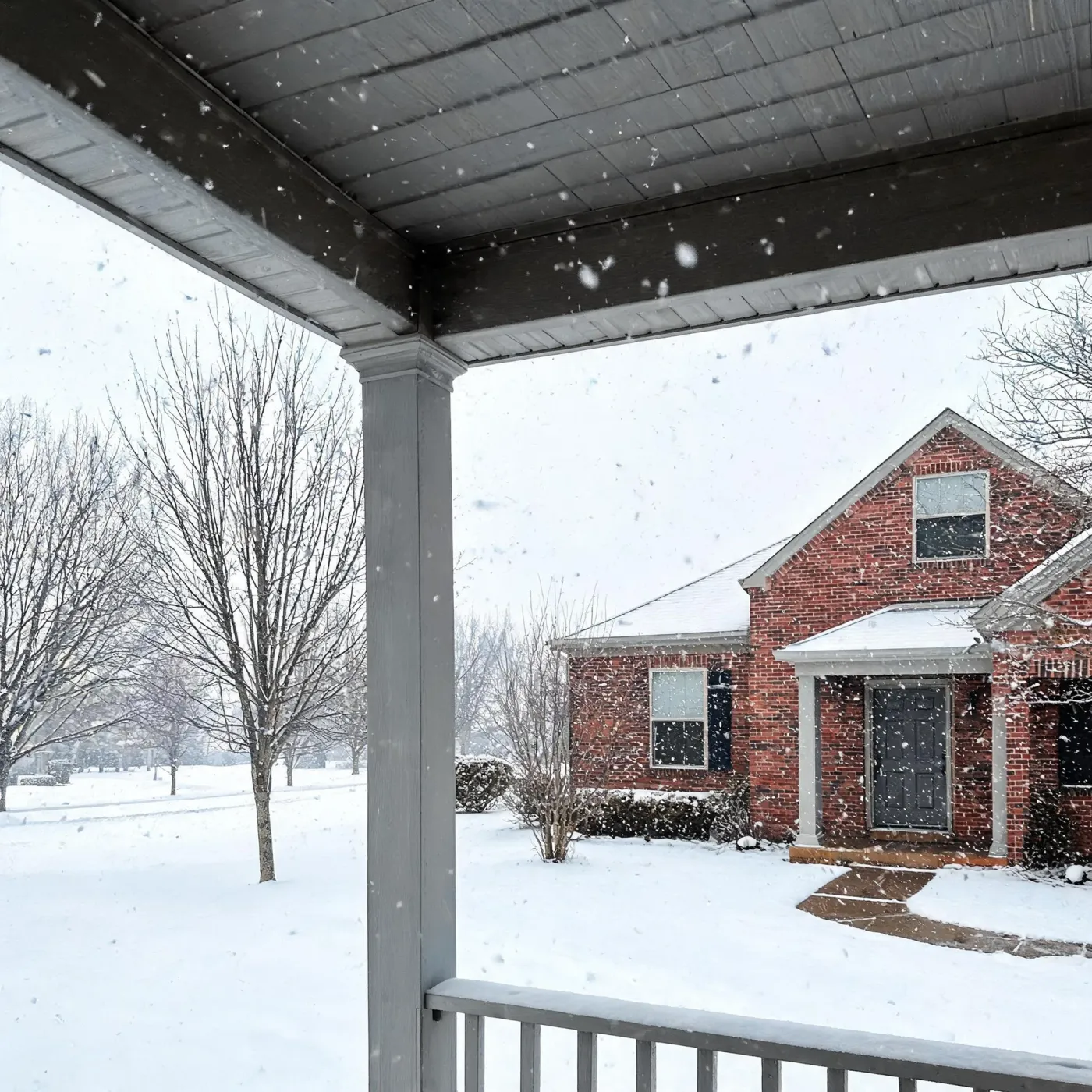
View from a covered porch with a white post and railing toward a red brick house across a snow-covered yard, with falling snow and bare trees.

Winter nights statewide average 13°F, and that's the stretch where an old boiler earns its keep or shows its age. At that temperature your boiler isn't cycling on and off anymore, it's running close to steady just to hold the house. A high-efficiency model pulls more heat out of the same flame during those long runs, so the burner isn't working as hard to keep the rooms even. With an older boiler, you'll notice the opposite on a night that cold: the thermostat drifting a degree or two below where you set it, and the boiler running longer to chase it. Source: NOAA climate normals.

NOAA nClimDiv 1991-2020 county normals weighted by homes

What is your old boiler actually telling you

You might notice the oil tank gauge dropping faster than it used to, or a delivery truck showing up more often than it did a few winters back. The boiler might short cycle, firing on and off every few minutes instead of settling into a steady run. You could see soot around the flue pipe, or the room it's in running warmer than the rest of the house. Sometimes it's a smell, oil or something faintly burnt when the burner kicks on. None of this means the boiler is about to fail. It means it's spending more oil than it has to in a state where oil isn't cheap, and that cost shows up every month until something changes.

  1. Cold water enters the boiler through the return line.

  2. The burner fires and heats water inside a sealed combustion chamber.

  3. A secondary heat exchanger pulls more heat from the exhaust.

  4. Cooled exhaust vents out through the stainless steel flue.

A man in a dark blue shirt stands in an open front doorway of a stucco and wood-clad house, facing a blond woman seen from behind in the foreground on a stone walkway.

Where that leaves you

If you're heating with oil and your boiler is getting old, a high-efficiency replacement is worth the look. The oil bill tells the real story over a winter or two, and in a state where most houses run on oil and electricity costs what it does here, the gap between an old boiler and a new one shows up on paper, not just in theory.

What makes the difference is who's installing it. A boiler sized wrong or piped wrong gives up most of what it was bought for, and that's not something you can check from the gauge on the tank. A local contractor who works on these systems all winter has seen what fails first in a Maine basement and what a proper install actually needs here. Getting matched with one, instead of a list of names to call yourself, means the quote you get is from someone who already knows what your winter asks of a boiler.

Interior corner of a living room with a beige upholstered sofa and dark cushion in the foreground, a ceramic vase of leafy branches on a dark side table by a curtained window, a framed picture on the wall, and a wood-surround fireplace at right.
A woman in a cream knit sweater sits in an armchair with her eyes closed near a window showing yellow autumn foliage, with a mug on a round wooden side table beside her.
A gray-haired man with a beard in a blue button-placket shirt reclines on a couch with his eyes closed, beside a sunlit window with a green plant.

Boiler Installation

A boiler pro near you

Only one pro gets your request, so you hear from one company.

A black-framed smartphone standing upright against a plain white background, its screen filled with solid green.
Step 1 of 3: Equipment