
How to bleed radiators before a Maine winter
Bleeding a radiator means letting the trapped air out of it so hot water can fill the whole thing again. Air works its way into a hot water heating system over the months, and it collects at the top of each radiator, which is why the bottom gets hot and the top stays cold. To bleed one, you open the small valve near the top with a radiator key or screwdriver until the hissing stops and water starts to come out, then close it. Do this to every radiator in the house before the cold sets in, not just the one that feels off. In a Maine winter, a radiator running on trapped air is a boiler working harder to heat a house that still feels cold, and with most homes here heating on oil, that is fuel burned for nothing. Checking each radiator now, before you need the heat, means you find out which ones need more than bleeding while there is still time to deal with it.
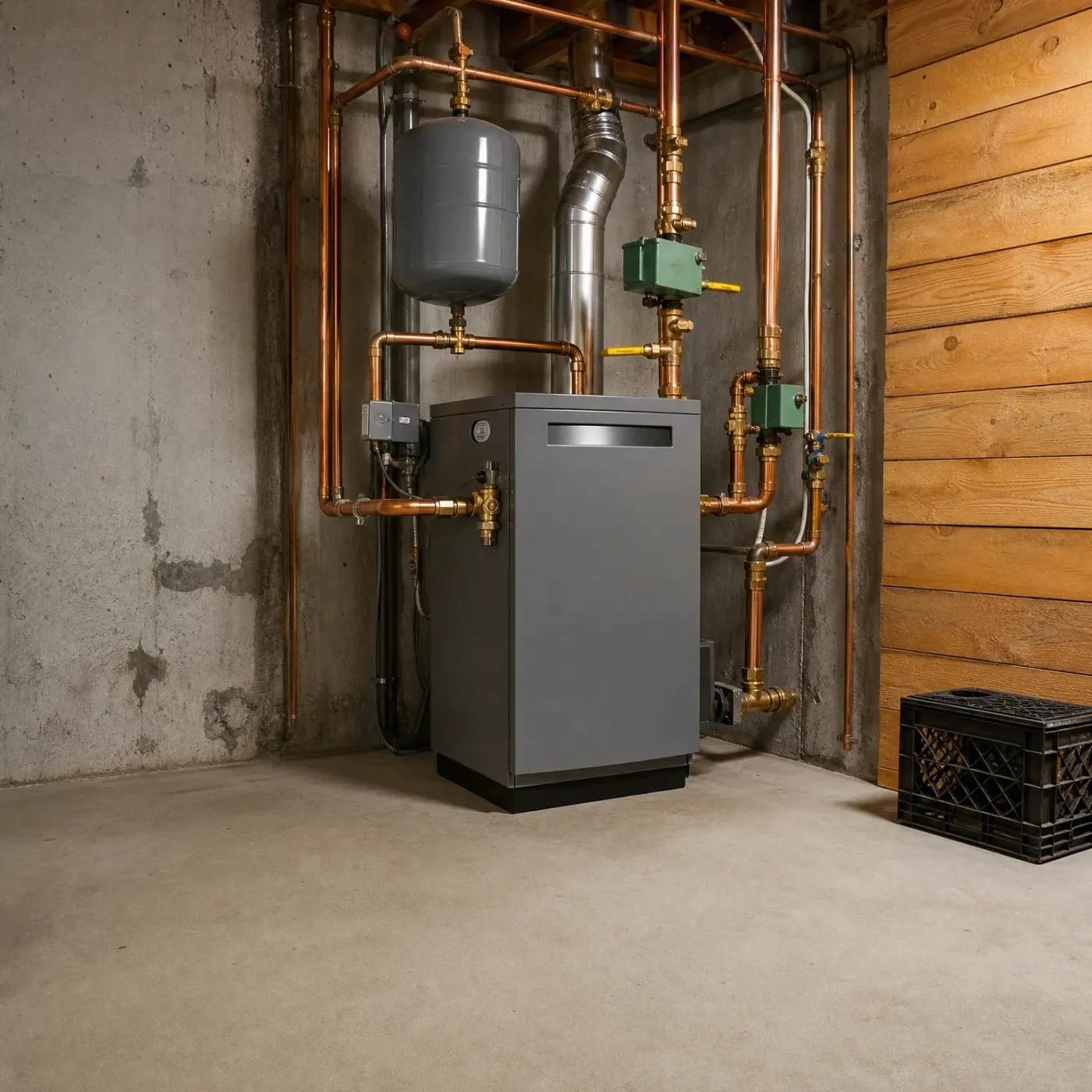
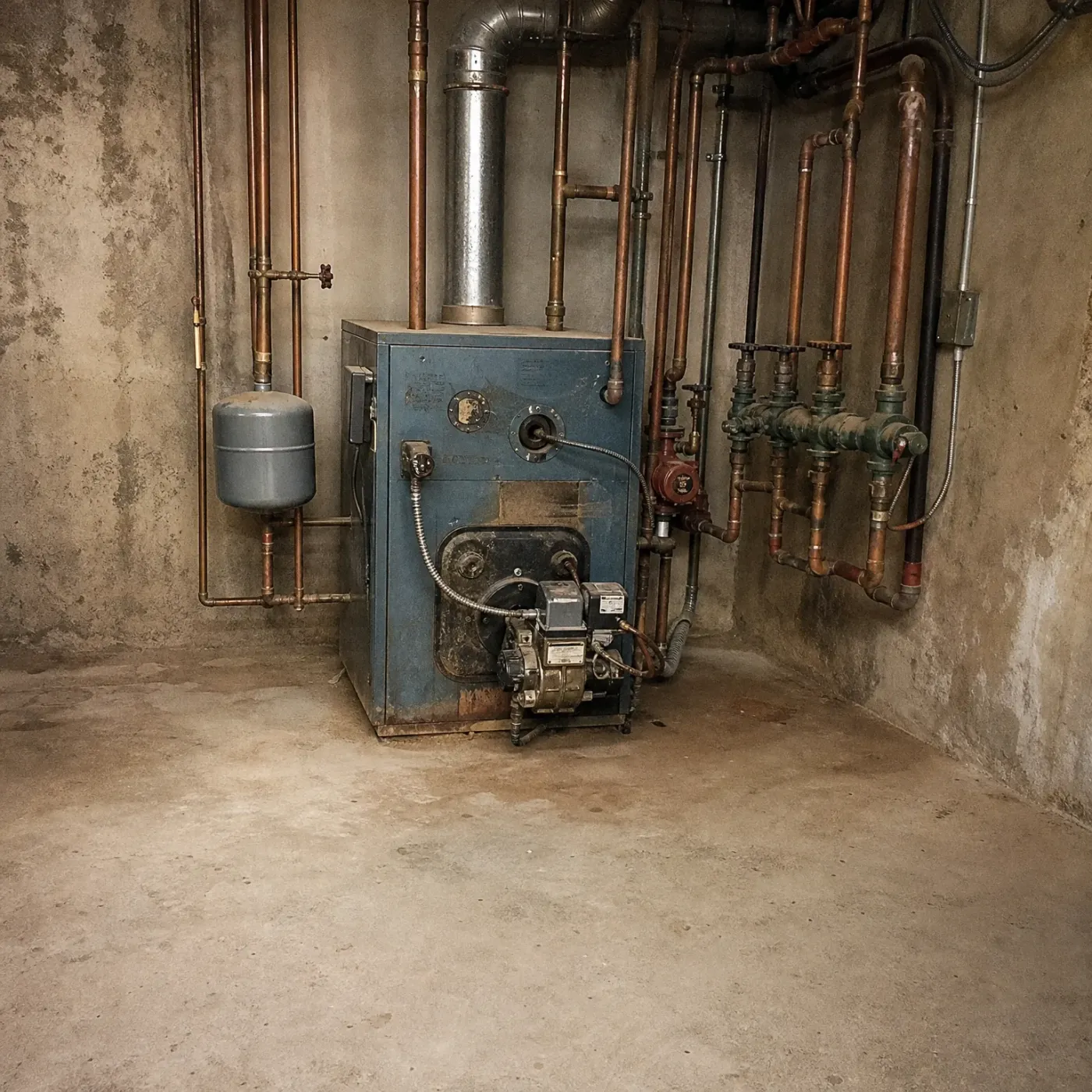
Every radiator has a small valve near the top, usually at one end. That's where the trapped air sits, since air rises above the water inside. A bleed key or a flathead screwdriver fits the valve and opens it with a quarter turn, no more. Air comes out first, and it hisses. Keep a cup or rag underneath, because water follows the air and it can spit before it settles into a steady stream. Once that stream runs clear with no more hissing, the valve closes and that radiator is done. Work through the house starting with the radiator farthest from the boiler, since air travels through the system and tends to end up furthest from where the water is pushed in. The last thing to check is the pressure gauge on the boiler itself. Letting air out of several radiators drops the water pressure in the whole system, and a boiler running low on pressure won't heat the way it should. Topping it off after bleeding is part of the job, not a separate one.
How Bleeding Actually Works
- Each radiator has a bleed valve near the top, usually a square-head or slotted screw on one end.
- A bleed key or flathead screwdriver turns the valve a quarter turn, just enough to let trapped air hiss out.
- Water will spit and sputter at first, so hold a small cup or rag under the valve while it runs.
- Once the hiss stops and water comes out in a steady stream with no air, the radiator is full and the valve closes.
- Start with the radiator farthest from the boiler and work back toward it, since that's where air tends to settle last.
- After bleeding every radiator, the boiler's pressure gauge should be checked, since letting air out drops the system pressure and it may need topping off.




Finding a pro stops being your job
A radiator that won't bleed clean, or a valve that's rounded off and won't turn, usually means something past the point of a bleed key. Oil heat runs most homes in Maine, and a boiler working against trapped air or a stuck valve burns more of it, right when electricity here already costs more than almost anywhere else to make up the difference. By the time the first hard freeze comes, you want this sorted, not half-done. A contractor who services these systems every fall knows which valves seize up, which boilers lose pressure once the radiators are bled, and what else is worth checking while the heat is apart for the season. That's a different thing than working through it alone with a wrench and a guess. If the valve won't budge or the radiator still runs cold after you've tried, getting someone out who knows this equipment, and knows it in Maine homes specifically, is the faster way through it. Send the request and let that part stop being yours to figure out.
A radiator with trapped air moves less heat into the room, so the thermostat has to run the boiler longer to reach the same temperature on the dial.
Oil here is priced by the gallon, and every extra minute the boiler runs to make up for a cold radiator is oil you paid for and didn't get heat from.



Shut off the boiler so no more hot water enters the system.
Let the radiators cool so the water inside won't scald you.
Fit the bleed key onto the valve at the top of the radiator.
Turn the key slowly and let trapped air escape until water runs steady.


Winter nights average 13°F statewide
On a 13°F night, a radiator losing heat to trapped air is the difference between a warm room and one that never quite gets there. Bleed each one before those nights start, and the boiler fills every radiator fully instead of fighting cold spots when it matters most.
NOAA nClimDiv 1991-2020 county normals weighted by homes
Clear the Air Before Winter
- Bleeding every radiator before the cold settles in gets hot water moving through the whole system again, top to bottom.
- A radiator that still won't bleed clean, or a valve that won't turn, is a job for a boiler technician, not a bleed key.
- Maine winters don't give a cold radiator much room to hide, and oil heat makes the fix worth doing before January.
- A local contractor who services boilers all winter knows which valves seize up and which radiators run cold first.
- Sending one request means one licensed contractor looking at your system, not a string of calls from companies that don't know it.
- Once the air is out and the valves checked, the boiler is heating water instead of fighting its way around trapped air.
Bleeding a radiator is a small job, and most of the time it's the whole job. A quarter turn of the key, some hissing air, then water, and that radiator is done for the season. Work your way through the house and the boiler stops fighting cold spots it can't explain. That's the fix for what trapped air causes. It isn't the fix for a valve that won't turn or a radiator that bleeds and still runs cold at the top. That points to something inside the system a bleed key can't reach, and it's worth having someone look at it before the first real cold snap, not during it.
A boiler technician who works in Maine sees this every fall, the same handful of radiators in a house running cold while the rest heat fine, the same valves seized from a season of not being touched. That's the kind of thing that's obvious to someone who services these systems all winter and easy to miss otherwise. Send one request and it goes to one licensed contractor local to you, not a handful of companies competing for the callback. That's one person looking at your actual boiler, not a general answer about boilers.
Get the air out now and the system is doing what it's supposed to before the cold asks anything of it. Whatever the valves turn up gets handled on your schedule, not the boiler's.
Let someone else find the pro
Only one pro gets your request, so you hear from one company.
There's no charge for the request.