Tell us about the job
Takes about a minute. No obligation.
Homes in Penobscot County, ME run heat about nine months a year, from September through May. A boiler running that kind of schedule accumulates cycles on its burner, heat exchanger, and ignition system at a rate that pushes those parts toward failure well before the vessel itself gives out. When a contractor arrives at a no-heat call here, the ignition assembly and the burner are the first components they pull and inspect, because the runtime those parts have absorbed narrows the diagnosis before any other test is run. A boiler that has been short-cycling, or misfiring intermittently, will often show visible wear at the igniter or fouling at the burner ports that points directly to the repair needed.
A boiler running in a house that has changed systems at least once carries its own record of what each contractor before did, and what they left. Half the homes in Penobscot County, Maine were built in 1977 or earlier (2020-2024 ACS 5-year). That spread of building age means a service call here routinely involves heat exchangers that have been resealed, controls that have been swapped in from whatever was available at the time, and flue runs that were adapted rather than replaced. When a contractor opens the unit, the parts they find may fit the boiler but trace back to a different one. That history is what shapes the repair scope.
The Parts of a Boiler a Contractor Checks First
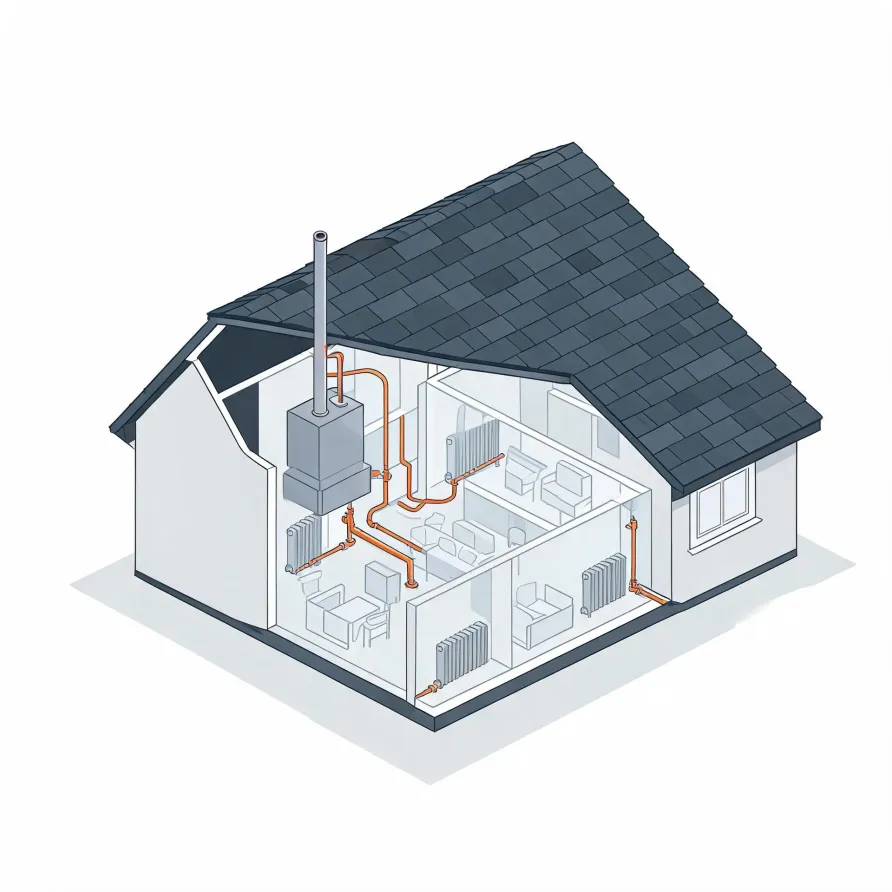
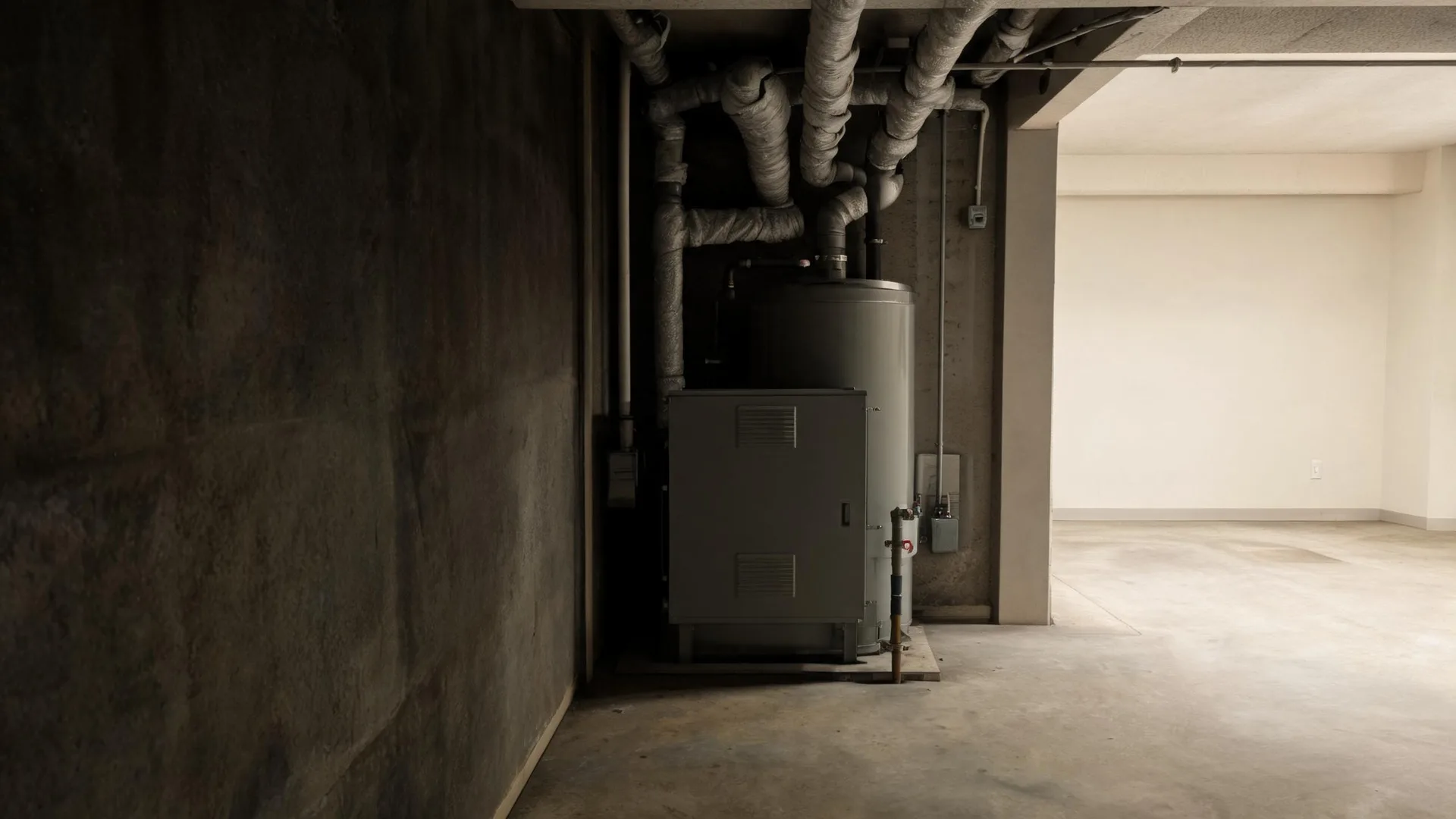
The boiler itself sits in the basement or mechanical room and is the piece a contractor goes to first. It houses the burner and heat exchanger, and when either of those goes wrong, the whole system stops producing heat. The pressure relief valve and aquastat mounted on the unit are also early stops, since both regulate conditions inside the boiler and fail in ways that are easy to misread.
From the boiler, hot water moves out through supply pipes and returns through a separate set after circulating through the radiators or baseboard units in each room. The circulator pump drives that movement, and a failed pump is one of the more common reasons heat reaches some rooms but not others. Expansion tanks, zone valves, and the thermostat wiring each play a role in what actually gets called for and delivered.
The drawing shows a typical boiler layout, and a licensed contractor determines which components apply to the specific system in your home.
Find a contractor in Penobscot CountyPenobscot County by the Numbers
369 severe weather events were recorded in Penobscot County, Maine between 2015 and 2024.
NOAA National Centers for Environmental Information, Storm Events Database, bulk CSV export, events 2015-01-01 through 2024-12-31.Half the homes in Penobscot County, Maine were built in 1977 or earlier (2020-2024 ACS 5-year).
U.S. Census Bureau, 2020-2024 American Community Survey 5-Year EstimatesPenobscot County, Maine holds 75,683 housing units (2020-2024 ACS 5-year).
U.S. Census Bureau, 2020-2024 American Community Survey 5-Year EstimatesOwners occupy 70.5% of the occupied homes in Penobscot County, Maine (2020-2024 ACS 5-year).
U.S. Census Bureau, 2020-2024 American Community Survey 5-Year EstimatesBoiler Repair Rules on the Books for Penobscot County, Maine1 sourced standards and codes
Licensing and Legal Requirements in Penobscot County, Maine
Maine licenses the fuel-burning side of heating rather than HVAC as a trade: a Maine Fuel Board licence is required to install or service solid fuel, oil, propane or natural gas burning equipment, including pellet-fired central heating appliances. Air conditioning is not named anywhere in the chapter.
Severe Weather Events in Penobscot County
Boilers in Penobscot County work against whatever the climate puts on them, and years with heavy weather push heating systems harder and surface problems faster. That pattern makes repair demand a local question, not a general one.
369 severe weather events, 2015–2024. Source: NOAA National Centers for Environmental Information, Storm Events Database.